
Diameter (geometry and metric concept)
The diameter is a line segment through the center of a circle or sphere and its length; more generally it is the largest distance between points in a set. Key formulas, symbols, and applications explained.
Definition
In elementary geometry, the diameter of a circle is any straight line segment that passes through the center and whose endpoints lie on the circle. It is also the longest chord of the circle. The same idea applies to a sphere: a diameter joins two opposite points on the surface and passes through the center. In common usage the word "diameter" can mean either the segment itself or the numerical length of that segment.
Image gallery
1 Image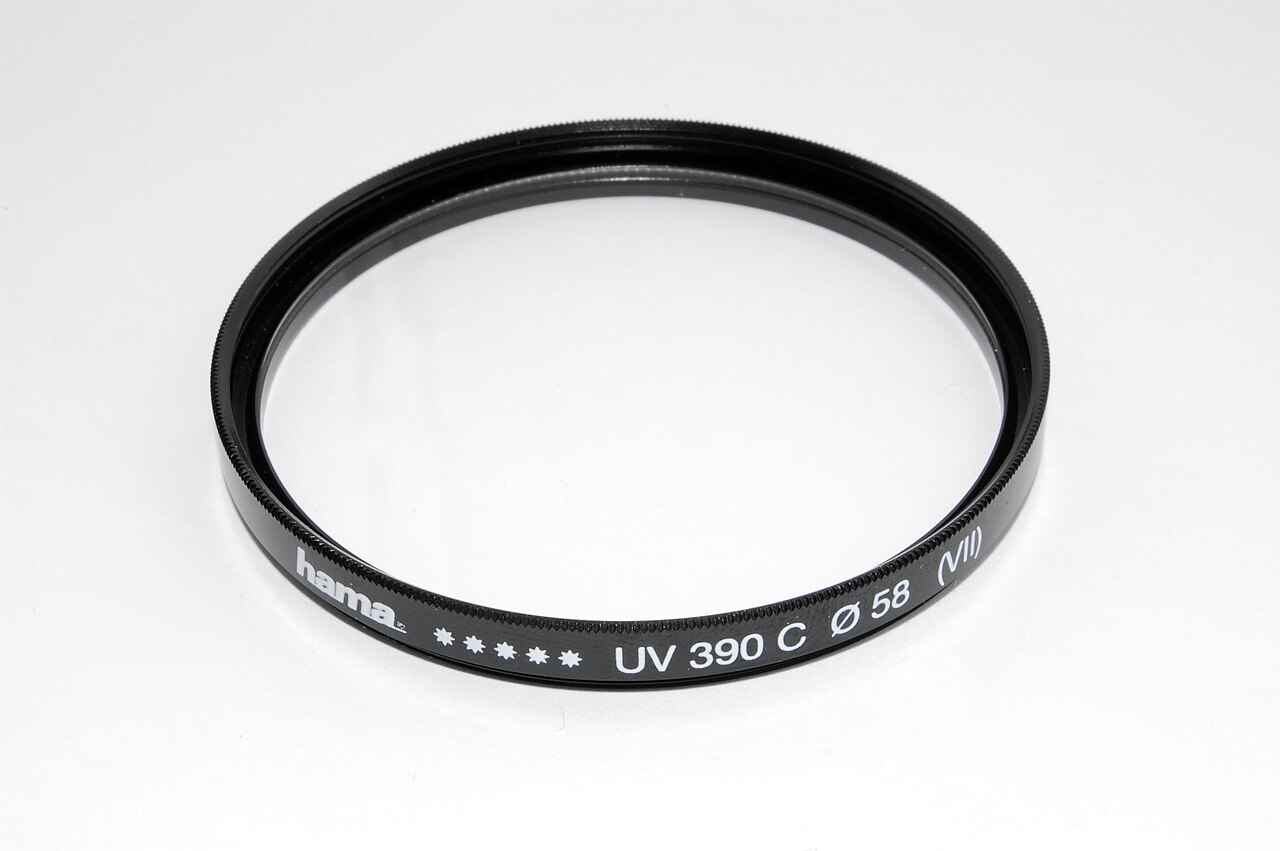
Basic properties
A diameter always passes through the center of the circle or sphere and therefore bisects them. For a circle, the diameter divides the circumference into two equal semicircles and its endpoints are antipodal points on the circle. For a sphere, the two endpoints are antipodal points on the surface. The diameter is the longest straight-line distance that fits inside the shape.
Formulas and notation
The diameter is commonly denoted by the letter d or by the symbol ⌀. It is directly related to the radius r by the simple relation d = 2r; equivalently, r = d/2. Other useful formulas that involve the diameter for a circle include the circumference C = πd and the area A = πd²/4. In practical contexts the diameter is reported with appropriate units (millimetres, inches, metres, etc.).
Extensions and different meanings
Outside basic Euclidean figures, "diameter" has a broader meaning in metric and topological contexts. For a set in a metric space the diameter is the supremum of distances between any two points in the set — informally, the greatest separation between points. In graph theory the term is also used to describe the maximum shortest-path distance between nodes of a graph; that is a related but distinct notion from the geometric segment.
History, notation and uses
The word derives from ancient Greek meaning "through measure" and has been a standard geometric term for centuries. The symbol ⌀ is widely used in technical drawings, manufacturing, and engineering to indicate the diameter of holes, rods and cylindrical parts. In measurement and design the diameter is a common specification because it directly controls area and fit for circular objects.
Notable facts and examples
- In any circle every diameter is a perpendicular bisector of any chord that it bisects at the center.
- The diameter equals the longest possible chord; no chord of a circle can exceed the diameter in length.
- When specifying pipes, bolts, or discs, the diameter provides a concise single-number description of overall size.
- For reference topics see general circle geometry and relations to the radius.
Related articles
Author
AlegsaOnline.com Diameter (geometry and metric concept) Leandro Alegsa
URL: https://en.alegsaonline.com/art/27103