
Greeley County, Nebraska
Greeley County is a small, rural county in Nebraska, founded in 1871 with the county seat at Greeley. It had 2,538 residents at the 2010 census and is known for its agricultural landscape and low population density.
Overview
Greeley County is a rural county in the U.S. state of Nebraska. It was established in 1871 and the county government is based in the town of Greeley, the county seat. According to the 2010 census, the county had 2,538 residents, making it one of the less populated counties in the state. Much of the land remains in agricultural use and communities are small and widely spaced.
Image gallery
1 Image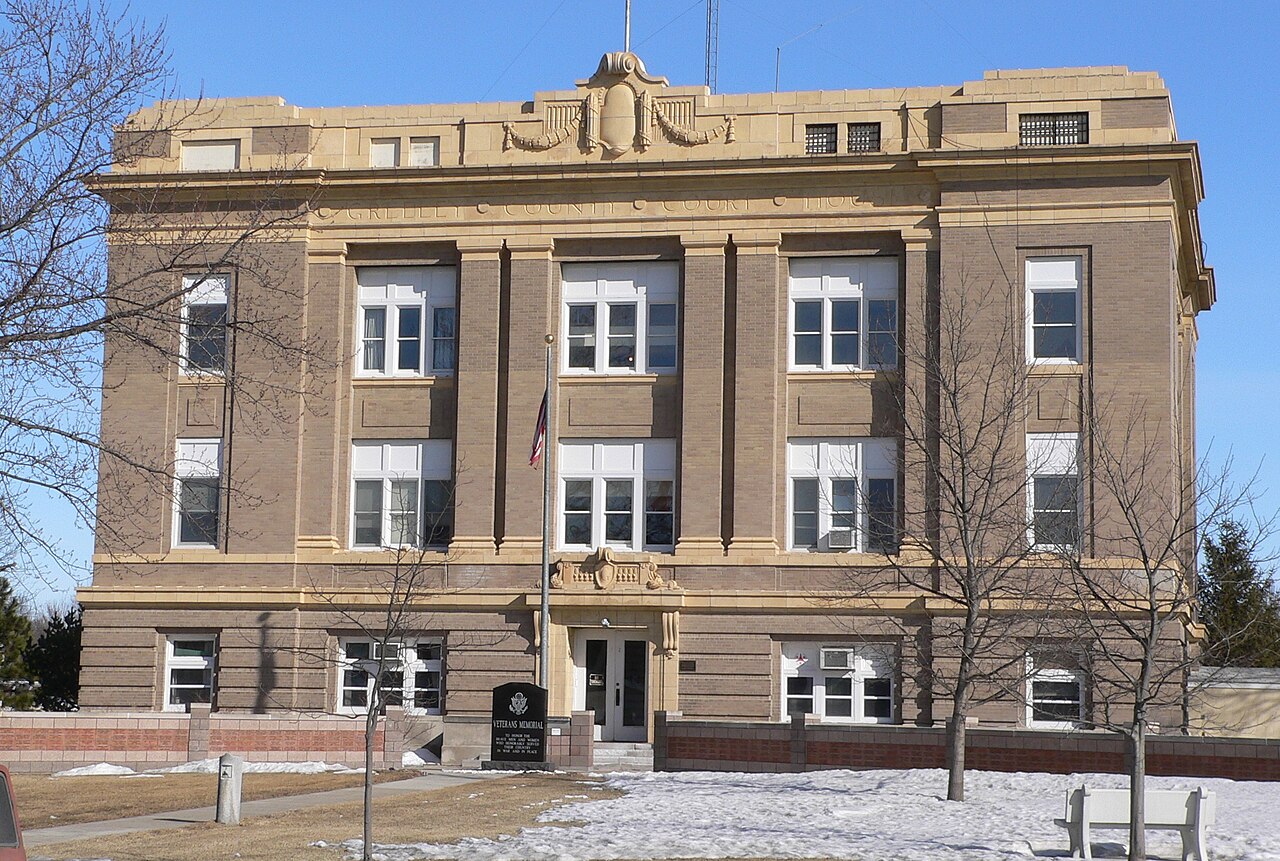
Characteristics and landscape
The county lies within the broad Great Plains region, characterized by rolling fields, grasslands and farmland. Land use is dominated by crops and livestock, with family farms and cooperative operations forming the economic backbone. Settlement patterns are typical of rural Nebraska: a central town for government and services surrounded by farms, ranches and unincorporated settlements.
History and origin
Organized in the early 1870s during a period of westward expansion and settlement, Greeley County takes its name from Horace Greeley, a newspaper editor and public figure who famously encouraged Americans to "go west." Early development followed federal land policies, homesteading and the gradual arrival of rail and road connections that made dryland farming and cattle ranching more viable.
Economy and community life
Greeley County's economy centers on agriculture—grain, forage and cattle are commonly raised—supplemented by local businesses, public services and small manufacturing or processing facilities where they exist. Schools, churches and volunteer organizations play a central role in community life. County officials focus on maintaining roads, emergency services and support for farming infrastructure.
Key facts and distinctions
- Founded: 1871; county seat: Greeley.
- Population: recorded as 2,538 in the 2010 census, reflecting low population density typical of many Plains counties.
- Region: part of the Great Plains agricultural belt in Nebraska, with landscapes suited to dryland farming and ranching.
Visitors and researchers often note Greeley County as an example of a small, agriculture-centered county with deep historical roots in 19th-century settlement. For local services and civic information, residents consult county offices and community institutions based in the county seat, while travelers rely on state and county road networks to access dispersed towns and farms.
Related articles
Author
AlegsaOnline.com Greeley County, Nebraska Leandro Alegsa
URL: https://en.alegsaonline.com/art/40652