
Volcano: formation, structure, eruption types, hazards and examples
An overview of volcanoes: how they form, the materials and structures involved, major types and examples, impacts on people and climate, and how scientists monitor them.
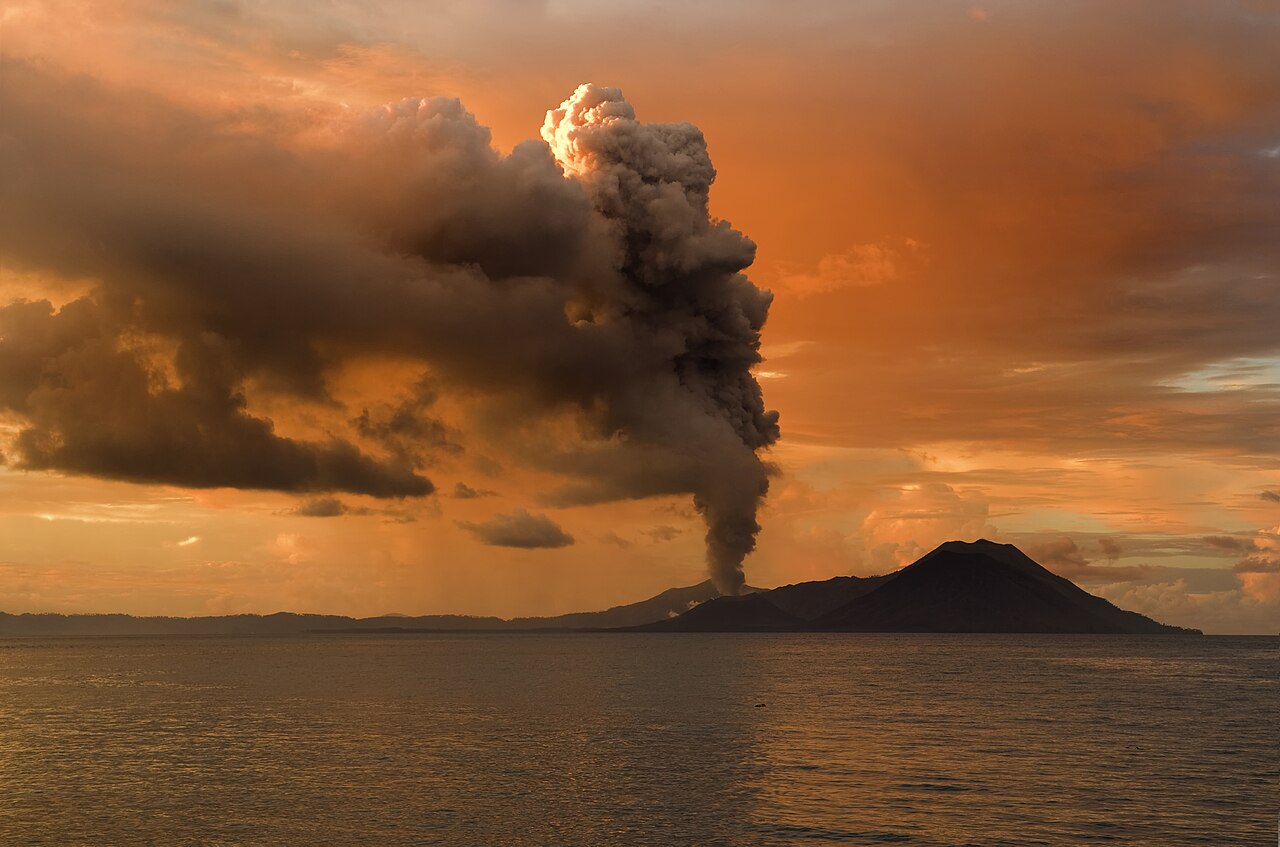
A volcano is a vent or series of vents in a planet's crust through which molten rock, gases and fragments are released from beneath the surface. In simplest terms a volcano connects a subsurface reservoir of molten rock, commonly called a magma chamber, with the surface, where molten rock flows as lava or is ejected as ash and blocks. Many volcanoes build conical mountains over repeated eruptions, but some are low and broad or leave large collapsed depressions called calderas. Volcanoes occur where the planet's outer shell is weakened or thinned, and their form, behaviour and hazards depend on the composition of the magma, the plumbing system beneath the vent, and the local geology.
Image gallery
10 Images



Where and how volcanoes form
On Earth the distribution of volcanoes is closely tied to the motion of rigid tectonic plates. The planet has a set of major plates and many smaller ones that move relative to one another on a softer mantle. Volcanoes commonly form where plates move apart at divergent boundaries, allowing mantle material to rise and melt; and where plates come together at convergent boundaries, causing one plate to sink and release fluids that trigger melting. Volcanoes also develop where the crust stretches, for example along continental rifts such as the East African Rift.
A second important cause of volcanism is a rising column of hot mantle material often called a plume or hotspot. When a plate moves over a hotspot, a chain of volcanoes can form: the Hawaiian islands are a classic example and are often cited in studies of hotspots (Hawaii). Some hotspots are thought to originate from deep near the core–mantle boundary, although details remain an active research area. Volcanoes are uncommon at transform faults where plates slide past each other, because there is little magma generation there.
Structure and erupted materials
Most volcanoes share common elements: a magma reservoir, conduits and vents, and surface features such as a summit crater or flanks. The summit depression often called a crater sits over the main vent; many volcanoes also have side vents and fissures. During activity volcanoes emit a variety of materials: hot gas and steam (steam and volatiles), fragmented rock and ash (tephra), and flowing lava. The style of an eruption (eruption) depends on magma viscosity and gas content—low-viscosity magmas flow easily, while high-viscosity magmas trap gas and can produce explosive eruptions.
Types of volcanoes and notable examples
- Shield volcanoes are broad, gently sloping structures built by repeated low-viscosity lava flows; Hawaiian volcanoes are typical examples and are often classified as shield volcanoes. The massive volcano Mauna Loa is one of the largest active volcanoes by volume and illustrates this form.
- Stratovolcanoes (composite volcanoes) are steeper and formed by alternating layers of lava and fragmented deposits; they tend to produce more violent eruptions and are common along convergent margins.
- Cinder cones are small, steep-sided cones made largely of volcanic fragments and are common around larger volcanic centers.
- Calderas form when a volcano's summit collapses into an emptied chamber after a very large eruption.
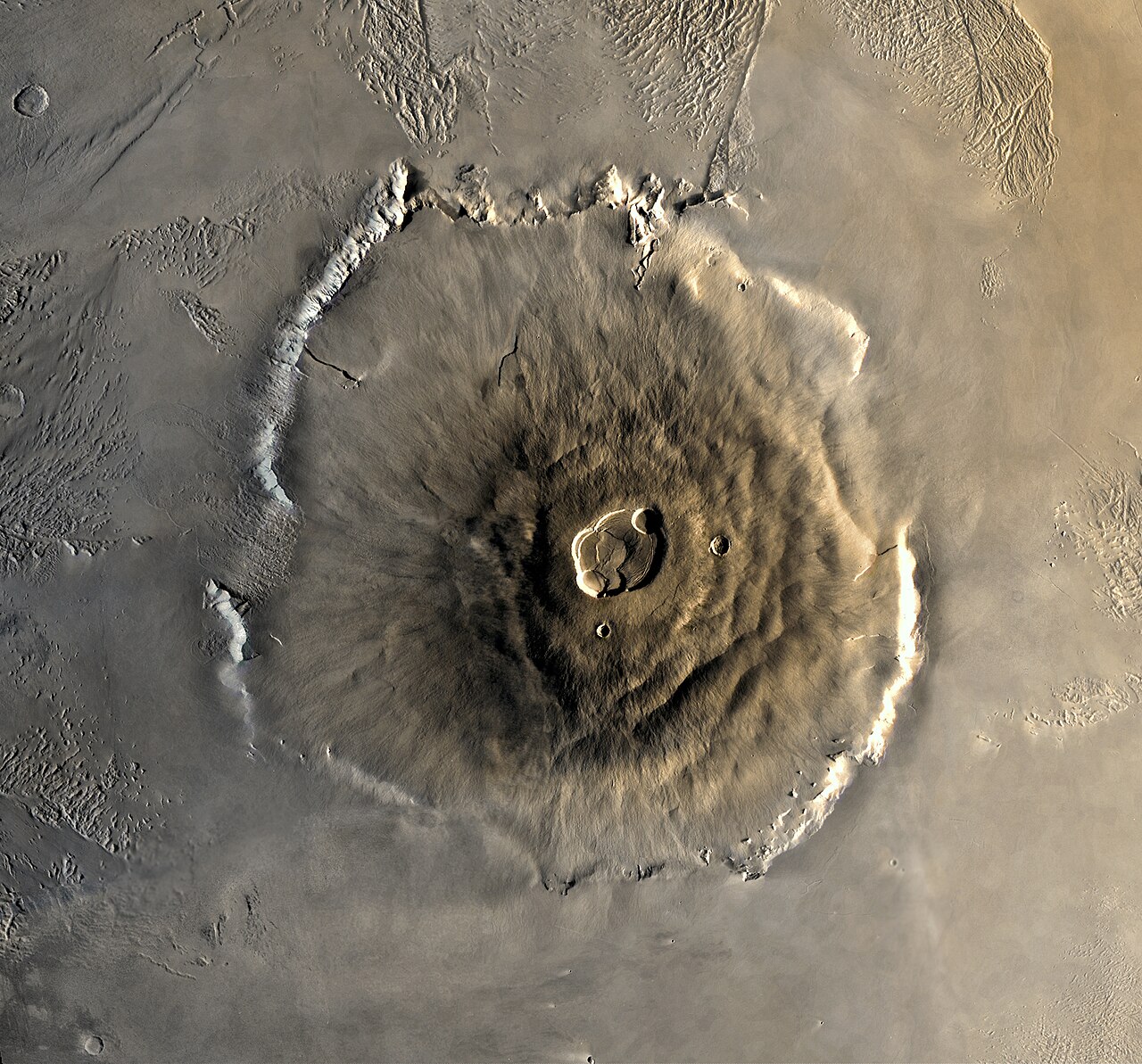
Volcanism is not unique to Earth. Other planetary bodies show volcanic features; for example, Mars hosts the enormous shield volcano Olympus Mons and other worlds display evidence of eruptive processes (volcanoes on other planets).
Impacts, benefits and monitoring
Volcanic eruptions bring hazards such as pyroclastic flows, ash fall, lava flows, and gas emissions that can threaten communities, air traffic and climate. Large explosive eruptions can inject ash and sulfur gases high into the atmosphere, producing short-term cooling and widespread disruption. Yet volcanoes also supply fertile soils, geothermal energy, and mineral resources; eruptions have shaped landscapes and influenced human history.
Scientists known as volcanologists study volcanic systems using geology, geochemistry, geophysics and remote sensing. Monitoring includes seismic networks to detect earthquakes, ground deformation measurements, gas sampling and satellite observations. These tools aim to forecast activity and reduce risk to populations living near active systems. For introductory resources on lava behavior, chamber processes, tectonics, hotspots and monitoring see short summaries and educational pages such as lava overview, magma chamber studies, and regional guides to tectonic plates, divergent and convergent boundaries, plus hotspot material (hotspots, Hawaii, deep mantle). Further practical introductions to craters, volcanic gases, tephra and eruption types are available at short primers on craters, steam, ash and eruption styles. For comparative planetary volcanology see resources on extraterrestrial volcanoes and notable examples like Olympus Mons and Mauna Loa, and classifications such as shield volcano.
Questions and answers
Q: What is a volcano?
A: A volcano is a mountain that has lava (hot, liquid rock) coming out from a magma chamber under the ground, or did have in the past.
Q: How are volcanoes formed?
A: Volcanoes are formed by the movement of tectonic plates. The Earth's crust has 17 major, rigid tectonic plates which float on a hotter, softer layer in its mantle. Volcanoes can also form where there is stretching and thinning of the crust's plates.
Q: What materials come out of an active volcano?
A: When an active volcano erupts, materials such as lava, steam, gaseous sulfur compounds, ash and broken rock pieces come out of it.
Q: Where are volcanoes found other than Earth?
A: Volcanoes are found on planets other than Earth. An example is Olympus Mons on Mars.
Q: Who studies volcanoes?
A: Volcanologists are scientists who study volcanoes using methods from geology, chemistry, geography, mineralogy, physics and sociology.
Q: What is the world's biggest volcano?
A: The world's biggest volcano is named Mauna Loa in Hawaii which is part of the five volcanoes on Hawaii's 'Big Island'. It is 4196 meters tall and it is a shield volcano.
Q: When was Mauna Loa last erupted?
A:The most recent time Mauna Loa erupted was in 1984. It erupted 33 times in the last 170 years.
Related articles
Author
AlegsaOnline.com Volcano: formation, structure, eruption types, hazards and examples Leandro Alegsa
URL: https://en.alegsaonline.com/art/105825
Sources
- enviroliteracy.org : "Earthquakes, Volcanoes, and Tsunamis" · web.archive.org
- pubs.usgs.gov : Principal types of volcanoes. USGS · web.archive.org
- earthmagazine.org : "Voices: Dead or alive ... or neither? Why a dormant volcano is not a dead one"
- geo.ed.ac.uk : "Holyrood Park Geology"
- bbc.co.uk : bbc.co.uk/news/science-environment-24007339
- nature.com : nature.com/news/underwater-volcano-is-earth-s-biggest-1.13680