
Feudalism: the medieval European social and political order
Feudalism was a decentralized medieval system of landholding, mutual obligations and local authority in Europe. It linked kings, nobles, vassals and serfs through land grants, service and customary law.
Overview
Feudalism is a term used to describe a broad set of social, legal and political arrangements that governed large parts of Europe during the Middle Ages. Historians typically date its central features from the 9th to the 15th century, though practices varied by region and time. At its core feudalism combined a particular pattern of landholding with bonds of personal loyalty and duty, so scholars often call it a social and political system rather than a single uniform institution.
Image gallery
7 Images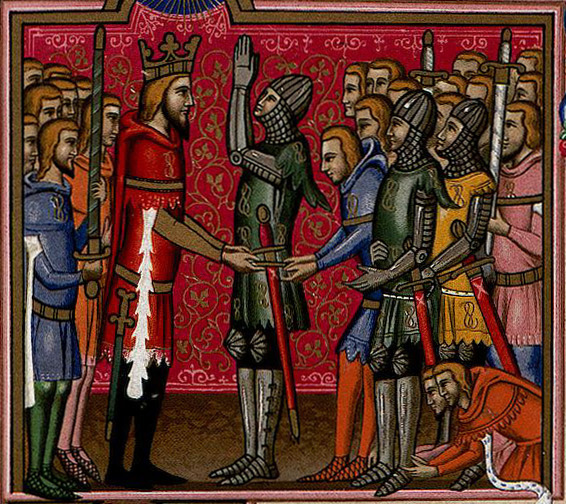


Basic structure
The model most commonly described begins with a monarch or ruler—often called a king—who was recognized as the highest owner of territory in a kingdom. The king granted estates or parcels of land, known as fiefs, to magnates and senior nobles, sometimes called lords or nobles. Those recipients in turn created personal bonds with lesser tenants: the vassal swore an oath of loyalty to a lord in exchange for the right to use the land and receive its produce. Peasants or peasants —in many places legally termed serfs—worked the land and were subject to customary duties rather than free contract.
Rights and obligations
Feudal relationships combined legal rights with duties. Typical obligations included military service or its cash equivalent, advice in council, and payments or labor associated with the manor. Lords offered protection, adjudication of disputes and access to land. These arrangements were often enforced by oaths, ceremonies of investiture and local custom rather than written statute.
Daily life and the manorial economy
The economic backbone of feudalism was the manor: an agricultural estate that supported a household and depended on peasant labor. Serfs and free tenants cultivated strips of arable land, paid rents in kind or money, and performed communal tasks such as maintenance of roads and mills. Mobility and legal rights for rural laborers were limited compared with modern standards; obligations were tied to land tenure and local courts.
Origins, variation and decline
Feudal practices evolved from late Roman, Germanic and local traditions of land tenure and military retinues. They developed unevenly — what is properly described as feudalism in one region may look different elsewhere. From the 14th and 15th centuries onward several forces weakened the system: demographic shocks (notably epidemics), the rise of centralized monarchies, monetary economies and changes in warfare reduced reliance on personal military service.
Legacy and distinctions
Feudalism shaped medieval politics, law and rural life and left a lasting imprint on property concepts and social hierarchy. Modern scholars caution that "feudalism" is a convenient analytical label rather than a single, everywhere-identical regime. For comparative study, it is helpful to distinguish between feudal relationships (personal bonds of loyalty), manorial economy (local agricultural organization) and the broader political order centered on landholding and authority.
Related articles
Author
AlegsaOnline.com Feudalism: the medieval European social and political order Leandro Alegsa
URL: https://en.alegsaonline.com/art/34127