
First Bulgarian Empire
Medieval Bulgarian state (c.681–1018) that forged a Slavic Orthodox culture, expanded across the Balkans, and left a lasting linguistic and political legacy in Eastern Europe.
The First Bulgarian Empire was a medieval state established by Bulgar rulers and Slavic populations in the Balkans in the 7th century CE. Emerging from migrations of steppe peoples and alliances with local Slavs, it became a major power between the Danube and the Aegean. Its institutions blended nomadic Bulgar traditions with Slavic social structures, producing a distinct polity that shaped the region's religion, language, and diplomacy.
Image gallery
10 Images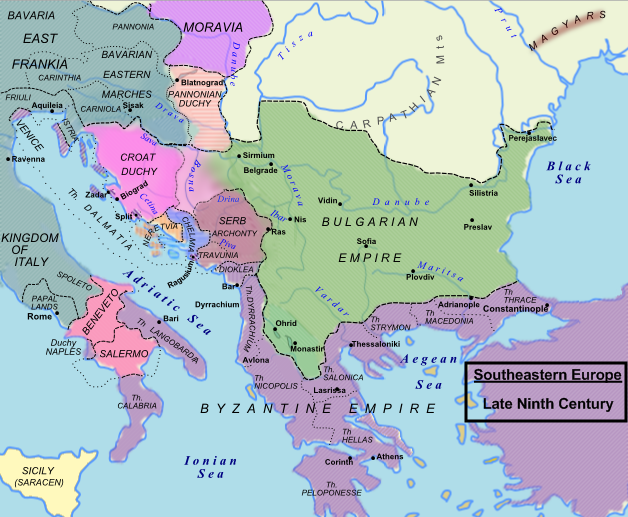





Characteristics and institutions
At its height the polity controlled large parts of the Balkans, with principal seats at Pliska and later Preslav. The ruler (initially titled khan, later styled tsar) presided over a hierarchy of nobles and provincial leaders. Military service, tribute, and negotiated settlements with neighboring powers were central to its survival. Administratively, it combined fortified hill towns, rural Slavic communities, and newly founded urban centers.
History and major phases
The state traces its roots to Bulgar settlement in the Lower Danube region; for a concise discussion of origins see early Bulgar tribes. Expansion accelerated under energetic rulers who won territory from Byzantine authority and other neighbors. Key developments include the Christianization of the ruling class and population, the cultural flowering under Tsar Simeon I, and eventual conquest by the Byzantine Empire under Basil II in the early 11th century — the process of annexation culminated in Byzantine control, after repeated conflict.
- Notable rulers: Asparuh (founder figure), Krum, Boris I (converted Bulgaria to Christianity), Simeon I (cultural golden age)
- Territorial note: Initial centers lay near the Danube Delta and lower river lands: see Danube region.
Cultural and religious change was pivotal. The adoption of Christianity allied Bulgaria with Eastern Orthodox traditions and enabled the patronage of Slavic literacy. Old Church Slavonic literature and the development and spread of the Cyrillic alphabet are closely associated with Bulgarian centers of learning, making the state a crucible for Slavic written culture.
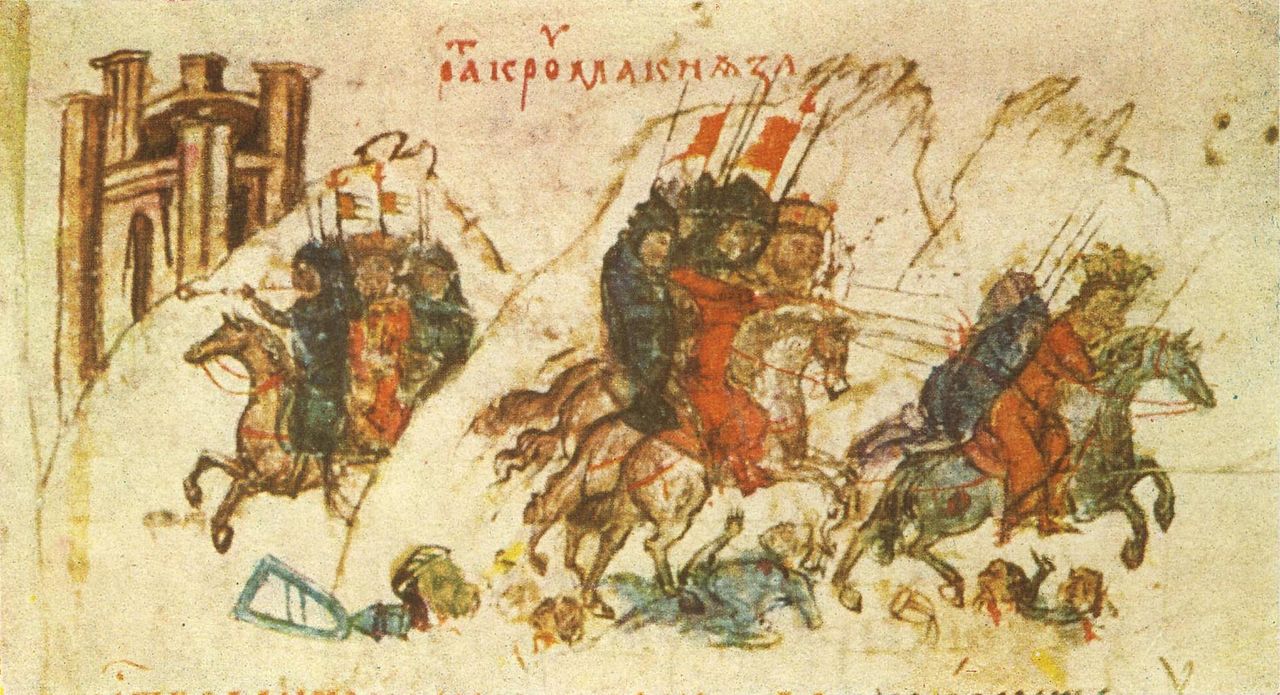
The First Bulgarian Empire also engaged in sustained rivalry and occasional alliance with the Byzantine Empire, as well as with neighboring peoples such as the Magyars and Pechenegs. Its political and cultural achievements provided a foundation for later Bulgarian states and for the wider Slavic world, leaving a legacy in law, liturgy, and national identity that endured long after its political institutions were absorbed by Byzantium.
Related articles
Author
AlegsaOnline.com First Bulgarian Empire Leandro Alegsa
URL: https://en.alegsaonline.com/art/34523