
Endocrine gland
A ductless gland that releases hormones into the bloodstream to regulate physiology; overview of major glands, function, control mechanisms, clinical relevance, and notable examples.
An endocrine gland is a specialized, ductless organ that releases chemical messengers known as hormones directly into the circulation. These glands are central components of the endocrine system, working together with the nervous system to coordinate growth, metabolism, reproduction and homeostasis. Unlike exocrine tissues, endocrine glands do not use ducts; their secretions enter the blood and affect distant target cells.
Image gallery
2 Images
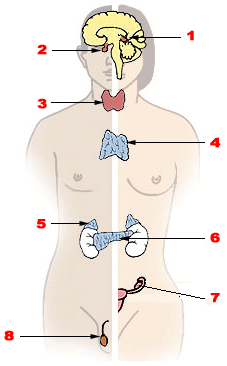
Structure and function
Endocrine glands are characterized by highly vascularized tissue and specialized cells that synthesize, store and release chemical signals. Cells often respond to feedback from target organs or to signals from regulatory centers such as the hypothalamus. The general process of release can be described as secretion: cells secrete hormones into capillaries where they are carried to receptors on other tissues. Hormone action ranges from rapid (seconds to minutes) to slow (hours to days) depending on the chemical nature of the messenger.
Major glands
- Pituitary gland — often called the "master gland" for its role in controlling other endocrine organs.
- Thyroid gland — regulates metabolic rate and development.
- Adrenal glands — produce stress hormones and mineralocorticoids.
- Pancreas — has both endocrine and exocrine roles; its islets regulate blood glucose.
- Gonads (ovaries and testes) — secrete sex steroids that govern reproduction and secondary sexual characteristics.
In addition to these primary glands, many organs have endocrine functions. For example, the stomach secretes peptide hormones such as ghrelin that influence appetite, and adipose tissue releases hormones that affect energy balance. The term endocrine gland thus applies broadly to any tissue whose secretions act systematically rather than through a duct.
Regulation, clinical importance, and distinctions
Endocrine activity is tightly regulated by feedback loops. For instance, hormone levels are often controlled by negative feedback from target organs back to the pituitary or hypothalamus. Disruption of this regulation produces common disorders: insufficient or excessive hormone production can lead to conditions such as hypothyroidism, Cushing's syndrome, or diabetes mellitus. Clinically, endocrine glands are assessed by measuring circulating hormone concentrations, imaging, and functional tests.
Notable distinctions include paracrine and autocrine signaling, where secreted factors act locally rather than entering the bloodstream, and neuroendocrine cells, which have properties of both neurons and endocrine cells. Research into endocrine glands continues to refine our understanding of hormone chemistry, receptor signaling, and therapeutic interventions for endocrine diseases. For further background and definitions see blood transport and general references on endocrine system.
Related articles
Author
AlegsaOnline.com Endocrine gland Leandro Alegsa
URL: https://en.alegsaonline.com/art/31383