
Secretion (biological process)
Biological release of molecules from cells or glands — hormones, enzymes, mucus and neurotransmitters — including cellular routes, types (endocrine/exocrine), mechanisms and biological roles.
Overview
Secretion is the controlled release of substances from a cell or a multicellular gland into the external environment, into body fluids, or into another cell. These substances may act locally or at distant sites and include hormones, enzymes, mucus, sweat and neurotransmitters. In broad usage the term covers both the cellular machinery that packages and exports molecules and the anatomical structures that produce them. For further reading on chemical signals see chemical signals.
Image gallery
2 Images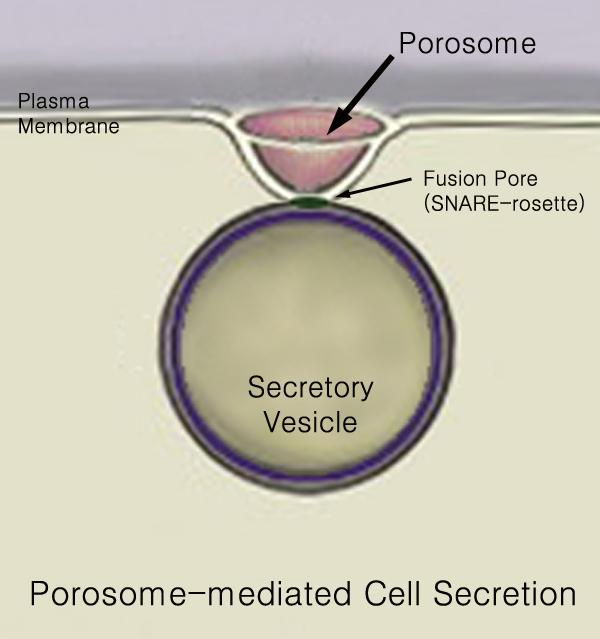
Cellular mechanisms
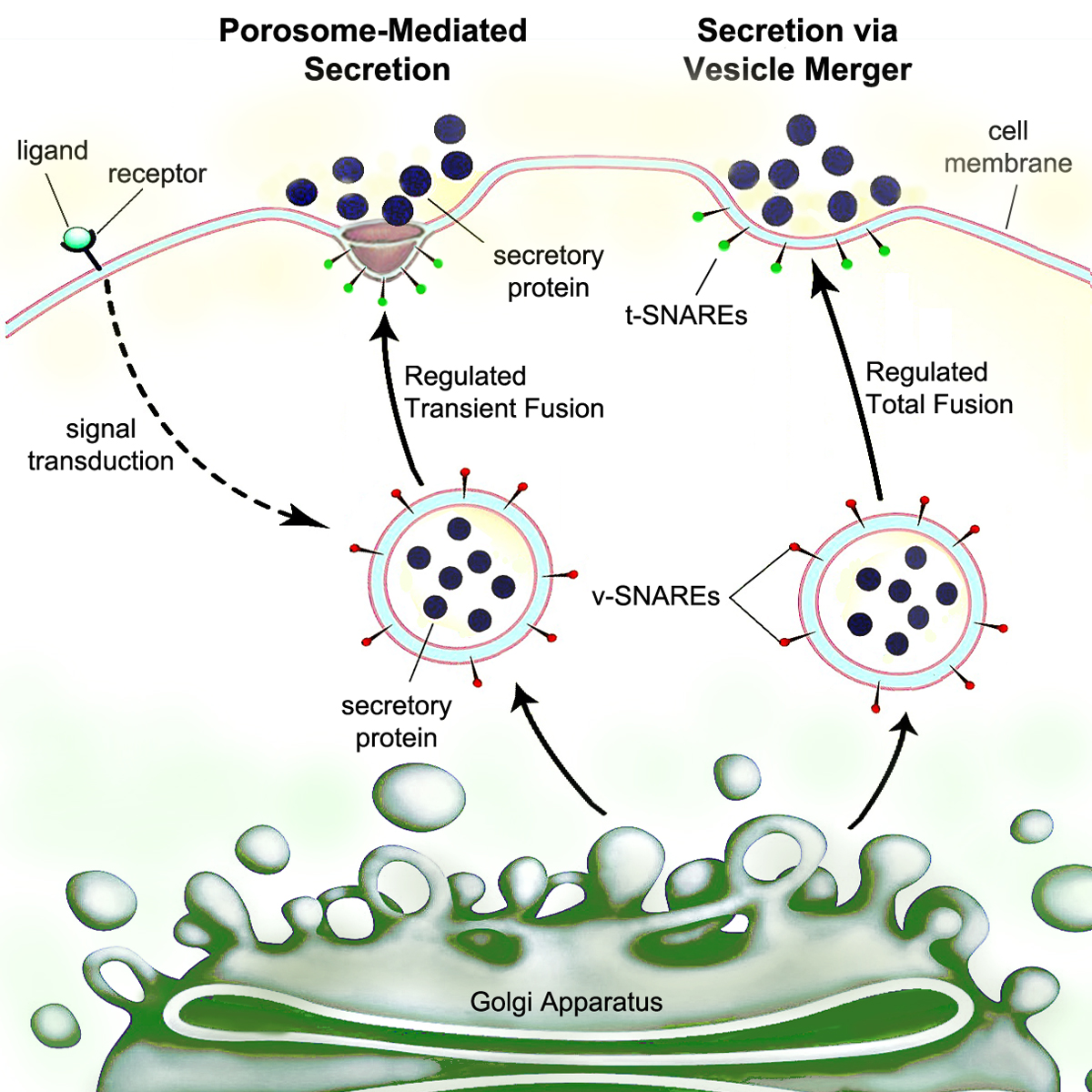
In eukaryotic cells the most common route is vesicular transport: newly synthesized proteins enter the endoplasmic reticulum, are processed in the Golgi apparatus and are packaged into secretory vesicles that fuse with the plasma membrane to expel their contents. This process is often called exocytosis and can be constitutive (continuous) or regulated (triggered by a stimulus). Many aspects of this route are summarized in resources about the secretory pathway and the role of membrane fusion machinery in vesicle release.
Types and examples
- Endocrine secretion: hormones released into the bloodstream by endocrine glands; effects are typically systemic.
- Exocrine secretion: substances delivered through ducts to a surface (for example digestive enzymes, saliva, sweat); often associated with glands.
- Paracrine and autocrine signaling: molecules act on neighboring cells or the secreting cell itself.
- Neurosecretion: neurotransmitters and neuropeptides released at synapses or into the bloodstream by neuroendocrine cells.
Typical secretion steps
- Synthesis of the molecule (often on ribosomes for proteins).
- Entry into the endoplasmic reticulum and post‑translational modification.
- Sorting and packaging in the Golgi apparatus.
- Transport in vesicles and docking/fusion with the plasma membrane.
Biological importance and distinctions
Secretion is essential for homeostasis, digestion, immune defense, intercellular communication and reproduction. It differs from excretion, which is the removal of metabolic waste products; secreted substances usually have biological roles beyond mere disposal. Both single‑celled organisms and multicellular plants and animals use secretion: microbes release digestive enzymes or toxins, plants secrete nectar and resins, and animal tissues secrete hormones and protective fluids. For more on how eukaryotic cells handle secretion see eukaryotic cell resources.
Notable facts
Secretion can be highly specialized. Some glands produce complex mixtures (for example milk or saliva), while neuronal secretion is adapted for rapid, repeated release. Disruption of secretory pathways underlies many diseases, including hormone deficiencies, cystic fibrosis (defective mucus handling) and certain neurodegenerative conditions. Academic and clinical studies often refer readers to introductory materials on cellular secretion at chemical signals and pathway summaries at the secretory pathway.
Related articles
Author
AlegsaOnline.com Secretion (biological process) Leandro Alegsa
URL: https://en.alegsaonline.com/art/88480