
Thyroid gland: structure, hormones, function, and clinical importance
Concise overview of the thyroid gland: anatomy, hormone synthesis (T4, T3, calcitonin), physiological roles, common disorders, diagnosis, treatment options and public health considerations.
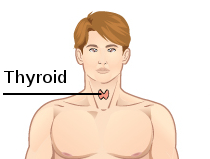
Overview. The thyroid is a butterfly-shaped endocrine organ located at the front of the neck, below the larynx. It is one of the body’s major endocrine glands and is described in clinical anatomy sources as the principal gland in the anterior neck region. The gland secretes hormones that control the rate at which the body uses energy and responds to other hormonal signals, affecting overall metabolic activity.
Image gallery
10 Images



Structure and regulation
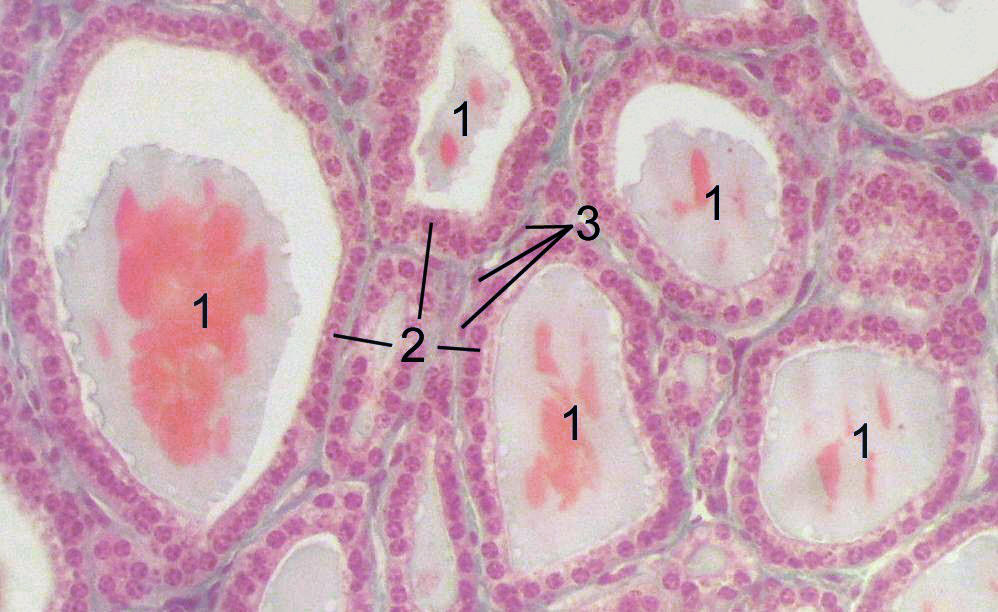
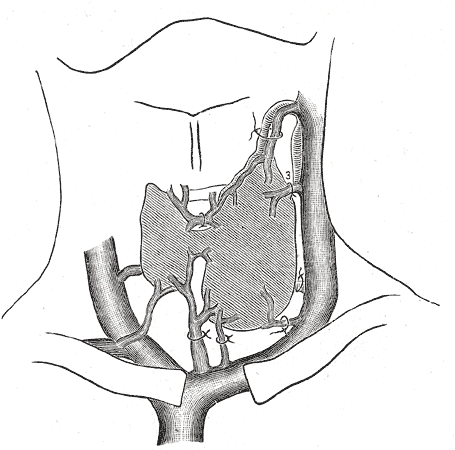
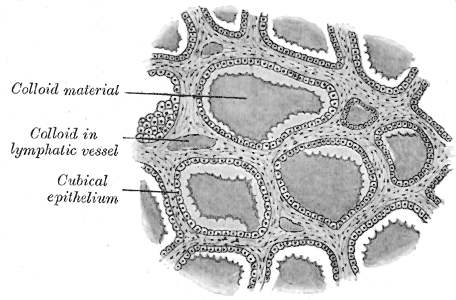
The thyroid consists of two lateral lobes joined by an isthmus. Microscopically it is composed of follicles lined by follicular cells that surround colloid, which stores thyroglobulin and hormone precursors. Parafollicular (C) cells secrete calcitonin. Thyroid activity is regulated by the hypothalamic–pituitary–thyroid axis: the hypothalamus releases TRH, the pituitary releases TSH, and negative feedback from circulating thyroid hormones adjusts TSH output.
Hormone synthesis and biochemistry
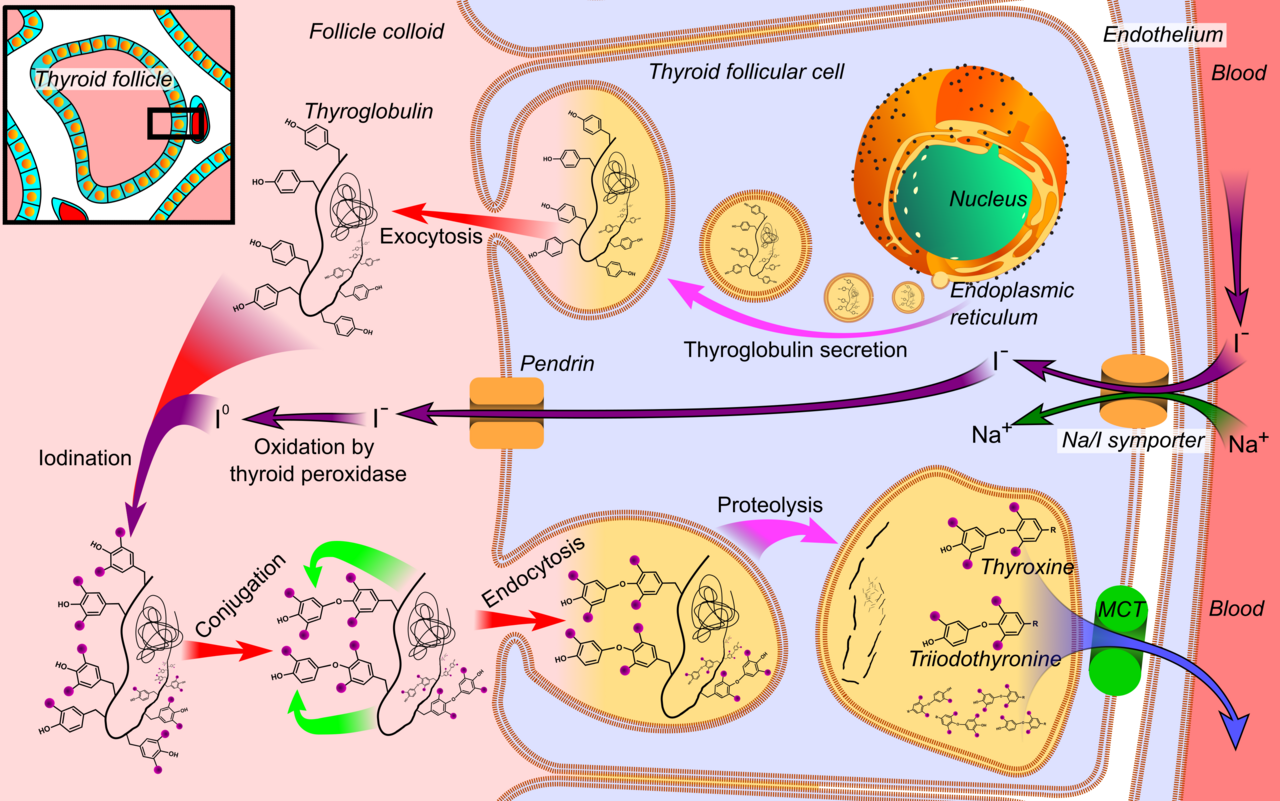
The gland produces two principal iodinated hormones, thyroxine (T4) and triiodothyronine (T3); T3 is the more biologically active at the cellular receptor. Synthesis requires the amino acid tyrosine residues within thyroglobulin and the mineral iodine, which is actively transported into follicular cells. Iodination and coupling reactions form T4 and T3; much T3 is generated by peripheral conversion of T4.
Physiological functions
- Regulation of basal metabolic rate, heat production and energy expenditure.
- Modulation of heart rate, cardiac output and vascular resistance, influencing overall energy use.
- Effects on growth, bone maturation and central nervous system development, especially in fetal and early postnatal life.
- Influence on gastrointestinal motility, muscle strength and neuromuscular reflexes.
- Secretion of calcitonin by C cells contributes to short-term regulation of serum calcium and bone turnover and interacts with broader mineral homeostasis mechanisms.
Clinical disorders
Common conditions include hypothyroidism (insufficient hormone production), hyperthyroidism (excess production), goiter (gland enlargement), thyroid nodules and thyroid cancer. Autoimmune thyroid disease is frequent; Hashimoto thyroiditis commonly causes hypothyroidism, while Graves disease is a leading cause of hyperthyroidism. Iodine deficiency and excess can both disrupt normal thyroid function.
Diagnosis
Evaluation typically begins with blood tests: serum TSH is the most sensitive screening test, often accompanied by free T4 and, in some cases, free T3. Thyroid autoantibodies (for example anti‑TPO or TSH‑receptor antibodies) help identify autoimmune causes. Imaging includes neck ultrasound to assess nodules and gland size; radionuclide scanning can evaluate functional activity of nodules. Fine-needle aspiration biopsy is used when malignancy is suspected.
Treatment and management
Treatment depends on the disorder: hypothyroidism is managed with levothyroxine replacement; hyperthyroidism may be treated with antithyroid medications, radioactive iodine ablation, or thyroidectomy. Nodules are monitored or removed based on size, symptoms and cytology. Management in pregnancy and in children follows specific protocols because of the gland’s role in development.
Public health and monitoring
Iodine sufficiency is important for population thyroid health; many countries use iodized salt or other measures to prevent deficiency. Newborn screening for congenital hypothyroidism allows early detection and treatment to prevent developmental delay. Long-term follow-up and periodic monitoring of therapy are important for maintaining appropriate hormone levels.
Further reading: Endocrine reference • Anatomy overview • Location detail • Metabolic role • Iodine importance • Amino acid source • Calcium link • Homeostasis concept
Related articles
Author
AlegsaOnline.com Thyroid gland: structure, hormones, function, and clinical importance Leandro Alegsa
URL: https://en.alegsaonline.com/art/99753