
Endocrine system: organs, hormones, functions, and clinical significance
Overview of the endocrine system: its glands and hormones, how they work, key functions, major organs, contrasts with other systems, clinical relevance and notable distinctions.
Overview
The endocrine system is the body's network of internal chemical regulators produced by specific organs. These regulators—called hormones—circulate in the blood and influence processes such as metabolism, growth, and development, as well as behavior and mood. The medical specialty that diagnoses and treats disorders of these tissues is medicine devoted to the endocrine system, often referred to as endocrinology.
Image gallery
3 Images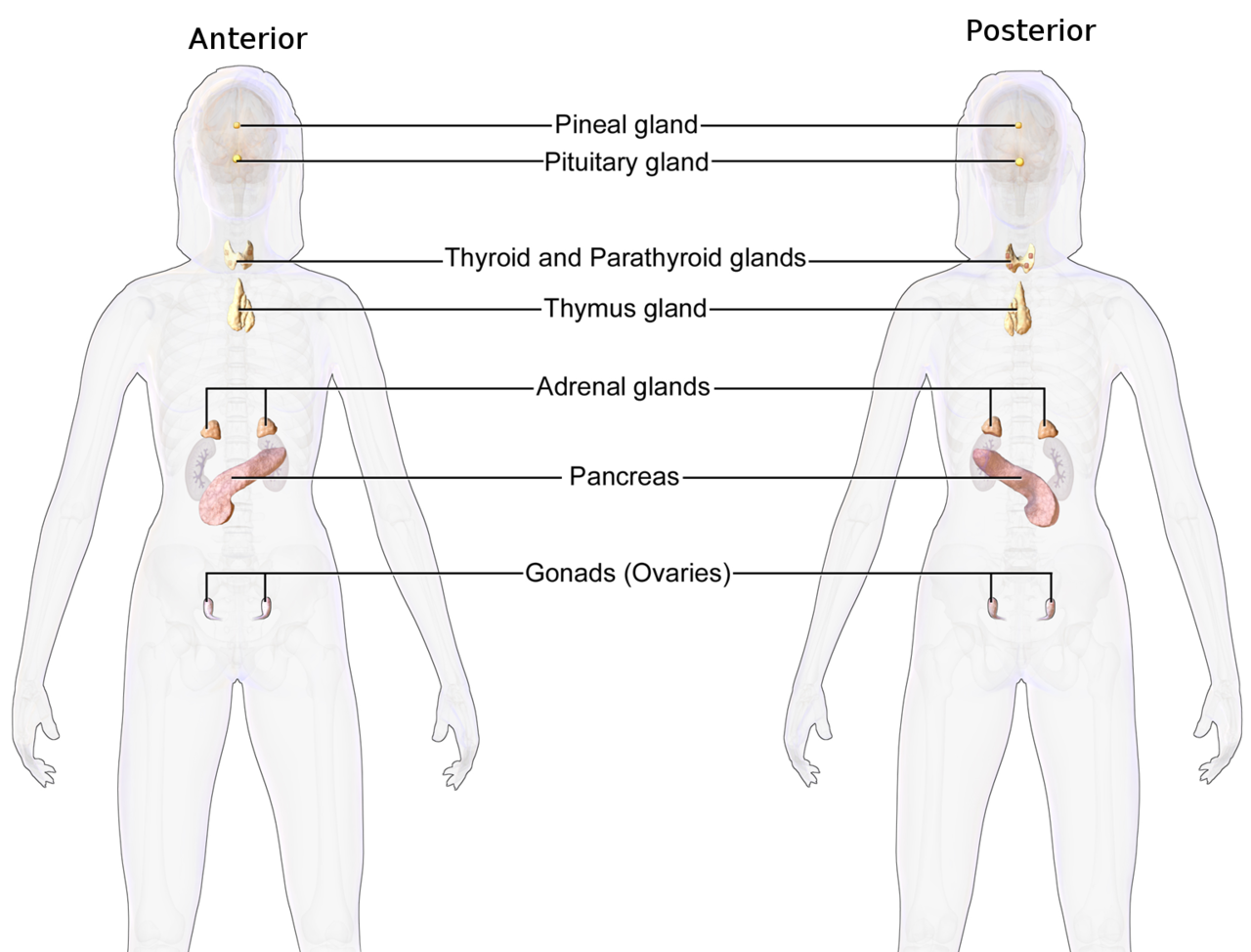
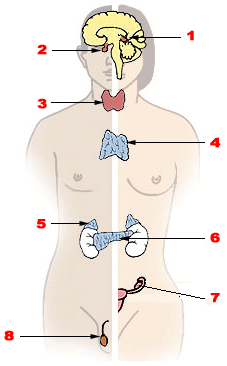
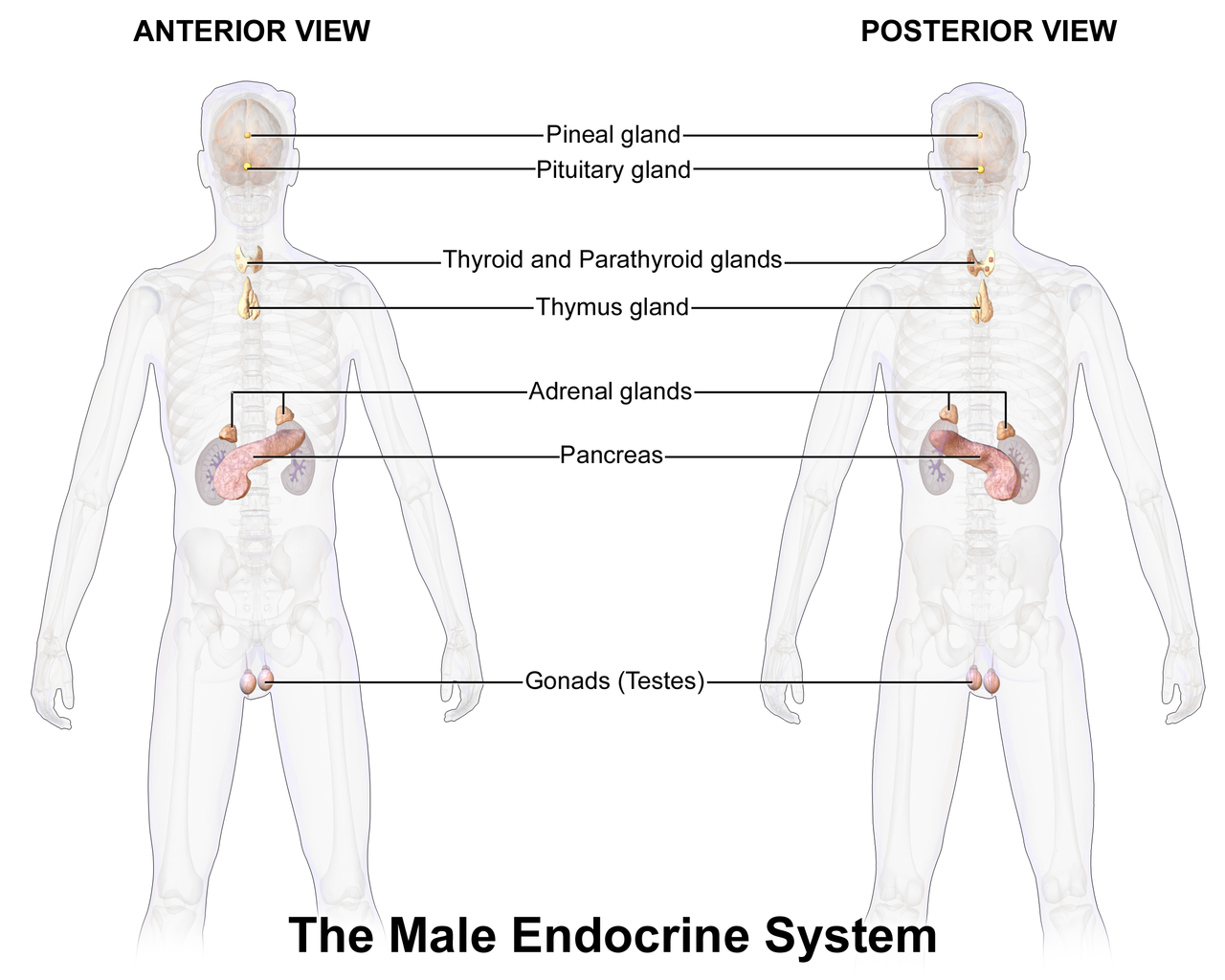
Structure and major components
Physiologically, the endocrine system is composed of discrete glands and hormone-producing cells distributed throughout the body. Typical examples include the pituitary, thyroid, adrenal glands, pancreas (islets), gonads (ovaries and testes), parathyroids and the pineal gland. These tissues are generally ductless, richly vascularized and store secretory products in intracellular granules or vacuoles until release.
How hormones act
Hormones released into the bloodstream travel to distant target tissues where they bind to specific receptors and modify cell activity. This signaling is part of the body's broader information signal systems and is studied in physiology. Endocrine signaling tends to produce responses that begin more slowly but last longer than signals transmitted by the nervous system. Some hormones act on many tissues, others on a single cell type; the same gland may secrete different hormones with distinct effects.
Contrasts and distinctions
The endocrine system differs from the exocrine system, which releases substances through ducts to external or luminal surfaces (for example, digestive enzymes). Endocrine glands, by contrast, secrete directly into the circulation. Functionally, the endocrine and nervous systems work together: the nervous system provides rapid, short-lived control, while endocrine signals sustain long-term adjustments in physiology.
Functions, examples and clinical importance
- Regulation of metabolic rate and energy balance (thyroid hormones, insulin).
- Control of growth and tissue maturation (growth hormone, sex steroids).
- Maintenance of fluid and electrolyte balance (aldosterone, antidiuretic hormone).
- Stress response and acute adaptation (adrenal hormones).
Common endocrine disorders include diabetes mellitus, thyroid dysfunction, growth abnormalities and disorders of the adrenal glands. Care for these conditions is managed within the field of endocrine glands medicine and by specialists trained in endocrinology or related areas of medicine.
History and notable facts
Recognition that glands secrete chemical messengers into the blood developed over the 19th and early 20th centuries; the concept and study of hormones transformed clinical practice by linking symptoms to altered internal chemistry. Today the endocrine system is central to understanding metabolism, reproduction, growth and the body's response to stress. For introductory and advanced resources, see basic texts in physiology and clinical guidelines in organ systems medicine.
Further reading and practical overviews can be found through trusted educational portals and clinical summaries that describe each gland, its secretions and common disorders; these resources often include diagnostic approaches and treatment principles relevant to both primary care and specialists in endocrinology or broader medicine. For distinctions between gland types and storage mechanisms see discussions of glands, secretory granules and the contrast with the exocrine system. An accessible primer on hormonal roles and clinical impact is available in many physiology introductions and endocrine-focused reviews (hormones, metabolism, growth, development, mood).
For terminology and concepts, primary literature and educational materials use standard categories: endocrine glands, paracrine and autocrine signaling, and interactions with the nervous and immune systems. Those seeking clinical detail should consult specialists in endocrinology or authoritative clinical guidelines maintained by professional societies in medicine.
Questions and answers
Q: What is the endocrine system?
A: The endocrine system is a system of glands in the body that produce hormones which are released into the bloodstream to regulate various functions such as metabolism, growth and development, tissue function, and mood.
Q: What field of medicine deals with disorders of endocrine glands?
A: Endocrinology is the field of medicine that deals with disorders of endocrine glands.
Q: How does the endocrine system differ from the exocrine system?
A: The endocrine system secretes its chemicals directly into the bloodstream whereas the exocrine system secretes its chemicals using ducts.
Q: How do responses from the nervous and endocrine systems compare?
A: Responses from the nervous system are quick but short-lived while responses from the endocrine system are slow to start but long-lasting in their response.
Q: What happens when hormones are released into the bloodstream?
A: When hormones are released into the bloodstream they travel to target tissues and trigger a response.
Q: What features do most endocrine glands have in common?
A: Most endocrine glands have no ducts, they have a good blood supply, and usually they have vacuoles or granules inside their cells for storing their hormones.
Related articles
Author
AlegsaOnline.com Endocrine system: organs, hormones, functions, and clinical significance Leandro Alegsa
URL: https://en.alegsaonline.com/art/31384