
Endothelium: the cellular lining of blood and lymphatic vessels
Endothelium is the monolayer of cells lining blood and lymphatic vessels. It serves as a selective barrier, regulates vascular tone, coagulation, inflammation and angiogenesis, and shows organ-specific specializations.
Overview
The endothelium is a continuous single-cell layer that lines the interior surface of the circulatory system, including arteries, veins and capillaries. It also coats lymphatic vessels and the heart. As the interface between flowing blood and the vessel wall, this tissue helps regulate exchange of gases, nutrients and waste, and participates actively in vascular homeostasis. For a general introduction to the system it serves, see the circulatory system.
Image gallery
4 Images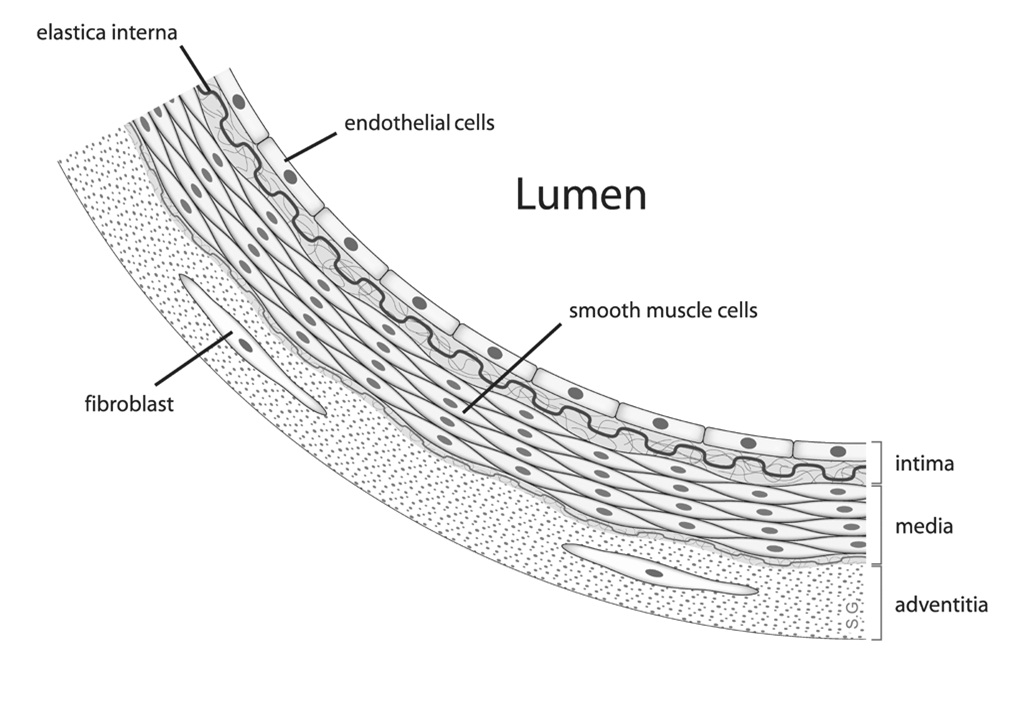


Structure and distribution
Endothelial cells are flattened, polygonal cells classed as a type of simple squamous epithelium. They rest on a thin basement membrane and are covered on their luminal surface by a carbohydrate-rich layer called the glycocalyx. The arrangement is a continuous lining throughout the vascular tree, but cells differ by vessel type and organ: for example, brain capillaries are tightly sealed, while kidney glomerular capillaries are fenestrated. Collectively the endothelial surface area and mass in an adult human are substantial: estimates commonly cite a total area measured in square meters and an aggregate cell mass on the order of one kilogram.
Primary functions
- Selective barrier: controls permeability and transendothelial transport.
- Vascular tone: synthesizes vasodilators and vasoconstrictors to regulate blood flow and pressure.
- Haemostasis: balances anticoagulant and procoagulant factors to prevent inappropriate clotting.
- Inflammation and immunity: modulates leukocyte recruitment and cytokine responses.
- Angiogenesis and repair: guides new vessel growth during development, wound healing, and disease.
Development and clinical relevance
Endothelial cells originate from mesodermal precursors (angioblasts) during embryogenesis and expand by vasculogenesis and angiogenesis. In adults, endothelial dysfunction is a central feature of many common conditions — including atherosclerosis, hypertension, diabetes-related vascular damage and sepsis — and contributes to impaired blood flow, chronic inflammation and thrombosis. Because of these roles, the endothelium is a frequent target in cardiovascular therapies and in research on regenerative medicine.
Distinctive features and notable facts
The endothelium differs from other epithelial tissues by its close contact with circulating blood and by specialized adaptations in different organs. Variants include continuous, fenestrated and sinusoidal endothelial types. The luminal glycocalyx and produced signaling molecules help coordinate rapidly changing demands. Its function can be supported or impaired by drugs, metabolic factors and mechanical forces such as shear stress, emphasizing its dynamic role in health and disease. For more on its barrier properties, see the endothelial membrane.
Related articles
Author
AlegsaOnline.com Endothelium: the cellular lining of blood and lymphatic vessels Leandro Alegsa
URL: https://en.alegsaonline.com/art/31400
Sources
- bloodjournal.hematologylibrary.org : "Endothelial Cells in Physiology and in the Pathophysiology of Vascular Disorders"