
Detritivore: organisms that consume and break down dead organic matter
Detritivores are organisms that consume dead organic matter, fragment it and accelerate decomposition; they support nutrient cycling, soil formation, carbon flow and many ecosystem services.
Overview
Detritivores are organisms that obtain energy and nutrients by feeding on detritus: dead plant and animal remains, fallen leaves, faeces and other organic debris. While many detritivores are classified as animals, the functional category overlaps with broader groups often called decomposers. Detritivores physically ingest and fragment particulate organic matter, distinguishing them from organisms that primarily secrete enzymes to decompose material externally. They act on dead organisms and waste rather than hunting live prey, and their activity speeds biochemical breakdown into simpler molecules.
Image gallery
9 Images



Feeding processes and characteristics
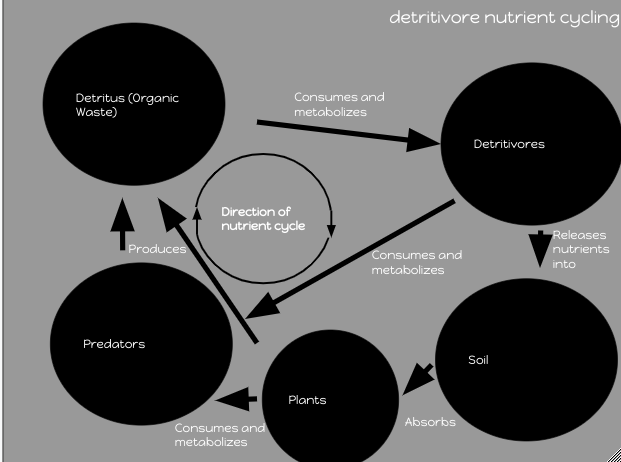
Detritivores vary in size from visible invertebrates to microscopic consumers. Many species process leaf litter, wood, dung or carrion, mechanically breaking particles and increasing surface area for microbial action. Through digestion and excretion they transform complex organic compounds into mineral forms and smaller organic fragments that are more accessible to microbes and plants. These processes influence soil texture, aeration and water retention and thus affect the wider ecosystem.
Ecological role and cycles
As agents of decomposition, detritivores return essential materials such as carbon and nutrients to the environment, linking consumer food webs to primary production. Their work is integral to the carbon cycle and other biogeochemical cycles, and it supports soil fertility, plant growth and long-term storage of organic matter. Detritivore activity is often a first or intermediate stage in decomposition, followed and complemented by microbial saprotrophs.
Examples and diversity
Common macrodetritivores include earthworms, woodlice, millipedes, many insects (for example dung beetles and some beetle larvae) and a variety of crustaceans and marine invertebrates such as sea cucumbers. The term also encompasses very small and microscopic consumers. Microbial organisms such as bacteria and fungi are often distinguished as decomposers because they typically digest externally, but they act together with detritivores to complete nutrient recycling.
Human interactions, applications and conservation
Human uses of detritivores include vermicomposting (using earthworms to convert organic waste into nutrient-rich castings) and the enhancement of soil fauna in restoration and sustainable agriculture. Conserving detritivore communities supports soil health, waste processing and pollutant breakdown. Threats to these communities include habitat loss, pollution, intensive tillage and some non-native species that alter decomposition rates. Research continues into how detritivore diversity affects ecosystem resilience and how best to manage soils for long-term function.
- See also: Decomposers
- Related concept: Carbon cycle
- Typical organism: Earthworm
- Microbial partners: Bacteria
- Terminology note: living versus dead material
Related articles
Author
AlegsaOnline.com Detritivore: organisms that consume and break down dead organic matter Leandro Alegsa
URL: https://en.alegsaonline.com/art/26915