
Carbon cycle: movement of carbon through Earth's systems
Overview of how carbon circulates among atmosphere, biosphere, oceans, soils and rocks, the processes that drive it, and how human activity alters the balance.
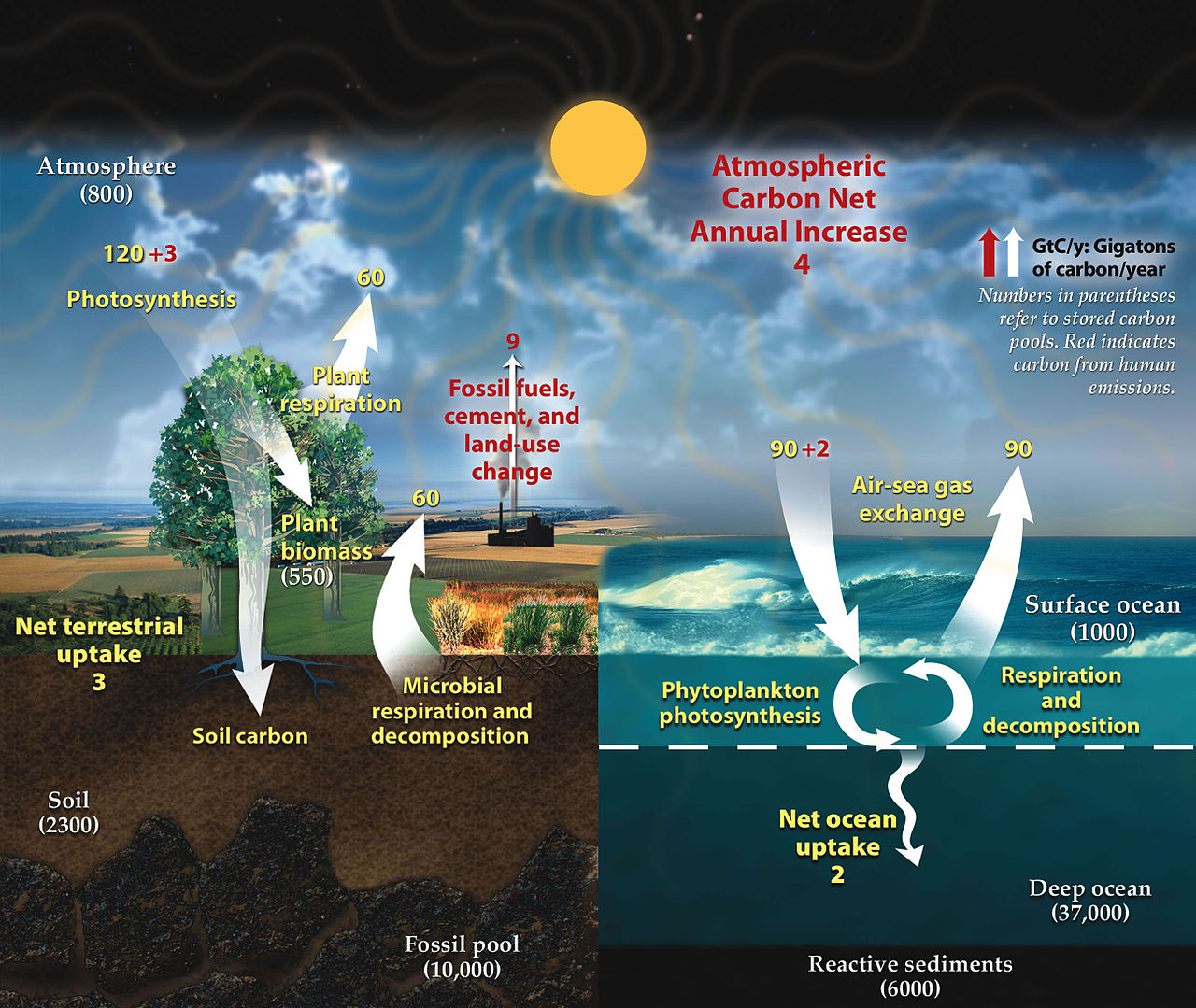
The carbon cycle describes the movement of carbon—one of Earth's fundamental chemical elements—between the atmosphere, living organisms, soils, oceans and the solid Earth. These exchanges occur over a wide range of timescales: some processes act over seasons or years, while others take millions of years. The balance among these flows regulates atmospheric carbon dioxide (CO2) and methane, which in turn influence climate, ecosystem productivity and the chemistry of seawater. For a concise introduction to the concept, see carbon cycle.
Image gallery
10 Images



Key reservoirs and flows
- Atmosphere: carbon exists mainly as CO2 and methane and is the fastest-changing reservoir.
- Terrestrial biosphere: forests, grasslands and other vegetation store carbon in living biomass through photosynthesis and release it by respiration.
- Soils and sediments: organic matter and partially decomposed plant material lock carbon in soils or accumulate as sediment.
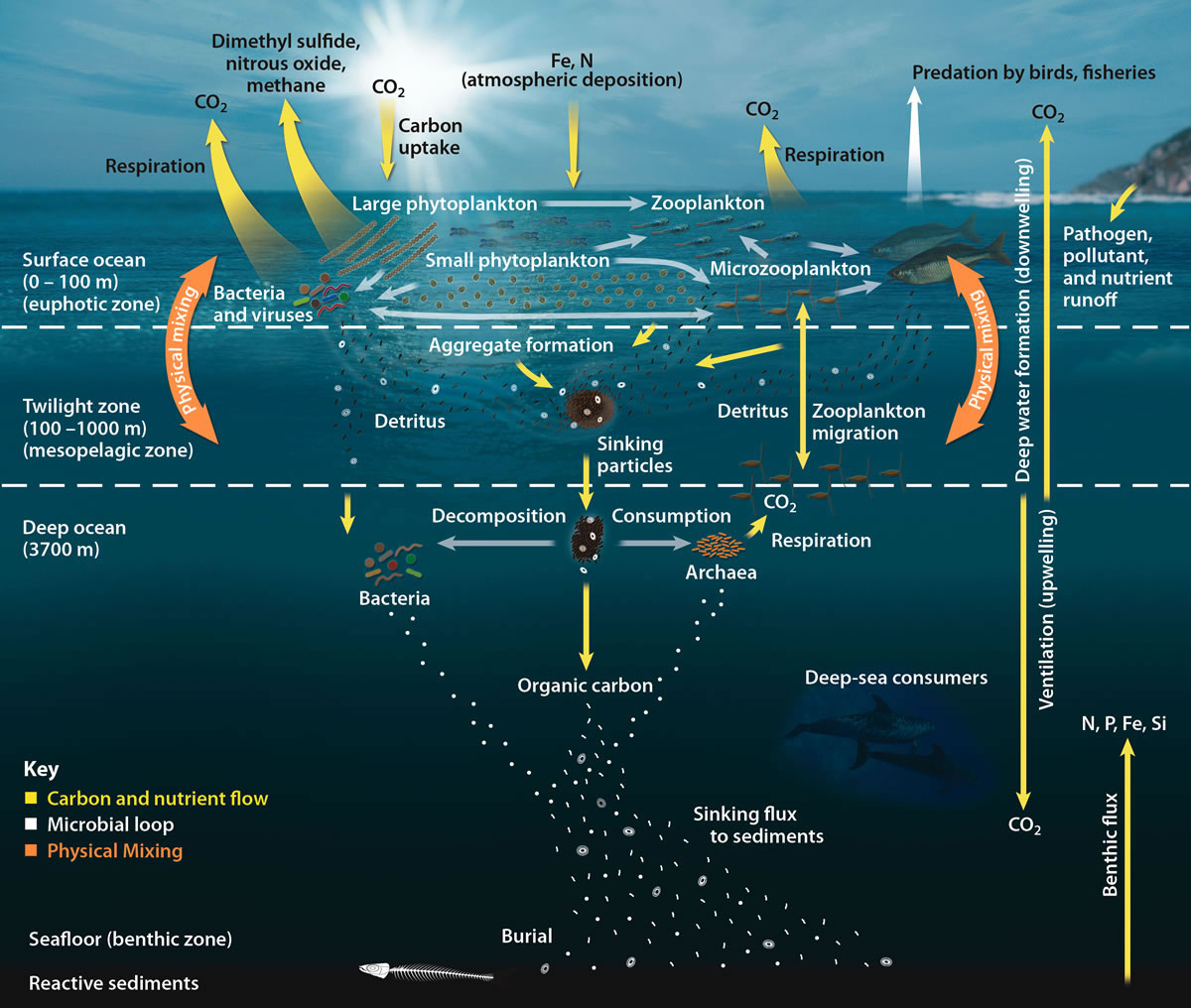
- Oceans: surface waters absorb CO2 and transport carbon to the deep ocean by biological and physical processes.
- Fossil fuels: deposits such as coal, oil and natural gas formed from ancient organic matter can store carbon for millions of years and release it when burned (fossil fuel combustion).
- Earth’s crust: vast amounts of carbon are bound in sedimentary rock and carbonate minerals like limestone.
Several key processes move carbon between these reservoirs. Plants and some microbes convert CO2 into organic molecules during photosynthesis, while animals and microbes return carbon to the atmosphere through respiration and decomposition. Combustion of biomass and fossil fuels transfers stored carbon rapidly into the air. In the ocean, CO2 dissolves at the surface and participates in chemical equilibria that can form carbonate ions and affect acidity.
Over geological timescales, weathering of rocks plays an important role: rainwater and dissolved CO2 form weak carbonic acid, which reacts with minerals during weathering and carries dissolved carbon to the sea. There it may precipitate as carbonate sediment, eventually becoming part of rock formations. Plate movements and subduction return some of this carbon to the surface; melting and volcanism release CO2 back to the atmosphere along active margins associated with plate tectonics.
Human activity has altered the natural balance of the carbon cycle. During most of Earth’s history volcanic emissions were the dominant long-term source of atmospheric CO2, but the industrial-era combustion of coal (coal), oil and gas has released large quantities of carbon dioxide in a short time. This enhancement of atmospheric CO2 is a principal driver of recent climate change and also increases the amount of dissolved CO2 in the oceans, a process that leads to ocean acidification and affects marine life.
The carbon cycle has practical and scientific importance. It underpins terrestrial productivity, determines soil fertility and influences the global climate system. Understanding which reservoirs absorb or emit carbon helps guide strategies for mitigation—such as protecting forests, improving soil management, or storing carbon in geological formations—and informs models that project future climate change. For further reading on the cycle’s components and dynamics see materials linked to carbon cycle and specialized references on fossil fuel impacts and rock carbon.
Questions and answers
Q: What is the carbon cycle?
A: The carbon cycle is the way carbon is stored and replaced on Earth. It involves processes that take hundreds of millions of years, as well as those that happen annually.
Q: What are the main ways that carbon gets into the carbon cycle?
A: The main ways that carbon gets into the carbon cycle are volcanoes, and the burning of fossil fuels like coal and gas. In recent history, people burning fossil fuels have been adding about a hundred times more CO2 to the air than volcanoes.
Q: How does photosynthesis remove CO2 from the atmosphere?
A: Photosynthesis by living organisms removes CO2 from the atmosphere by taking it in for energy production. Some of this gets released when they die and decompose, but a proportion also gets buried in sedimentary rock.
Q: How does weathering help to dissolve rocks?
A: Weathering by rain washes out CO2 in the form of dilute carbonic acid which then reacts with rock, helping to dissolve and destroy it. This process also ends up as sediment which helps complete the cycle.
Q: Where else does some CO2 get dissolved?
A: Some CO2 also gets dissolved in oceans where it can stay for long periods before being released back into atmosphere or becoming part of sedimentary rock.
Q: How much more CO2 has been added to air by people compared to volcanoes?
A: For every ton of CO2 added to air by volcanoes, about 100 tons of CO2 have been added to air by people through combustion over last hundred years.
Q:What is a large consumer of atmospheric Carbon Dioxide essential for dissolving rocks ?
A: Weathering is a large consumer of atmospheric Carbon Dioxide essential for dissolving rocks .
Related articles
Author
AlegsaOnline.com Carbon cycle: movement of carbon through Earth's systems Leandro Alegsa
URL: https://en.alegsaonline.com/art/16875
Sources
- users.rcn.com : users.rcn.com
- home.clara.net : "Energy Resources: Fossil Fuels"