
Diaphragm (mammalian respiratory muscle)
The diaphragm is a dome-shaped skeletal muscle that separates thoracic and abdominal cavities in mammals and plays the central role in breathing, posture, and several physiological maneuvers.
Overview
The diaphragm is a broad, dome-shaped sheet of skeletal muscle and central tendon that forms the floor of the thoracic cavity and the roof of the abdominal cavity in mammals. Often described simply as the primary muscle of respiration, the diaphragm works with the ribs and other muscles to change thoracic volume and drive airflow into and out of the lungs.
Image gallery
8 Images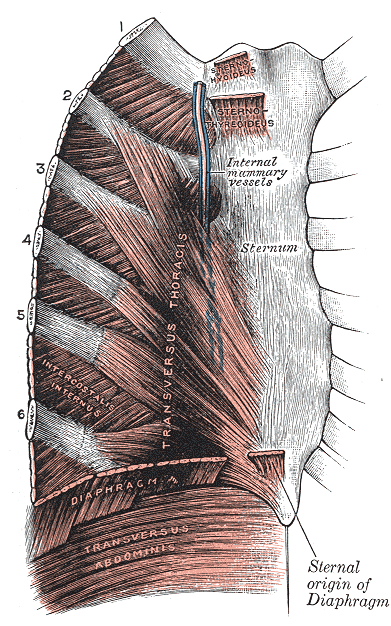



Anatomy and parts
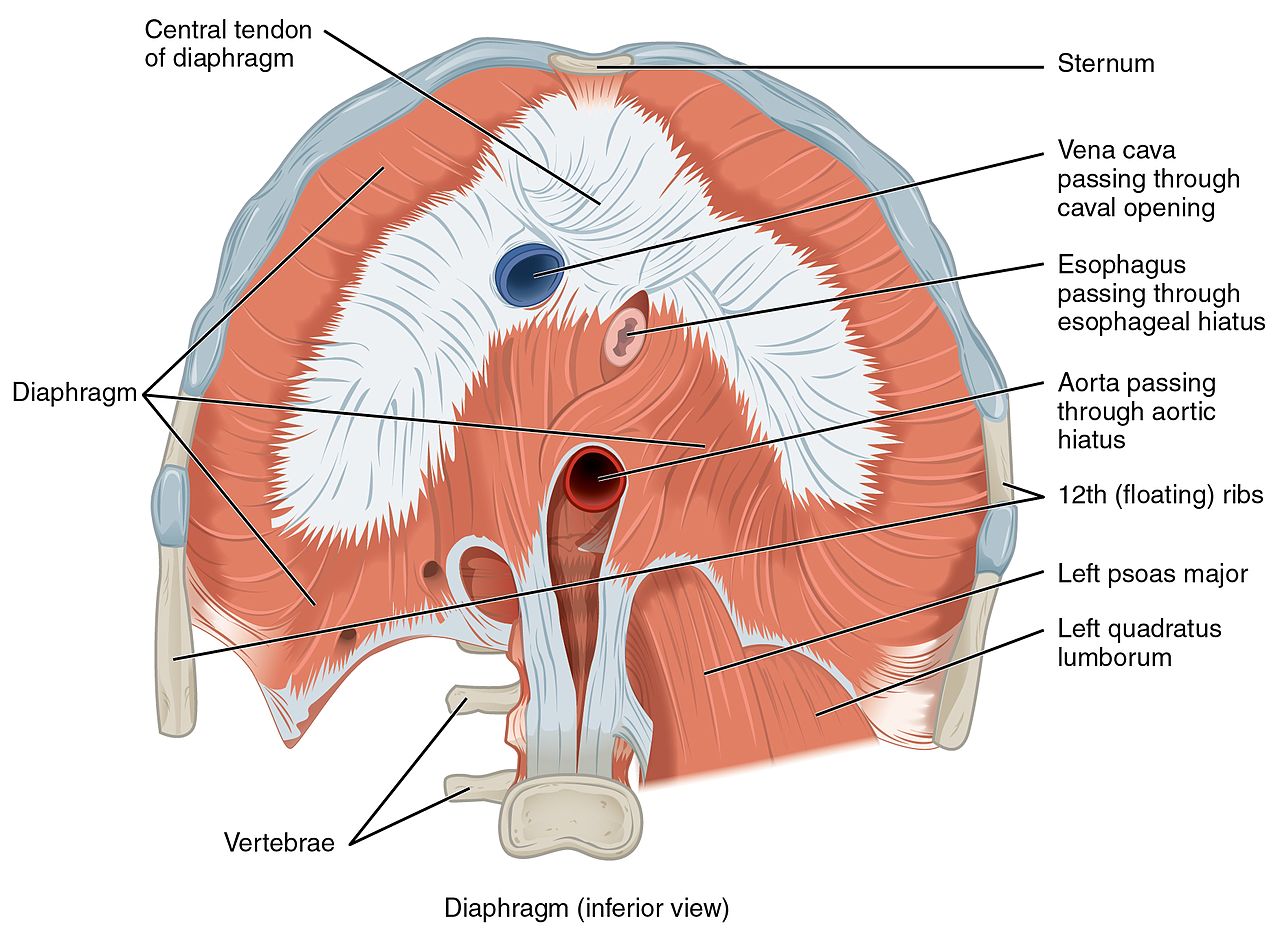
Structurally the diaphragm has muscular slips that arise from the inner surface of the lower ribs, the sternum and the lumbar vertebrae and converge on a central aponeurotic tendon. Major features include:
- Central tendon: a strong, noncontractile sheet where muscle fibers insert.
- Muscular parts: sternal, costal and lumbar portions that attach to the ribcage and spine.
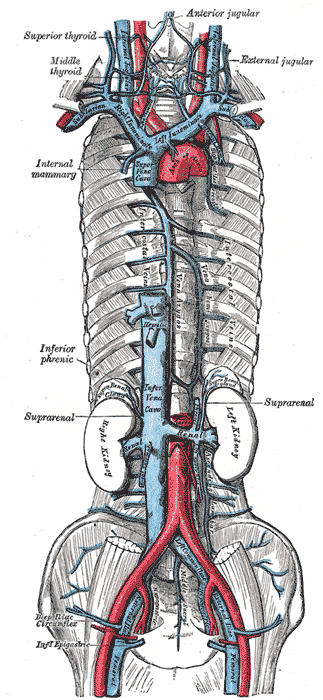
- Openings (hiatuses) for the inferior vena cava, esophagus and aorta that allow passage of vessels and the alimentary tract.
Function and examples
When the diaphragm contracts it flattens, increasing thoracic volume and lowering intrathoracic pressure; this draws air into the lungs. Relaxation allows elastic recoil and expiration. The diaphragm also contributes to actions that increase intra-abdominal pressure such as coughing, vomiting, bearing down during defecation or childbirth, and stabilizing the trunk during lifting.
Innervation, development and evolution
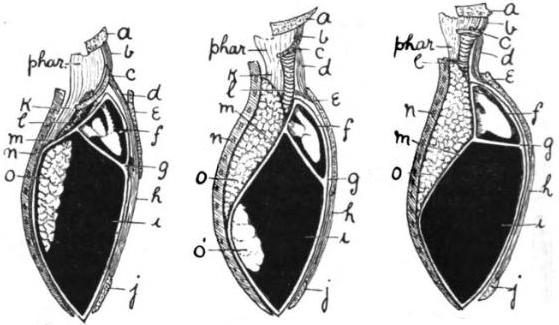
The diaphragm is innervated primarily by the phrenic nerve, whose motor fibers originate from cervical spinal segments (commonly summarized as C3–C5). Embryologically it develops from several sources including the septum transversum and pleuroperitoneal membranes. Its presence is a distinctive feature of mammals, and variations in shape and size reflect different breathing mechanics across species (mammals).
Clinical significance and distinctions
Damage to the phrenic nerve or direct muscle injury can cause partial or complete diaphragmatic paralysis, impairing ventilation. Hiatal hernia, traumatic rupture, and congenital defects such as diaphragmatic hernia are important clinical problems that affect breathing and digestion. Understanding diaphragm anatomy is central to anesthesia, critical care and surgery because of its role in respiration and its relationships with thoracic and abdominal organs.
Related articles
Author
AlegsaOnline.com Diaphragm (mammalian respiratory muscle) Leandro Alegsa
URL: https://en.alegsaonline.com/art/27139