
Corn Laws: British grain tariffs and their 19th-century repeal
British 19th-century laws that restricted grain imports to protect landowners, sparking political conflict, economic debate and eventual repeal in 1846 with wide social consequences.
The Corn Laws were a collection of British statutes in the early 19th century that regulated the importation and taxation of cereal grains. Often described simply as restrictions or trade laws, they imposed duties and bans intended to keep domestic grain prices high enough to protect rural landowners and farmers. The measures affected food prices, wages and public opinion during a period of industrial growth, urbanization, and post-war adjustment after the Napoleonic Wars. Contemporary debates treated "corn" as a generic term for cereal crops rather than maize.
Image gallery
5 Images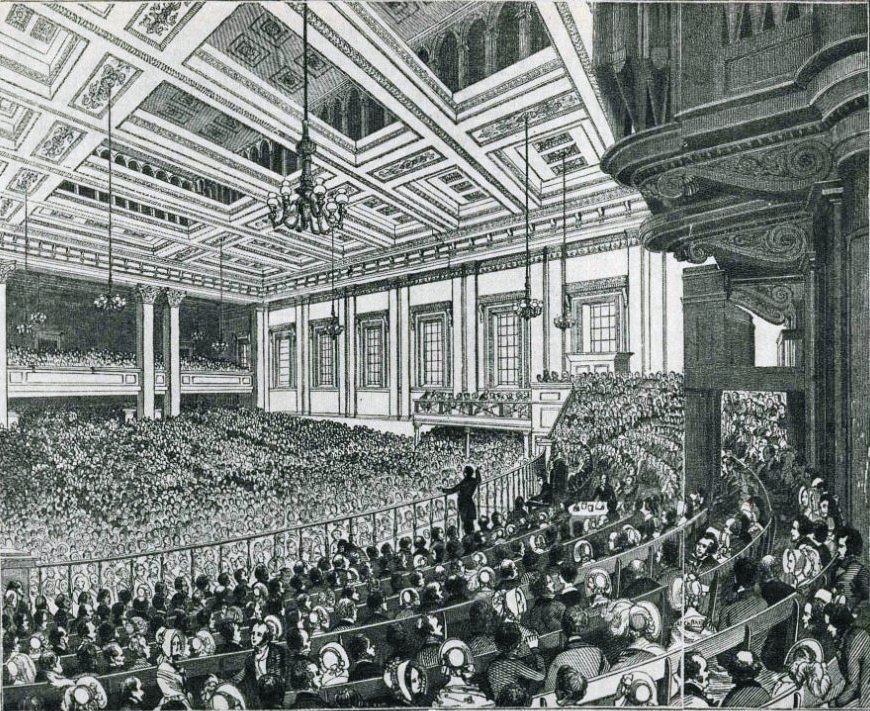



Provisions and how they worked
The initial package enacted in 1815 set a price threshold and import rules: if the domestic price of a quarter of wheat fell below a stipulated level — famously cited as 80 shillings in some formulations — foreign grain faced strong import restrictions or was excluded entirely, while higher prices allowed imports with reduced or no duties. Later modifications introduced a sliding scale of duties and partial relaxations in 1822 and 1828, designed to respond to market prices. These fiscal mechanisms can be understood as a form of agricultural protectionism that linked tax policy to commodity prices and to the interests of the landed classes.
Political struggle and repeal
The laws provoked long-running political conflict. Urban manufacturers and wage earners argued that high grain prices raised the cost of living and depressed real wages, while rural landowners emphasized national self-sufficiency and stable farm incomes. Economists and public intellectuals entered the debate: for example, David Ricardo was a prominent critic who argued that such protectionism harmed the wider economy, while others, including Thomas Malthus, defended agricultural safeguards as prudent policy. The pressure from the organized campaigning of groups such as the Anti-Corn-Law League, together with changing party calculations, culminated in the Conservative government under Sir Robert Peel moving to repeal the laws in 1846.
- Legal adjustments: 1828 sliding-scale reforms attempted compromise but left core protection intact.
- Organized opposition: mass petitioning, public meetings and coalition politics played a decisive role in repeal.
- Government split: Peel’s decision to repeal divided his party and altered the British political landscape.
Social and economic consequences
The repeal shifted policy toward freer trade in grain and signalled a broader move away from nineteenth-century tariff protection for agriculture. It reduced the formal legal barriers to importation, benefiting urban consumers and industrial capitalists by lowering food costs and easing wage pressures. At the same time, farmers and landlords faced competitive adjustment. The timing of repeal coincided with the catastrophic potato failures in Ireland; estimates suggest that the Irish Potato Famine resulted in the deaths of well over one million people and mass emigration during the 1840s, a calamity that shaped contemporary opinion about relief, trade and moral responsibility.
Legacy and interpretation
Historians and economists continue to study the Corn Laws as a case study in the political economy of protectionism, the rise of organized advocacy, and the transition toward mid-century free trade doctrines. The episode illustrates how fiscal rules designed to favor particular social groups can produce broad economic effects and contested moral judgments. Debates that featured figures like David Ricardo and public intellectuals of the day remain touchstones in discussions about protectionism, comparative advantage and the proper scope of state intervention in markets. For legislative texts, tax details and period reactions see contemporary sources and collections of parliamentary records and analyses at statute compilations, parliamentary chronologies at archival summaries, and popular histories linked from national narrative pages or economic reviews at specialist sites. For biographies and political context consult entries and studies accessible via law compendia and political biographies. Additional reading and primary documents are indexed at trade law collections and economic treatises catalogues like those associated with 19th‑century fiscal history.
Related articles
Author
AlegsaOnline.com Corn Laws: British grain tariffs and their 19th-century repeal Leandro Alegsa
URL: https://en.alegsaonline.com/art/23116