
Alberto Granado: Argentine scientist, traveller, and educator
Argentine biochemist and companion of Che Guevara on the 1951 motorcycle journey; later a leprosy clinic worker and Cuban medical educator whose life inspired The Motorcycle Diaries.
Alberto Granado (8 August 1922 – 5 March 2011) was an Argentine biochemist and university professor whose early travels and medical work became part of a much wider cultural and historical story. Best known for the 1951 motorcycle journey across South America with his friend Ernesto "Che" Guevara, Granado combined scientific training, political engagement and hands‑on public health work in a career that later led him to Cuba.
Image gallery
3 Images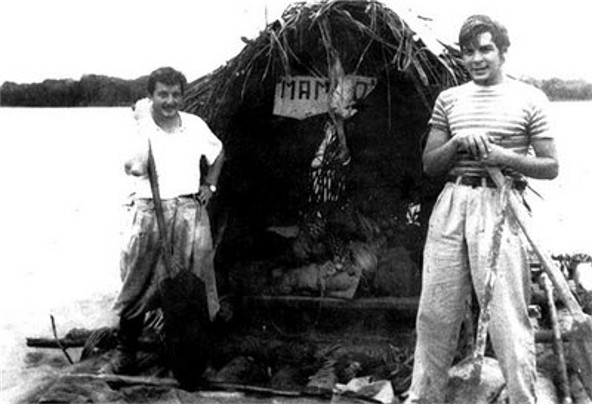


Early life, education and activism
Born in Hernando, Córdoba Province, Granado studied natural sciences at the University of Córdoba, focusing on chemistry and pharmacology. While a student he became active in campus politics and participated in demonstrations against Argentina's government, an involvement that briefly led to detention. His scientific background and social concerns shaped his practical approach to medicine and public health throughout his life; contemporary descriptions often label him a biochemist who worked at the intersection of laboratory research and community medicine.
The 1951 journey and its aftermath
In 1951 Granado and his friend Ernesto Guevara set out on a long trip across South America on a second‑hand motorcycle. The route, recorded in personal journals, covered thousands of kilometres and exposed them to the continent's social inequities and public health challenges. Granado's journal and photographic records were later one of the sources for the cinematic account in Walter Salles' film The Motorcycle Diaries (2004). During the trip they reached cities such as Caracas and met many people whose lives influenced their future choices; Guevara returned to finish his medical studies while Granado remained to work in clinical settings.
Work in leprosy care and public health
After the journey Granado devoted himself to treating infectious and tropical diseases, spending significant time at a leprosy clinic where he combined bedside care with efforts to improve sanitary conditions and community outreach. His practical experience in rural and under‑served areas underscored a belief in accessible medical services and informed his later role as an educator.
Life and career in Cuba
In the early 1960s Granado relocated to Cuba, where he helped to build medical education programmes, notably contributing to a school of medicine at the University of Santiago and later working in Havana. There he engaged in scientific research, teaching and public health administration during a period of major reorganization of Cuban health services. His move reflected both personal ties and a long‑term commitment to health care in Latin America.
Legacy and notable facts
- Granado's friendship with Che Guevara began at university and the pair's overland trip in 1951 has been recounted in journals and films; the travel notes offer firsthand observations of mid‑20th century Latin America (Che Guevara).
- He is remembered for bringing scientific training into community medicine and for advocating practical solutions to endemic diseases.
- His life bridged Argentina, Venezuela and Cuba; he died in Havana and requested that his ashes be scattered in Cuba, Argentina and Venezuela.
- Accounts of his journey and later work appear in books, interviews and the film adaptation; those resources provide complementary perspectives on his role as both a scientist and a traveller.
Granado's story is often cited as an example of how scientific training, political awareness and direct patient care can combine in a single career. For further reading on particular episodes—his university years, the motorcycle trip, his leprosy clinic work and his Cuban teaching career—see specialized biographies and archived interviews that document both the personal and professional dimensions of his life (biochemist, South America, motorcycle, The Motorcycle Diaries, chemistry, pharmacology, leprosy, Cuba, Havana, Che Guevara). Additional archival materials and memorials can be located through academic and cultural institutions that preserve eyewitness accounts and documentary records (Caracas, Venezuela).
Related articles
Author
AlegsaOnline.com Alberto Granado: Argentine scientist, traveller, and educator Leandro Alegsa
URL: https://en.alegsaonline.com/art/2131
Sources
- nytimes.com : "Che Guevara's 'Motorcycle Diaries' Partner Dies at 88 - NYTimes.com"
- worldcat.org : 0362-4331