
Chinchilla: small Andean rodents known for dense fur and social behavior
Overview of chinchillas: their appearance, habitat in the Andes, behavior, conservation history, use in fur farming, and basic care as pets.
Overview
Chinchillas are small, stocky rodents native to the high Andes of South America. Two living species make up the genus Chinchilla: the long-tailed and the short-tailed types. They are largely crepuscular and agile, often compared in size and habits to ground-dwelling squirrels; both similarities and differences are described in more detail below. For general behavioral context see crepuscular and comparisons with ground squirrels.
Image gallery
7 Images


Physical characteristics
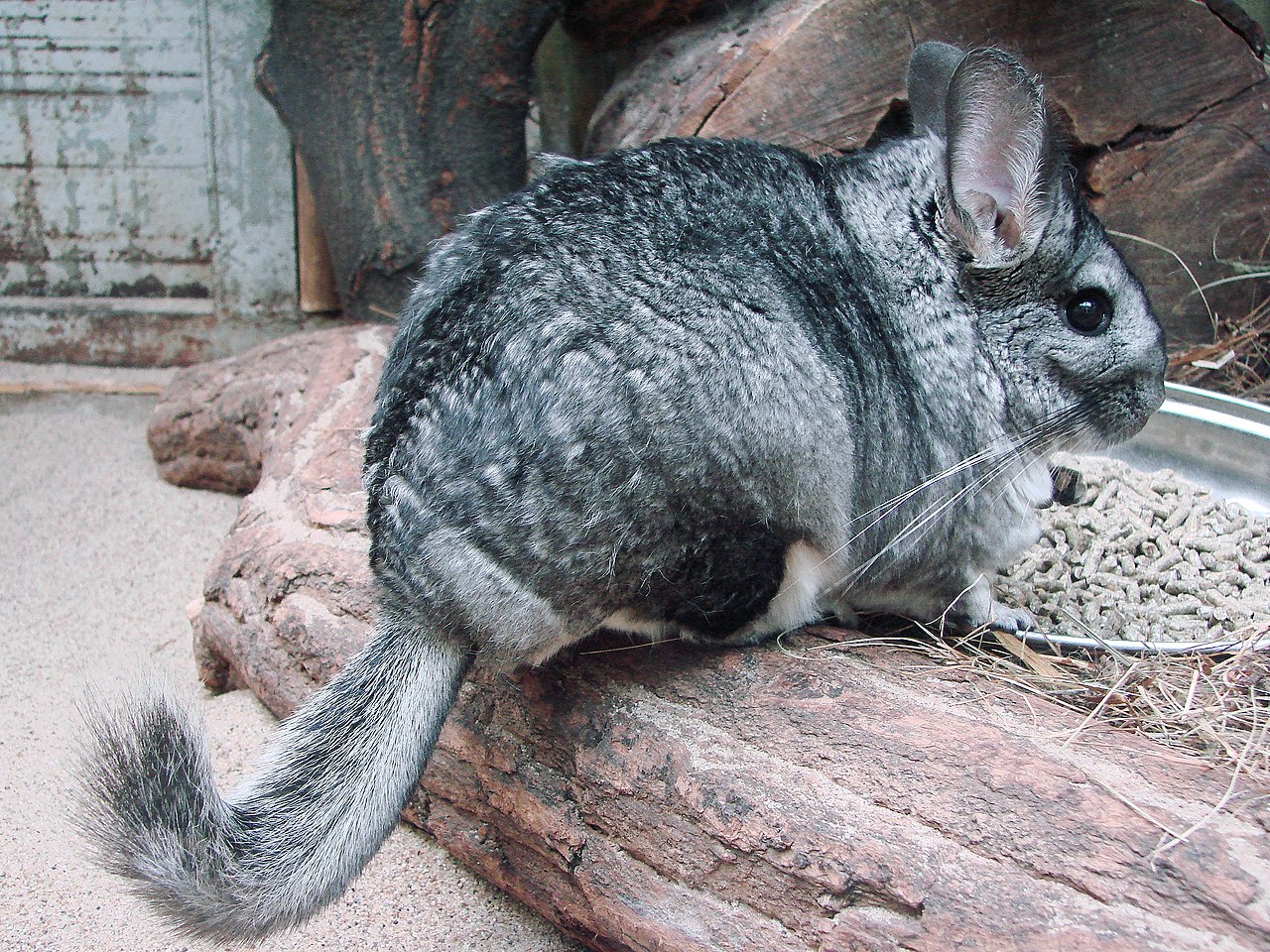
These animals are best known for extremely dense, soft fur that gives them a velvety appearance. Their bodies are compact with bushy tails, large eyes adapted for low-light activity, and strong hind limbs for jumping and climbing among rocky outcrops. The fur, historically prized for garments and insulation, is one of their defining biological traits; an overview of human use of their pelage appears later in this article (fur).
Habitat, range and social structure
Chinchillas inhabit arid, rocky ecosystems at high elevations in the Andes. Historically their range included parts of Bolivia, Peru, Argentina and Chile, but wild populations today are severely reduced and largely restricted. In the wild they form colonies, commonly called herds, which provide social structure and help with vigilance against predators. Their taxonomic relationships place them with relatives such as the viscachas within the rodent group and the family Chinchillidae, which includes related species like viscachas.
Behavior, diet and reproduction
Chinchillas are predominantly active around dawn and dusk. They are herbivores that feed on a variety of plant materials—grasses, seeds, leaves and bark—requiring a high-fiber diet. Their social behavior ranges from tightly bonded groups to smaller family units, depending on habitat and resources. Reproductive biology in chinchillas includes relatively long developmental periods compared with many small rodents, and they invest considerably in a few well-developed young rather than large litters.
History, conservation and human use
The name "chinchilla" derives from the indigenous Chincha people of the Andes, who historically used the animals' dense fur. Overexploitation for pelts, combined with habitat loss, caused precipitous declines in wild populations by the late 19th and early 20th centuries. Today both species face significant threats and are afforded legal protections in many countries. Most animals used in commercial fur production come from managed breeding operations rather than the wild. For background on cultural origin see Chincha people and for historical range see Andes.
Chinchillas as pets and in captivity
Domestic chinchillas, typically derived from captive lines of one species, are kept as companion animals around the world. They can live for more than a decade in well-managed care. Owners must provide cool, dry environments, a high-fiber diet, and opportunities for dust baths that help maintain their fur. Chinchillas are sensitive to heat and humidity and require secure enclosures with opportunities for climbing and chewing to wear continuously growing teeth.
Quick facts and notable distinctions
- Taxonomy: genus Chinchilla, family Chinchillidae.
- Related groups: viscachas share similar habitats and behaviors.
- Cultural link: named after the Chincha people, who prized their fur (fur).
- Geographic notes: historically present across several Andean nations including Bolivia, Peru, Argentina and Chile; modern wild records are restricted and conservation-dependent.
- Behavioral note: largely crepuscular and live in social groups called herds.
For more detailed species accounts and conservation assessments consult specialized resources and regional wildlife authorities. General introductory references on their activity patterns and habitat can be found via links labeled comparative mammals and regional Andean ecology portals such as Andes.
Related articles
Author
AlegsaOnline.com Chinchilla: small Andean rodents known for dense fur and social behavior Leandro Alegsa
URL: https://en.alegsaonline.com/art/19743
Sources
- brainmuseum.org : "brainmuseum.org"
- chinchillasounds.de : "chinchillasounds.de"
- chinchilla-mutationen.de : "chinchilla-mutationen.de"
- chinchilla.co : "Chinchilla facts"
- chinchilla-brevicaudata.de : "chinchilla-brevicaudata.de"
- chinchilla-lexikon.de : chinchilla-lexikon.de
- chin.dk : chin.dk/eng/facts.html
- animal-world.com : "Chinchilla"