
Chinese mountain cat (Felis bieti)
A little-known small wildcat native to the high plateaus of western China. Covers appearance, behavior, taxonomy debates, habitat, threats and conservation measures.
The Chinese mountain cat, also called the Chinese desert cat, is a little-known small felid found on the high plateaus and arid grasslands of western China. It is generally treated as a member of the genus Felis, the group that includes the common small wildcats and the ancestor of domestic cats. Field observations are scarce, so much of what is known comes from museum specimens, camera-trap records and a limited number of ecological studies.
Image gallery
3 Images

Appearance and behaviour
This cat is stockily built for life in cold, open country, with dense fur, relatively short legs and a broad face. Its coat is usually a pale, sandy or greyish color with faint markings that help it blend into steppe and plateau vegetation. The tail is ringed and relatively thick. It is solitary and secretive, with crepuscular or nocturnal activity patterns. Detailed information about its social system and reproduction is still limited.
Habitat and distribution
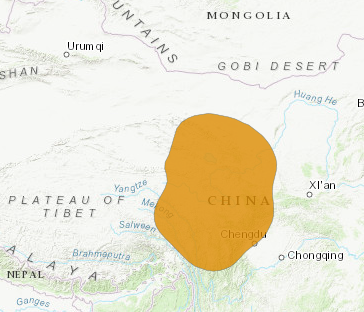
The species is native to the Tibetan Plateau and adjacent regions of western China, reported from provinces such as Qinghai and neighboring areas including parts of Gansu, Sichuan and the Tibet Autonomous Region. It favors high-altitude grasslands, alpine steppe and semi-desert areas where small mammals are available. Records are sparse, and its true distribution may be patchy due to low detection rates.
Diet and ecology
Diet studies and stomach-content reports indicate a reliance on small mammals such as pikas and rodents, supplemented by birds and insects when available. As a mid-sized predator in a harsh environment, the Chinese mountain cat plays a role in controlling populations of burrowing rodents, which can influence vegetation and grazing dynamics in plateau ecosystems.
Taxonomy and research
Taxonomic treatment has varied: many authorities treat it as a distinct species (Felis bieti), while others have proposed affinity or subspecific placement relative to the wildcat complex. Ongoing genetic and field research aims to clarify its relationships to other small felids and to domestic cats. For general background on small wildcats see the entry for small wild cat and regional studies of felids in western China.
Conservation status and threats
Because the Chinese mountain cat is rarely seen, its conservation status is difficult to assess precisely. Known threats include habitat degradation from overgrazing and development, reduction of prey populations, accidental killing or persecution, and potential genetic or disease interactions with feral or free-roaming domestic cats. Conservation efforts focus on improving survey coverage, protecting key habitats, engaging local communities, and conducting genetic monitoring to guide management.
- Key features: dense fur, cryptic coloration, thick tail.
- Primary habitat: high-elevation grassland and semi-desert.
- Main conservation needs: better surveys, habitat protection, research.
Despite its elusive nature, the Chinese mountain cat is a distinct element of plateau biodiversity. Strengthening field studies and incorporating local ecological knowledge are essential steps toward understanding and conserving this uncommon felid.
Tags
Related articles
Author
AlegsaOnline.com Chinese mountain cat (Felis bieti) Leandro Alegsa
URL: https://en.alegsaonline.com/art/19767
Sources
- bucknell.edu : "Order Carnivora"
- google.com : Mammal Species of the World
- worldcat.org : 62265494