
Chaturanga: early Indian predecessor of modern chess
Chaturanga is an ancient Indian board game, emerging in or before the 6th century CE, regarded as the principal ancestor of chess. This article outlines its name, pieces, reconstructions, spread (shatranj) and legacy.
Overview
Chaturanga is the historical name given to a family of Indian strategy board games that emerged in or before the 6th century CE and is widely regarded as the earliest direct ancestor of modern international chess. The name chaturanga literally means "four divisions" and evokes the four arms of an army; surviving references are fragmentary, and most modern descriptions come from later texts, comparative study and archaeological or artistic depictions. Scholarly reconstructions draw on linguistic, literary and material evidence to propose plausible rule sets and piece moves general overview.
Image gallery
2 Images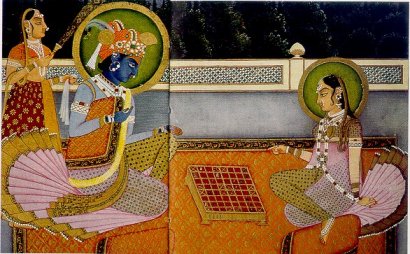

Name and military imagery
The title chaturanga refers to infantry, cavalry, elephantry and chariotry, the principal military divisions of classical Indian armies. These correspond in later chess to the pawn, knight, bishop and rook respectively, though direct equivalence in movement is uncertain. The principal non-pawn officer was the mantri or minister (sometimes called the raja's advisor), a male attendant rather than a female sovereign; that piece later evolved into the queen in European chess after many centuries of change linguistic note and military context.
Board, pieces and common reconstructions
Most reconstructions of chaturanga use an eight-by-eight checkered board like the modern chessboard, but other regional boards and variant sizes are attested in South Asian tradition. Typical piece types considered in reconstructions include:
- Infantry (pawns) — numerous small pieces in front of the main line that advance and capture in constrained ways; promotion rules vary between reconstructions.
- Cavalry — mounted troops acting as leapers; the knight of modern chess is descended from this unit.
- Elephantry — representing war elephants; different sources assign it a short diagonal step, a limited leap, or other restricted diagonal moves, which later developed into the bishop's role.
- Chariotry — long-range linear movers similar in concept to the rook.
- Mantri (minister) — a royal advisor or attendant with limited movement compared with the later queen.
Concrete rules are not preserved in a single authoritative source; historians reconstruct likely move-sets from Sanskrit and Persian writings, later commentaries, and the rules of related regional games. Some reconstructions allow pawn promotion to the mantri or to other units, while others restrict promotion entirely. Scholarly summaries and experimental rule sets are available for those wishing to explore different reconstructions primary references and reconstruction review.
Historical development and geographic spread
Chaturanga developed in the northern Indian subcontinent, commonly dated to the Gupta era or earlier, and spread westward into Persia and beyond. In Persia the game adapted to local tastes and languages and became known as shatranj; this form reached the Islamic world and later medieval Europe, bringing further rule changes. Over several centuries of exchange and modification the game underwent important innovations: the transformation of the minister into the more powerful queen and the expansion of the bishop's mobility were decisive in creating the faster, more tactical modern game by the late 15th century in Europe Persian transmission and shatranj studies.
Rules, variants and scholarly debate
Because contemporary accounts are limited, many aspects of chaturanga must be described cautiously. There is no single canonical rule set; instead chaturanga should be regarded as a family of related games with regional variations. Key points of debate among historians and game researchers include the exact move of the elephant, the procedure and options for pawn promotion, and the size or pattern of boards used in different periods. Comparative studies help locate chaturanga within a wider context of Indian and Central Asian board-games and their transformations comparative study and academic summary.
Legacy and cultural significance
The principal legacy of chaturanga is its role as the ancestor of shatranj and, through further development, modern chess. Its military imagery influenced how strategy was conceptualized, and its diffusion illustrates the exchange of ideas along trade routes and through political contact. Chaturanga continues to interest historians, players and museum curators; reconstructions are played by enthusiasts and used in teaching to illustrate the long evolution of strategic thought in board games popular history, museum notes and scholarly resources.
Further reading and resources
- General overview of chaturanga
- Linguistic and cultural notes
- Primary historical references and translations
- Context of ancient Indian military organization
- Persian and Islamic transmission (shatranj)
- Studies on shatranj and medieval sources
- Reconstructions and rule variants
- Comparative studies of related board games
- Accessible popular histories and introductions
- Museum collections and descriptions
- Academic summaries and bibliographies
- Further scholarly resources and databases
Related articles
Author
AlegsaOnline.com Chaturanga: early Indian predecessor of modern chess Leandro Alegsa
URL: https://en.alegsaonline.com/art/19021