
Knight (chess piece)
The knight is a cavalry-themed chess piece that moves in an L-shape, can jump over pieces, and is prized for forks, outposts and close-range tactics; each side begins with two knights.
Overview
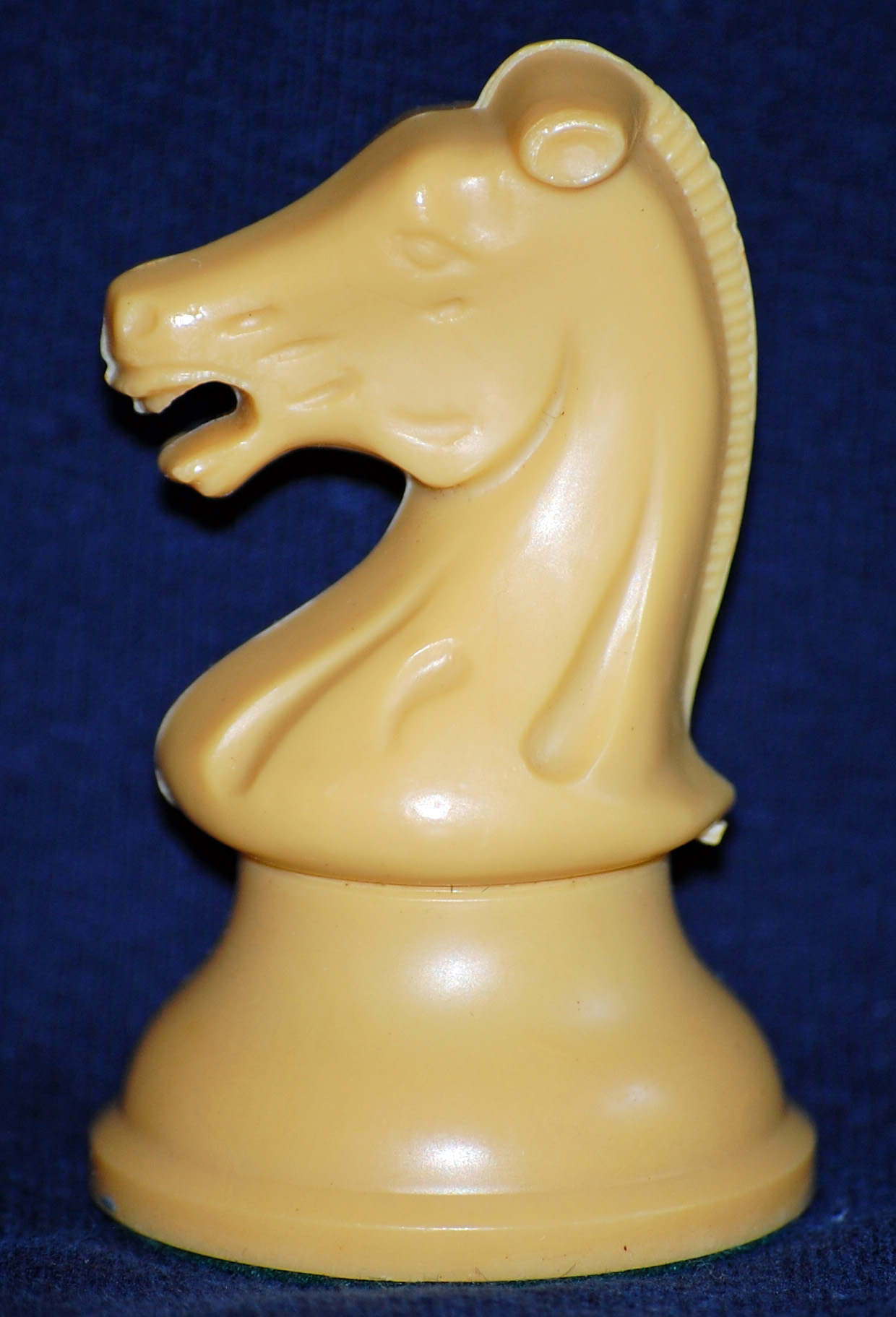
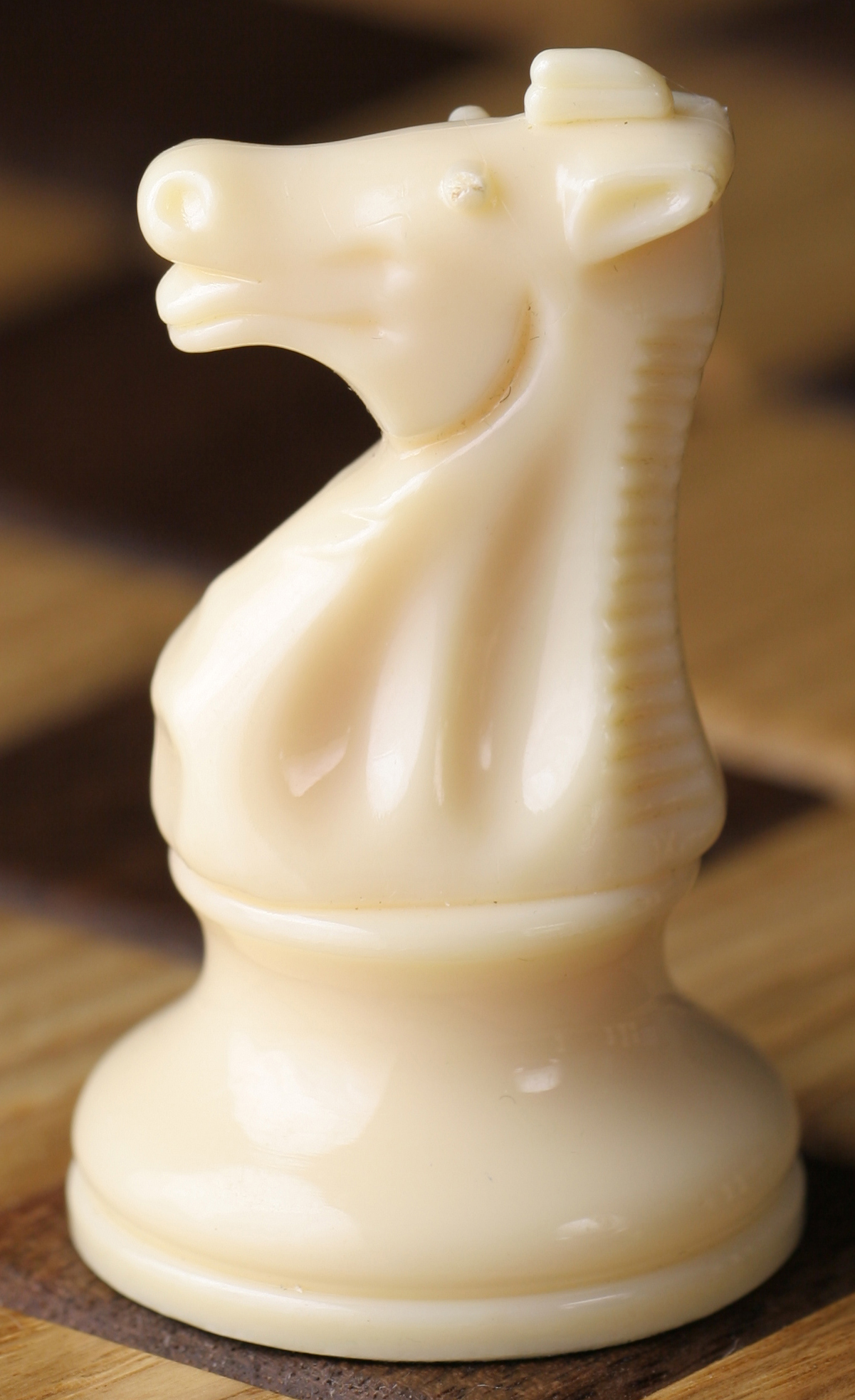
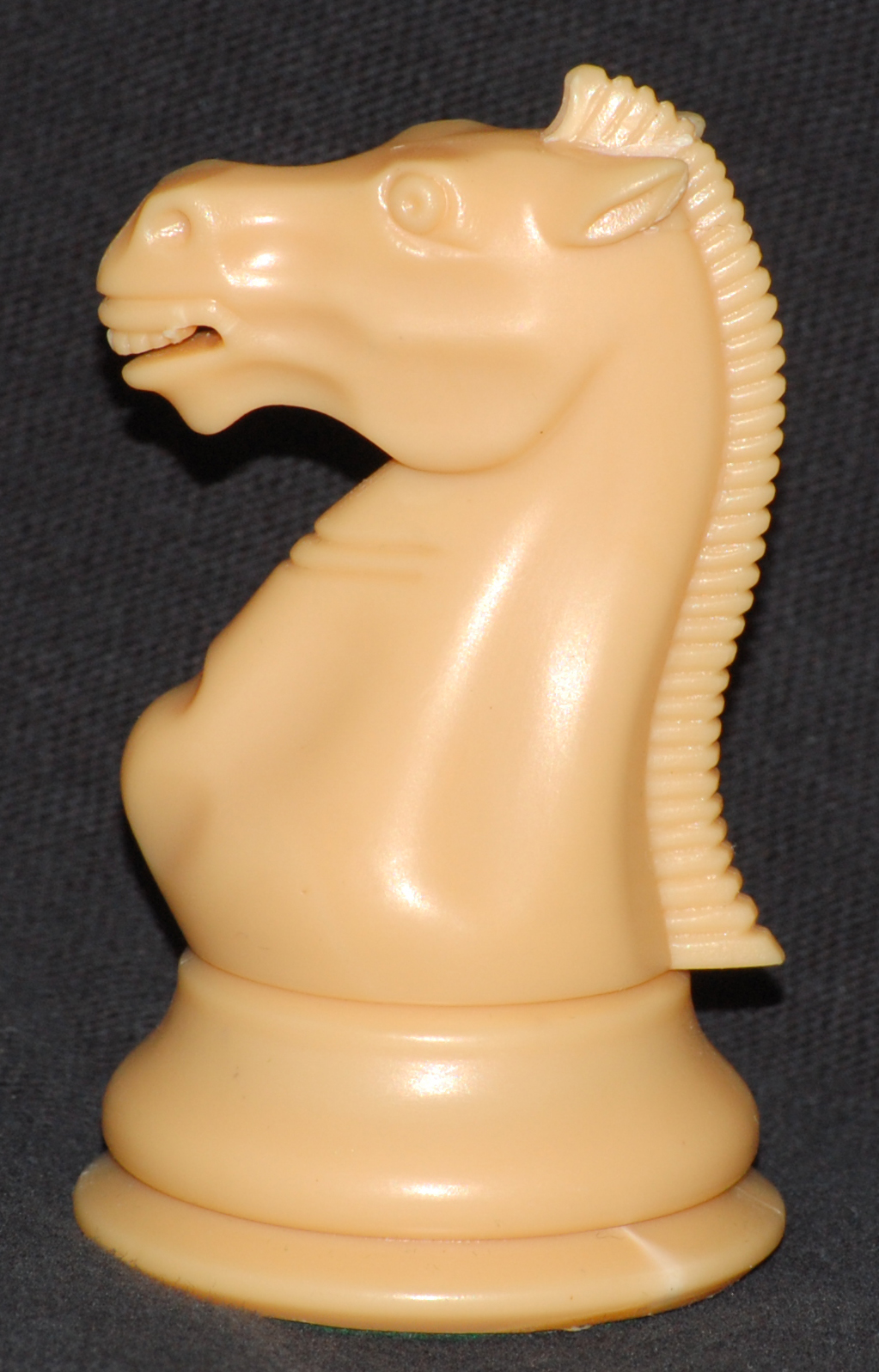
The chess piece known as the knight is traditionally represented by a stylized horse head and neck. Each player begins a standard game with two knights, placed on the b- and g-files behind the pawns. Unlike sliding pieces such as the bishop and the rook, the knight moves in a fixed short pattern and is especially valuable in crowded or closed positions.
Image gallery
10 Images




Movement and characteristics
A knight moves in an L-shaped pattern: two squares in one orthogonal direction and then one square perpendicular (or one then two). Because the total displacement is three squares, a knight always lands on a square of the opposite color from its starting square. It is the only piece that can leap over intervening pieces, which allows it to reach squares other pieces cannot in congested situations.
Notation, starting squares and relative value
In modern algebraic notation the knight is denoted by N; older descriptive scores sometimes used Kt. The usual starting squares are b1 and g1 for White, and b8 and g8 for Black. In practical material valuation a knight is commonly compared to a bishop and assigned approximately three points; its true worth depends on pawn structure and the phase of the game.
Strategic uses
Knights excel at short-range maneuvers and thrive in closed positions where pawn chains and blocked files limit long-range pieces. A well-placed knight on an outpost — a square supported by its own pawn and not easily attacked by opponent pawns — can exert sustained influence. Knights are also effective when rerouted via maneuvering sequences to reach more activity on the center or the opponent's position.
Tactical motifs
One of the knight's most famous tactical weapons is the fork: a single knight attack that simultaneously threatens two or more enemy units, for example a king and a queen or a major piece and another valuable target. Knights can also participate in mating nets; the smothered mate is a well-known pattern in which a knight delivers mate to a king blocked by its own pieces.
Knights versus bishops and endgame considerations
The relative strength of a knight and a bishop varies with position. Bishops generally gain in open positions with long diagonals and pawns on both wings, while knights are often superior in closed structures and in positions with fixed pawn chains. In many endgames the bishop's long range and ability to control squares from a distance become decisive, but knights remain potent in positions with blockade and complex pawn configurations.
History and representation
The horse-head design emphasizes the piece's cavalry origin and has been standard in European sets for centuries. In printed game scores a specific figurine often represents the knight; in algebraic notation the single letter N is used to distinguish it from the king. The knight's unique movement and ability to jump give it a special tactical and strategic role in chess at every level of play.
- Key traits: L-shaped move, can jump, changes square color each move.
- Common tactics: forks, outposts, smothered mate and short-range coordination.
- Notation: N (algebraic), Kt (older); two knights per side at the start.
For introductory rules see a general chess rules guide, or consult standard strategy texts for examples of knight maneuvers and tactical patterns. The knight remains one of the most tactical and characterful pieces in the game, combining limited range with surprising connectivity and threat potential.
Author
AlegsaOnline.com Knight (chess piece) Leandro Alegsa
URL: https://en.alegsaonline.com/art/53980