
Pawn (chess piece): movement, rules, and strategic role
The pawn is the least powerful chess piece but crucial to strategy. It advances forward, captures diagonally, can promote on the far rank, and determines structure through passed, doubled, isolated and backward pawns.
Overview
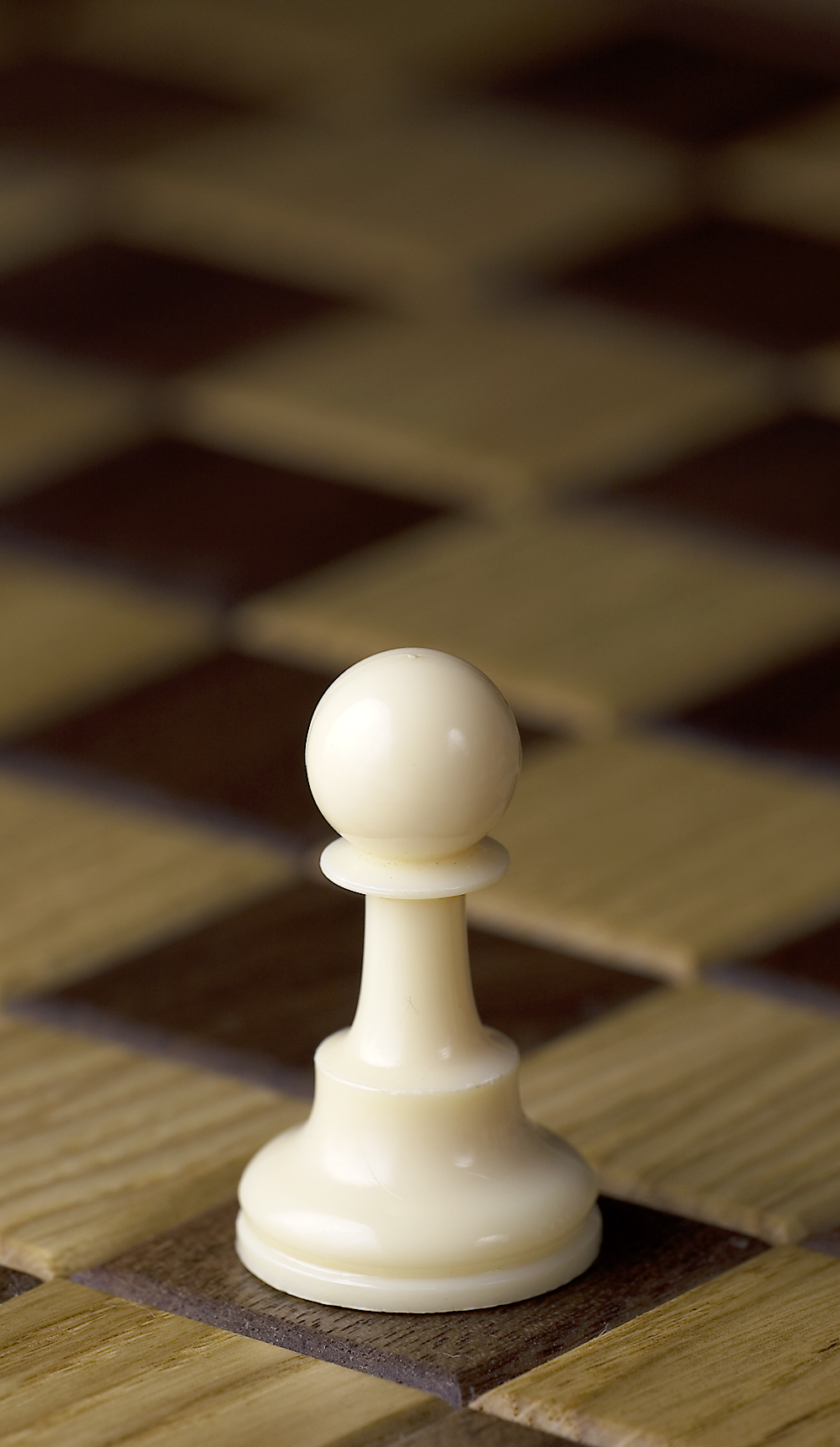
The pawn (♙ for White, ♟ for Black) is the most numerous and least individually powerful piece in the game. In many descriptions it represents foot soldiers or infantry. Each side begins with eight pawns placed on the second rank for White (a2–h2) and the seventh rank for Black (a7–h7). Although simple in movement, pawns shape plans and often decide the outcome of a game.
Image gallery
2 Images
Movement and capture
Ordinarily a pawn advances one square straight ahead. From its starting square it may move two squares forward on its first move if not impeded. Pawns capture differently from how they move: a capture is made one square diagonally forward. They cannot move or capture backward. These basic rules are fundamental to pawn play and to many tactical motifs in chess.
Special rules
Two special exceptions affect pawns. First, en passant allows a pawn to capture an opposing pawn that has just moved two squares and passed adjacent to it; the capture must be done immediately on the next move. Second, when a pawn reaches the opponent's far rank it is promoted: the player replaces it with a queen, rook, bishop, or knight of the same color (promotion to queen is most common). These rules give pawns a unique dynamic among pieces.
Pawn structure and strategic importance
Pawns determine the character of a position. Terms that describe pawn structure include doubled pawns (two pawns of the same color on a file), isolated pawns (no friendly pawns on adjacent files), backward pawns (unable to advance safely), and passed pawns (no opposing pawn can stop it on its file or adjacent files). Managing pawn weaknesses and pawn breaks — planned pawn advances to open files or free pieces — is central to middlegame strategy.
Value and practical examples
Although conventionally assigned a value of one point, a pawn's worth rises and falls with the phase of the game and the position. A passed pawn in the endgame can often be decisive; in the opening and middlegame pawns create space, restrict enemy pieces, and support attacks. Pawn chains and pawn majorities (having more pawns on one side of the board) influence where players seek to create weaknesses or launch pawn breaks.
Starting position and notable facts
Each side's pawns begin on rank two for White and rank seven for Black: a2–h2 and a7–h7 respectively. Because they move differently than they capture and because of promotion and en passant, pawns produce many of the game's unique tactical and strategic themes. For further reading on rules, tactics, and historical development see general references on the game, on pawn theory in opening play (pawn centers and chains), and practice guides to endgames involving pawns; introductory resources are available under basic piece values and specialized studies of pawn endgames at infantry-themed sections or tactical collections
Questions and answers
Q: What piece in chess is considered the weakest?
A: The pawn is considered the weakest piece in chess.
Q: How many pawns does each player start with in chess?
A: Each player starts the game with eight pawns.
Q: Where are the pawns placed at the beginning of the game?
A: The pawns are placed on each square of the second row or rank from the view of the player.
Q: What do the pawns represent in chess?
A: The pawns represent infantry.
Q: What is the starting position for white pawns?
A: White pawns start on a2, b2, c2, ..., h2.
Q: What is the starting position for black pawns?
A: Black pawns start on a7, b7, c7, ..., h7.
Q: What is the significance of the pawns' starting position in chess?
A: The pawns' starting position in chess is strategic and influences the player's opening moves.
Author
AlegsaOnline.com Pawn (chess piece): movement, rules, and strategic role Leandro Alegsa
URL: https://en.alegsaonline.com/art/75265