
Shatranj — the medieval form of chess
Shatranj, developed from Indian chaturanga and refined in Sassanid Persia, is the direct ancestor of modern chess. It preserves early piece names and medieval strategic ideas, and introduced terms like ‘check’ and ‘checkmate’.
Overview
Shatranj is the medieval form of chess that emerged when the Indian game chaturanga spread westward and was adopted in Sassanid Persia and later by the Arabic-speaking world. The game carried many names and features across cultures, but the Persian term shāh (king) and the exclamation shāh māt (the king is finished) gave rise to the familiar English words “check” and “checkmate.” For a general introduction to the broader game family, see chess.
Image gallery
10 Images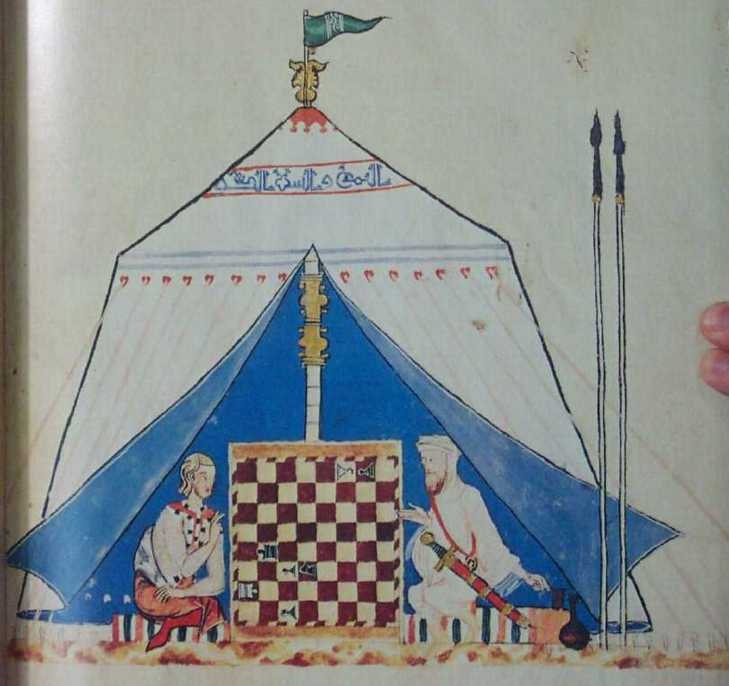


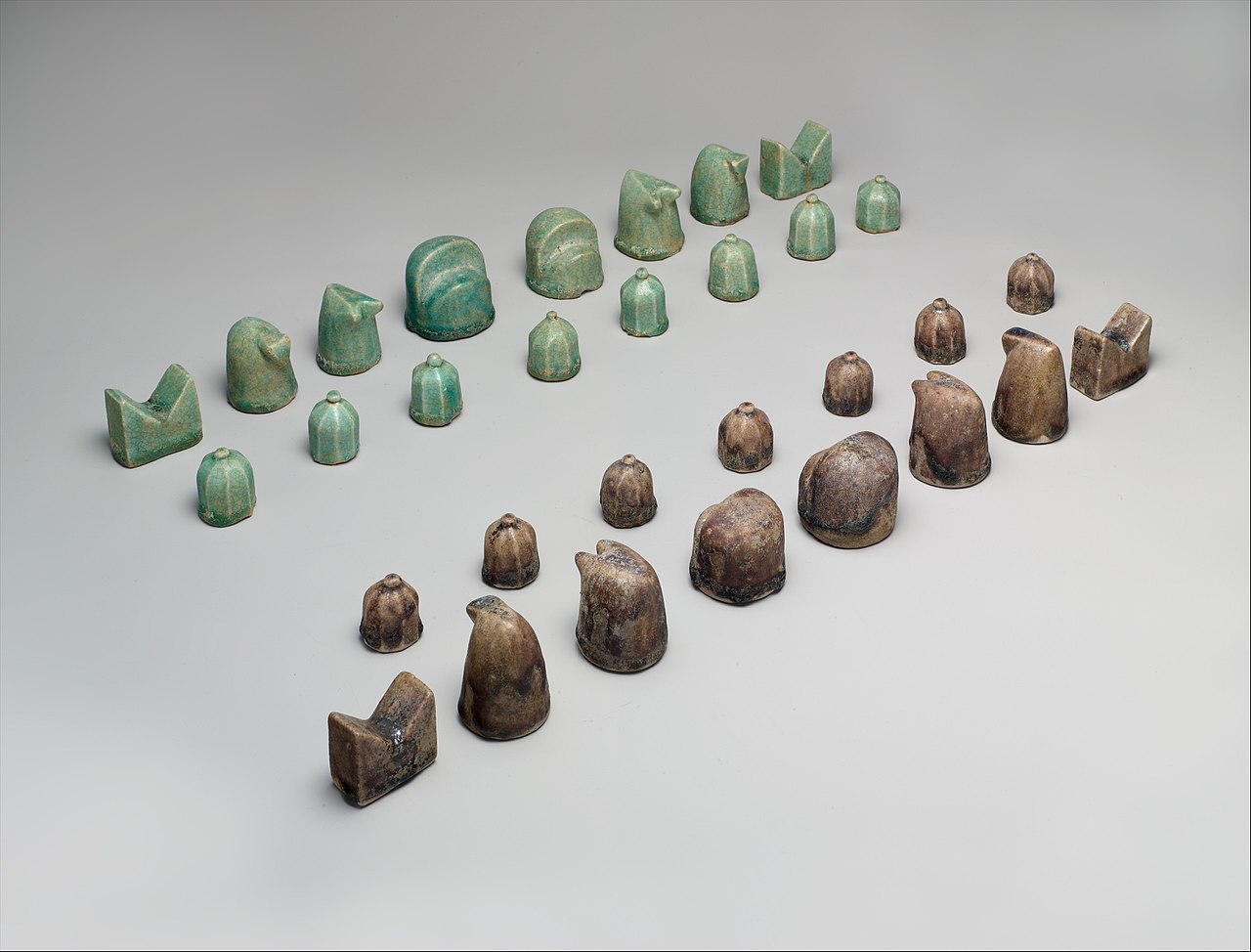


Characteristics and pieces
Shatranj used an 8×8 board and a set of pieces that look like modern chessmen but moved differently. The usual medieval piece set and their common movements were:
- Shāh (king) — moved one square in any direction, as in modern chess.
- Firzan (advisor or vizier) — a weak predecessor of the queen, moving only one square diagonally.
- Rukh (chariot) — equivalent to the modern rook, moving any number of squares orthogonally.
- Alfil (elephant) — leapt two squares diagonally, jumping over the intervening square; its limited range made it tactically distinct from the modern bishop.
- Knight — the leaping L-shaped move that survives unchanged into modern chess.
- Pawns — advanced one square per move (no two-square first move in classical shatranj), captured diagonally, and promoted on reaching the far rank usually to a firzan rather than to the powerful modern queen.
Several modern rules were absent: castling did not exist in classical shatranj, the pawn double-step and en passant rule were not part of the game, and stalemate rules varied by region.
Historical development
The game reached Persia likely during late antiquity, where it developed under Sassanid influence and acquired the name chatrang or shatranj. After the Islamic conquests, the game spread throughout the Muslim world and was discussed by scholars and craftsmen who refined notation, composed problems, and taught strategic ideas. Arabic-speaking players called the game shatranj, and that name — or variants of it — influenced many European and Asian languages as chess continued westward into medieval Europe.
Strategy, stages and literature
Medieval writers on shatranj already recognized the three broad phases of play familiar today: the opening, the middlegame and the endgame. Treatises described piece mobilization and pawn structure in the opening, tactical and positional play in the middlegame, and a rich body of endgame technique developed because the slow-moving pieces made precise pawn and king play decisive. For modern references to these phases, see opening and middlegame discussions in chess literature.
Importance and legacy
Shatranj is important because it is the direct ancestor of modern chess: many tactical motifs, terms and the basic idea of checkmate come from it. As piece moves evolved—particularly the transformation of the firzan into the powerful queen and changes to the bishop’s movement—the game accelerated into the form recognized today. Cultural traces of shatranj remain in language, historical manuscripts, and medieval problems that continue to interest historians and players exploring the roots of chess.
Questions and answers
Q: What was the early name of chess in Persia?
A: The early name of chess in Persia was Chatrang.
Q: What did the players start calling out when threatening the opponent's king in Chatrang?
A: The players started calling out "Shāh!" (Persian for 'King') when threatening the opponent's king in Chatrang.
Q: What did the players start calling out when the king could not escape from attack in Chatrang?
A: The players started calling out "Shāh māt!" (Persian for 'the king is finished') when the king could not escape from attack in Chatrang.
Q: What does "māt" or "māta" mean in Arabic?
A: "Māt" or "māta" means "died", "is dead" in Arabic.
Q: When did the Muslim world start taking up the game of chess?
A: The Muslim world started taking up the game of chess after the Islamic conquest of Persia.
Q: What is the name of the game in Arabic?
A: The name of the game in Arabic is Shatranj.
Q: How did the Arabs divide their game of Shatranj?
A: The Arabs divided their game of Shatranj into the same three stages which we do today: opening, middlegame and endgame.
Related articles
Author
AlegsaOnline.com Shatranj — the medieval form of chess Leandro Alegsa
URL: https://en.alegsaonline.com/art/89534