
Afrikaans: origin, features, and contemporary role
Afrikaans is a West Germanic language that developed at the Cape; this article surveys its origins, structure, varieties, history, and its place in modern Southern Africa.
Afrikaans is a West Germanic language that emerged in the southern African region and today functions as one of the principal languages of the area. It descended from 17th‑century Dutch and shares many features with modern Dutch and other Germanic languages, yet it has its own standardized grammar, spelling and literary tradition. It is widely spoken in South Africa and Namibia, and has a community of speakers and learners beyond those countries.
Image gallery
7 Images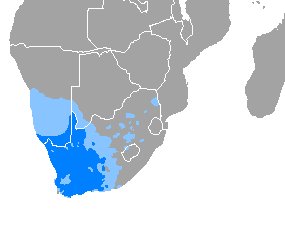


Origins and early development
The language arose in the Cape of Good Hope region during the period when the Dutch East India Company established a refreshment station at the Cape. The arrival of settlers and workers beginning from around 1652 through the early 18th century (to about 1705) produced a contact situation in which 17th‑century varieties of Dutch mixed with elements brought by immigrants and unfree labourers. Many colonists came from the Netherlands, while others had roots in Germany, France and even Scotland. Enslaved and indentured people from Southeast Asia and Madagascar, as well as speakers of local indigenous languages, contributed lexical and phonetic material; communities of Malagasy and Southeast Asian origin were among them.
In its earliest stages the speech was often called a dialect (commonly "Cape Dutch") and developed in both settler and mixed‑heritage populations, including settler farmers later known as Afrikaners and other communities. Unfree labour and slave populations are historically documented as part of the multilingual environment that shaped the language (slaves), and the local coastal settlement at the Cape was the central locus of early change.
Becoming a distinct language
By the 19th century the speech forms at the Cape had diverged enough from metropolitan Dutch to be noticeable. Scholarly and public debate about its status continued for decades; some demographic and genealogical studies attempted to trace the diverse origins of Afrikaans speakers, and while those studies suggest mixed European and non‑European ancestry, precise proportions are debated and uncertain. Historical milestones in social and linguistic change include legal and social reforms in the late 18th and early 19th centuries (for example the end of the slave trade around 1807) and the gradual move toward separate linguistic identity in the later 19th and early 20th century.
The modern name Afrikaans simply derives from the Dutch word for "African" and was adopted as the label for the language as it came to be treated as separate from standard Dutch.
Characteristics and varieties
Compared with 17th‑century Dutch and many other Germanic languages, Afrikaans displays a simplified inflectional system and a regularized grammar. Its phonology, vocabulary and idioms reflect multiple influences: Old Dutch input remains dominant, but there are notable loanwords and calques from Malay, Portuguese, indigenous southern African languages, and later borrowings from English. Grammar features include a reduced verbal conjugation system and the loss of grammatical gender, which makes agreement patterns simpler than in modern Dutch.
- Grammar: comparatively analytic, with fixed word order and limited inflection.
- Vocabulary: core Dutch-derived lexicon with borrowings from non‑European sources.
- Dialects: regional and social varieties include urban and rural forms, Cape varieties and varieties associated with different communities.
Contemporary status and use
Afrikaans is an official language in South Africa and has an established presence in education, media, literature and public life. A sizable portion of first‑language speakers are not white; the language is used by people of diverse backgrounds and is an important medium in community identity, music, journalism and scholarship. In neighbouring Namibia Afrikaans functions as a lingua franca for many people.
Its relationship to modern Dutch is one of close kinship and partial mutual intelligibility: speakers of each language can often understand the other to a degree, but there are clear differences in pronunciation, grammar and everyday vocabulary. Afrikaans has a rich written literature and a continuing role in contemporary culture despite past political associations; many initiatives focus on inclusive language education and the study of regional varieties.
For readers seeking further basic information, consult general references on South African languages, historical overviews of the VOC period, and linguistic treatments that compare Dutch and Afrikaans. Additional general resources include accounts of the language's social history, its contacts with African and Asian languages, and descriptive grammars. See also discussions of the language's early categorization as a dialect and its later standardization, a process visible into the early 20th century.
Relevant topics for further study include: migration and settlement patterns in the Netherlands and around the Cape, influence of German and French settlers, the role of Scottish contacts, the presence of Malagasy and other groups in the colonial labour force, and the social history of the Afrikaner community. These intersecting strands help explain how a regional speech variety became the standardized language now called Afrikaans.
For targeted resources see introductions to historical linguistics of the region and contemporary surveys of education and media in Namibia and South Africa.
Questions and answers
Q: What language is Afrikaans?
A: Afrikaans is a West Germanic language mainly spoken in South Africa and Namibia.
Q: Where did the dialect of Afrikaans originate from?
A: The dialect of Afrikaans originated from among the Afrikaner Protestant settlers, the unfree workers, and slaves brought to the Cape area in southwestern South Africa by the Dutch East India Company (Dutch: Verenigde Oost-Indische Compagnie - VOC) between 1652 and 1705.
Q: Who were these settlers?
A: Most of these first settlers were from the United Provinces (now Netherlands), though there were also many from Germany, some from France, a few from Scotland, and various other countries. The unfree workers and slaves were Malays, and Malagasy in addition to the native Khoi and Bushmen.
Q: How much of White Afrikaans speaking population was Dutch according to J. A Heese's research?
A: According to J. A Heese's research until 1807 36.8% of the ancestors of White Afrikaans speaking population were Dutch.
Q: What other nationalities made up this population?
A: 35% were German, 14.6% were French and 7.2% non-white (of African and/or Asian origins).
Q: When did people start recognizing it as a different language than Dutch?
A:Afrikaans was considered a Dutch dialect until early 20th century when it began to be widely known as a different language.
Q:What does "Afrikaans" mean in English?
A:The name "Afrikaans" means "African" in English; it is an African form of Dutch
Related articles
Author
AlegsaOnline.com Afrikaans: origin, features, and contemporary role Leandro Alegsa
URL: https://en.alegsaonline.com/art/1287
Sources
- ethnologue.com : Afrikaans
- glottolog.org : "Afrikaans"