
African golden cat (Caracal aurata): description, habitat, and conservation
Medium-sized wild cat of equatorial African rainforests. Varied coat colors, elusive behavior, and declining populations due to habitat loss and hunting; closely related to the caracal.
The African golden cat (Caracal aurata) is a medium-sized felid native to the dense, humid forests of equatorial Africa. It is notable for a wide range of coat colours and a generally secretive, largely nocturnal lifestyle. Sightings are uncommon because the species prefers closed-canopy forest and avoids human activity. For a concise species overview and photographs, consult field guides or specialist resources.
Image gallery
7 Images



Physical characteristics
Adults are larger than most domestic cats but smaller than big cats such as leopards. Typical body mass is variable across populations; individuals commonly fall within a moderate weight range for medium felids. The pelage shows several stable colour morphs — golden, reddish, brown, gray or silver — and some West African individuals retain distinct spotting on the back. The underside of the chest and chin are often paler, sometimes nearly white, and the face may bear small lighter spots around the eyes. Coat tones may shift somewhat with age and wear. The species has a robust, compact build with rounded ears and a relatively short tail compared with other forest cats. For more on variation and measurements see morphology notes and comparative studies.
Range and habitat
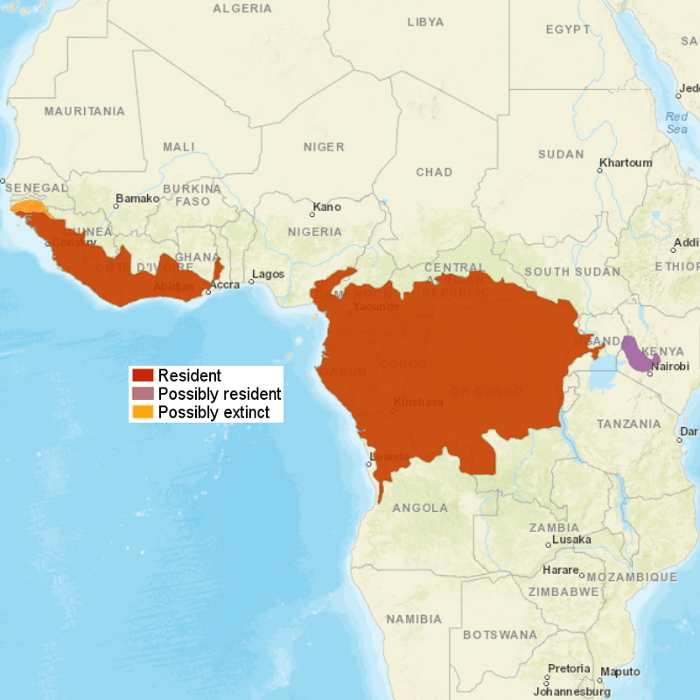
African golden cats occupy tropical rainforest across a swath of equatorial Africa. Their distribution is concentrated in West and Central African forest blocks and extends into parts of East-Central Africa where suitable closed-canopy habitat remains. They rely on dense understory and complex ground cover for hunting and shelter, and they avoid open, heavily fragmented landscapes. Habitat descriptions and range maps are summarized in many conservation assessments and natural-history accounts range data.
Behavior, diet and reproduction
This species is predominantly solitary and mostly active at night, though it can be crepuscular. Its diet is opportunistic and includes small to medium-sized mammals (rodents, hyraxes, small antelope), birds and reptiles; some local populations take larger prey when available. Stalking from cover and short bursts of pursuit are typical hunting methods. Breeding biology is not as well documented as for more common felids, but females give birth to litters of one to several kittens after a gestation period comparable to similar-sized cats. Field studies and camera-trap surveys provide most of the contemporary behavioral insights ecology studies.
Taxonomy and notable relationships
Historically placed in the genus Profelis, the African golden cat is now classified as Caracal aurata in many modern taxonomies following genetic and morphological work. It is closely related to the caracal and shares a broader lineage with other African small-to-medium felids. For background on classification changes and genetic evidence see taxonomic review and comparative analyses phylogeny.
Conservation status and threats
The species faces pressures from habitat loss, forest fragmentation, and hunting (both targeted and incidental, including bushmeat trapping). Because African golden cats depend on extensive tracts of intact forest, deforestation is the primary long-term threat. Protected areas and community conservation can help, but many populations remain vulnerable to ongoing land-use change. Conservation assessments, population trend reports and recommended actions are available through specialist organizations and regional conservation programmes conservation resources, threat analyses and monitoring projects monitoring work.
Distinctive facts and research needs
- Color polymorphism: several coat colours coexist within populations; some local groups show more spotted individuals than others — notably in parts of West Africa morph studies.
- Elusive nature: its secretive habits mean many details of its ecology remain poorly documented; camera traps and genetic sampling continue to fill gaps research updates.
- Conservation priority: maintaining large forest blocks and reducing unsustainable hunting are critical for long-term survival; community engagement and protected area management are central strategies conservation strategies, policy summaries, regional plans.
Overall, the African golden cat is an emblematic forest carnivore whose varied appearance and secretive behavior have made it a subject of ongoing interest for zoologists, conservationists and naturalists working to secure the future of Africa's rainforest ecosystems.
Related articles
Author
AlegsaOnline.com African golden cat (Caracal aurata): description, habitat, and conservation Leandro Alegsa
URL: https://en.alegsaonline.com/art/1264
Sources
- researchgate.net : Biology and conservation of wild felids