
Africanized honey bee
A hybrid form of honey bee noted for heightened defensive behavior. Originated from crosses of African and European honey bees and now established across much of the Americas.
Overview
The Africanized honey bee is a hybrid lineage produced by the crossing of African honey bees with various European honey bee subspecies. Often called "Africanized" or colloquially "killer bees," these insects are not a separate species but a group of honey bees with a distinct combination of behaviors and genetics. They are notable chiefly for their strong colony defense response, a higher propensity to swarm, and their capacity to colonize new habitats rapidly.
Image gallery
8 Images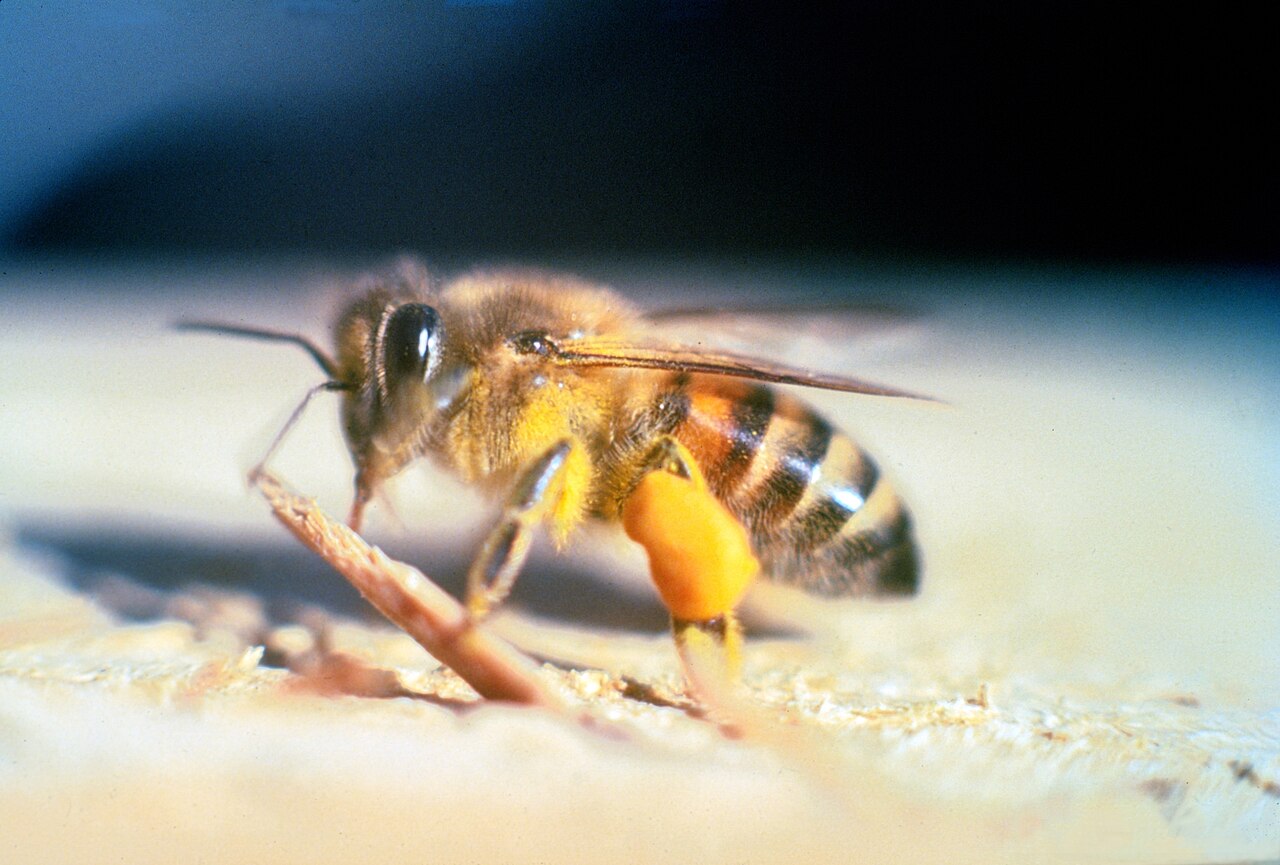



Characteristics
Africanized colonies tend to display several behavioral differences from many managed European-derived honey bee strains. Individual stings are chemically similar to those of other honey bees, but Africanized colonies often mobilize more guard bees and pursue perceived threats for longer periods and greater distances. They may initiate stinging responses with less provocation, and they commonly produce more numerous, smaller swarms which helps them spread and establish in new areas.
- Defense: rapid recruitment of nestmates and prolonged pursuit of intruders.
- Reproduction: frequent swarming increases colonization rate.
- Identification: genetic testing, behavior, and morphology together distinguish Africanized bees from European-derived stocks.
History and spread
The hybridization began in the mid-20th century when African honey bees were imported to South America to improve honey production. Following accidental releases, hybrids formed between African and imported European subspecies and began a northward expansion across South and Central America. By the late 20th century they reached parts of the southern United States and continue to occupy a broad range where climate and floral resources allow.
Human interactions and management
Africanized honey bees present public-safety challenges rather than a new toxic threat: the hazard arises from multiple stings delivered by many individuals rather than from more potent venom. Fatalities are rare but can occur with mass attacks or in people with severe allergic reactions. Recommended precautions include avoiding disturbing colonies, retreating calmly to shelter if attacked, protecting the face and airways, and seeking medical attention after multiple stings or signs of anaphylaxis. Professional removal or relocation of colonies is a common response when colonies occur near homes or public spaces.
Ecological and economic impacts
These bees are effective pollinators and can contribute to crop pollination, but their aggressive behavior complicates beekeeping and public access to green spaces. In regions where they have displaced other honey bee stocks, beekeepers have adapted by selecting calmer queens, managing hives intensively, or avoiding high-risk areas. Conservation concerns also consider interactions with native pollinators and local ecosystems, though Africanized bees occupy the same ecological niche as other managed honey bees.
Further reading
For more on hybrid origin and genetics see research overview. To compare with European honey bees, consult resources about European honeybee (Apis mellifera). Practical advice and official recommendations on safety and removal can be found in management guidelines.
Questions and answers
Q: What are Africanized honeybees?
A: Africanized honeybees are an artificial man-made hybrid of the European honeybee and African bees that are more dangerous and defensive than regular honeybees.
Q: Why are Africanized honeybees called 'killer bees'?
A: Some people call Africanized honeybees 'killer bees' because they can be much more protective of their beehive and much more likely to sting, attack together and sting the same animal or person with hundreds of stings.
Q: How are Africanized honeybees more dangerous than regular honeybees?
A: Africanized honeybees are much more protective of their beehive than regular honeybees, and they usually chase their target much farther than regular honeybees. They also stay angry and ready to fight for a longer time.
Q: What happens when one of the Africanized honeybees is surprised or scared?
A: When one Africanized honeybee is surprised or scared, they all attack together and sting the same animal or person with hundreds of stings.
Q: Why are Africanized honeybees more dangerous even though their sting is the same as a regular honeybee's?
A: Africanized honeybees are more dangerous even though their sting is the same as a regular honeybee's because they sting all together, and their attacks involve more bees.
Q: How do Africanized honeybees differ from regular honeybees?
A: Africanized honeybees are more dangerous and defensive than regular honeybees. They have many more "guard" bees than regular honeybees, which makes them more protective of their beehive.
Q: What is unique about Africanized honeybees?
A: Africanized honeybees are unique because they are an artificial man-made hybrid of the European honeybee and African bees that are much more dangerous and defensive than regular honeybees. They also have many more "guard" bees than regular honeybees.
Related articles
Author
AlegsaOnline.com Africanized honey bee Leandro Alegsa
URL: https://en.alegsaonline.com/art/1281