
West Africa: geography, peoples, history and contemporary issues
An overview of West Africa covering its geography, cultural diversity, history, economies, and regional organisations, with notes on climate zones, major cities and contemporary challenges.
West Africa refers to the western portion of the African continent, stretching from the Atlantic coast inland toward the Sahara. Its boundaries are defined in different ways by geographers and organisations; for example, the United Nations uses a regional scheme that groups a set of countries commonly considered part of Western Africa. The region is notable for its ecological variety, long human histories, and array of languages and cultures.
Image gallery
10 Images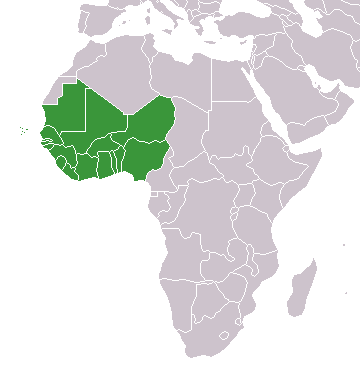


Geography and environment
West Africa includes coastal plains, tropical rainforests, the Guinean forest-savanna mosaic, broad savannas, and the southern edge of the Sahel — the semi-arid zone below the Sahara. Important river systems, such as the Niger and the Volta, provide irrigation, transport corridors and fisheries. Climate ranges from humid equatorial along the coast to arid in the north, and the region faces environmental issues such as deforestation, desertification, and variable rainfall patterns.
People, languages and culture
The population is ethnically and linguistically diverse. Major language families include Niger–Congo languages in the south and west, Mande languages, and Afroasiatic languages in parts of the Sahel. Islam and Christianity are widespread alongside many traditional belief systems. West African cultures are well known for musical traditions, oral literature, vibrant visual arts, textile crafts, and culinary diversity.
History and political development
Historically the region was home to powerful pre-colonial states and empires — for example, the Ghana, Mali and Songhai empires — which played major roles in trans-Saharan trade and Islamic scholarship. From the 15th century European contact expanded, followed by colonial rule under British, French, Portuguese and other powers. Most countries gained independence in the 20th century and since then have followed varied paths of political development.
Economy, cities and organisations
Economies in West Africa are mixed: agriculture remains a central livelihood, while some countries export oil, minerals, cocoa and other commodities. Urban growth has been rapid; major cities include Lagos, Accra, Abidjan, Dakar and Kano, which serve as commercial and cultural hubs. Regional cooperation is organised through bodies such as the Economic Community of West African States (ECOWAS), which works on trade, development and conflict resolution.
Contemporary challenges and significance
West Africa is important to global trade, culture and history but faces persistent challenges: poverty, infrastructure gaps, health concerns, political instability in some areas, and security threats including armed conflict and extremist violence. At the same time, the region is dynamic — with young populations, growing cities, creative industries, and ongoing efforts to strengthen governance, economic diversification and resilience to climate change.
- Notable features: ecological zones from rainforest to Sahel;
- rich musical and literary traditions;
- long histories of trade and learning;
- active regional cooperation through organisations like ECOWAS.
This article offers a concise introduction to West Africa's physical setting, human diversity, historical background and contemporary issues, while recognising that definitions and country groupings can vary according to different sources and purposes.
Related articles
Author
AlegsaOnline.com West Africa: geography, peoples, history and contemporary issues Leandro Alegsa
URL: https://en.alegsaonline.com/art/107324