
African wild dog (painted dog)
A social, wide-ranging African canid known for its mottled coat, cooperative hunting, and vulnerable conservation status. Lives in packs and hunts medium-sized ungulates; threatened by habitat loss, conflict, and disease.
The African wild dog, also called the painted dog (Lycaon pictus), is a distinctive carnivore native to sub-Saharan Africa. It is the most specialized member of the larger Canidae lineage that survives today, notable for its patchy multicolored coat, large rounded ears, long legs and a social life centered on cooperative breeding and hunting.
Image gallery
10 Images


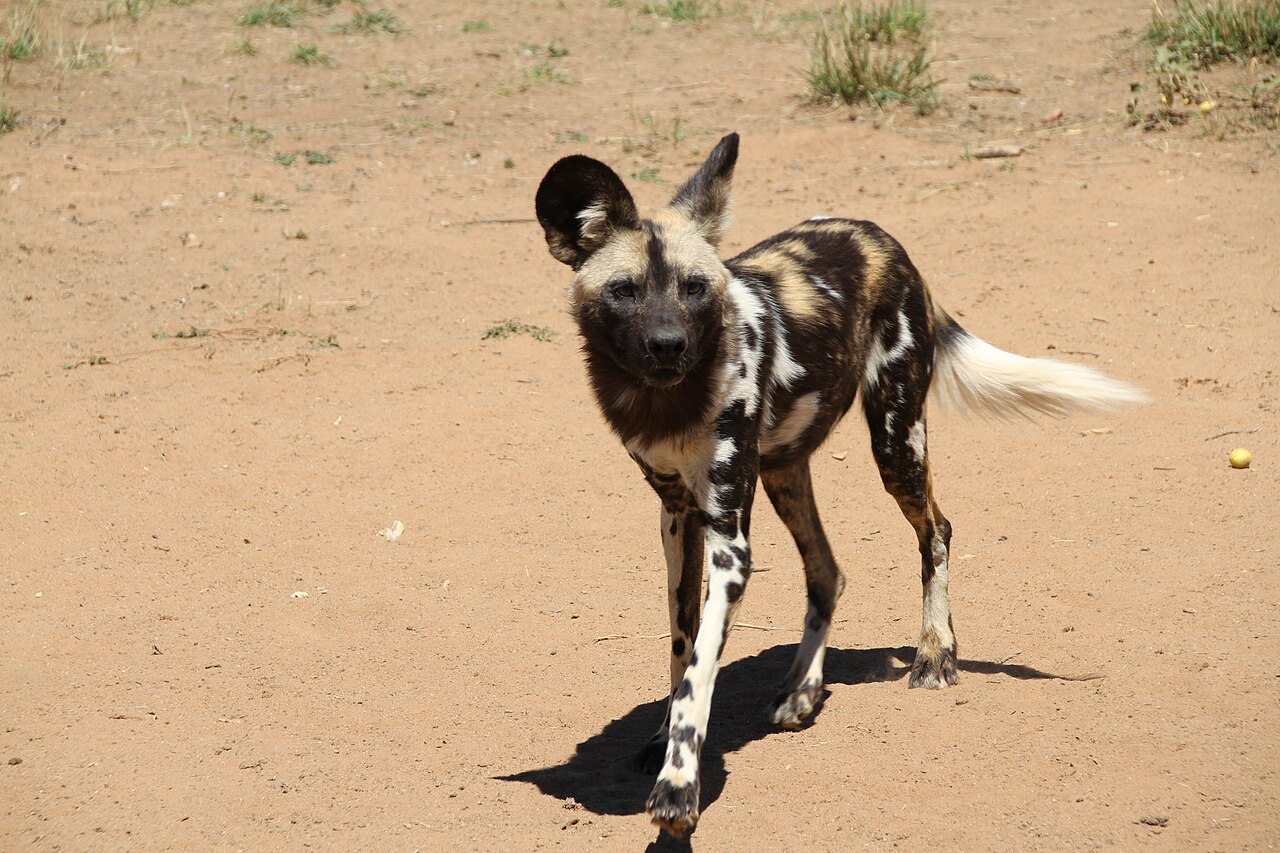


Description and key characteristics
These animals are immediately recognizable by a mottled pattern of black, brown, white and yellow fur; no two individuals share the same markings. Other characteristic features include unusually large ears that help dissipate heat and locate sounds, a lean, muscular build adapted for endurance running, and strong, webbed paws that aid long chases. The species is the sole representative of the genus Lycaon.
Social structure and behaviour
African wild dogs are highly social and live in tight-knit packs. Packs are cooperative units in which most members contribute to hunting, pup rearing and territory defence. Typically one or a few adults breed, while helpers assist by escorting, babysitting and regurgitating food for pups and other group members. Communication relies on vocalizations, body postures and scent marking.
Hunting, diet and ecological role
They are efficient, cursorial hunters, pursuing prey at sustained speeds and using teamwork to exhaust and isolate individuals. Their diet mainly consists of medium-sized ungulates such as antelopes, though they will take a range of mammals depending on local availability. As social predators, they help regulate prey populations and influence savanna and woodland ecosystems.
Distribution, history and conservation
Historically widespread across much of Africa, their range has contracted sharply in the modern era because of habitat fragmentation, human persecution, competition and kleptoparasitism by lions and spotted hyenas, and infectious diseases transmitted from domestic animals. Conservation efforts focus on protecting habitat corridors, reducing conflict with people, vaccination and monitoring of wild populations. Many populations remain small and vulnerable, making coordinated, landscape-scale conservation critical.
Notable facts
- They are sometimes called "painted" dogs because of their patchwork coats.
- Pack cohesion and cooperative care of young are among the most developed of any canid.
- Interactions with larger predators such as lions and hyenas can determine local survival and hunting success.
Related articles
Author
AlegsaOnline.com African wild dog (painted dog) Leandro Alegsa
URL: https://en.alegsaonline.com/art/1278
Sources
- species.wikimedia.org : Lycaon pictus
- commons.wikimedia.org : Lycaon pictus
- iucnredlist.org : "Lycaon pictus"