
Caracal (Caracal caracal) — medium-sized wild cat
The caracal is a distinctive medium-sized wild cat native to Africa, the Middle East and parts of Asia, noted for its tufted ears, powerful leap and versatile hunting skills.
Overview
The caracal (Caracal caracal) is a medium-sized wild cat found across parts of Africa, the Middle East and central Asia. Common names include caracal, Persian lynx and African lynx, though it is not a true member of the Lynx genus. Its name comes from regional languages and reflects the species' long recognition by human societies.
Image gallery
10 Images



Appearance and distinguishing traits
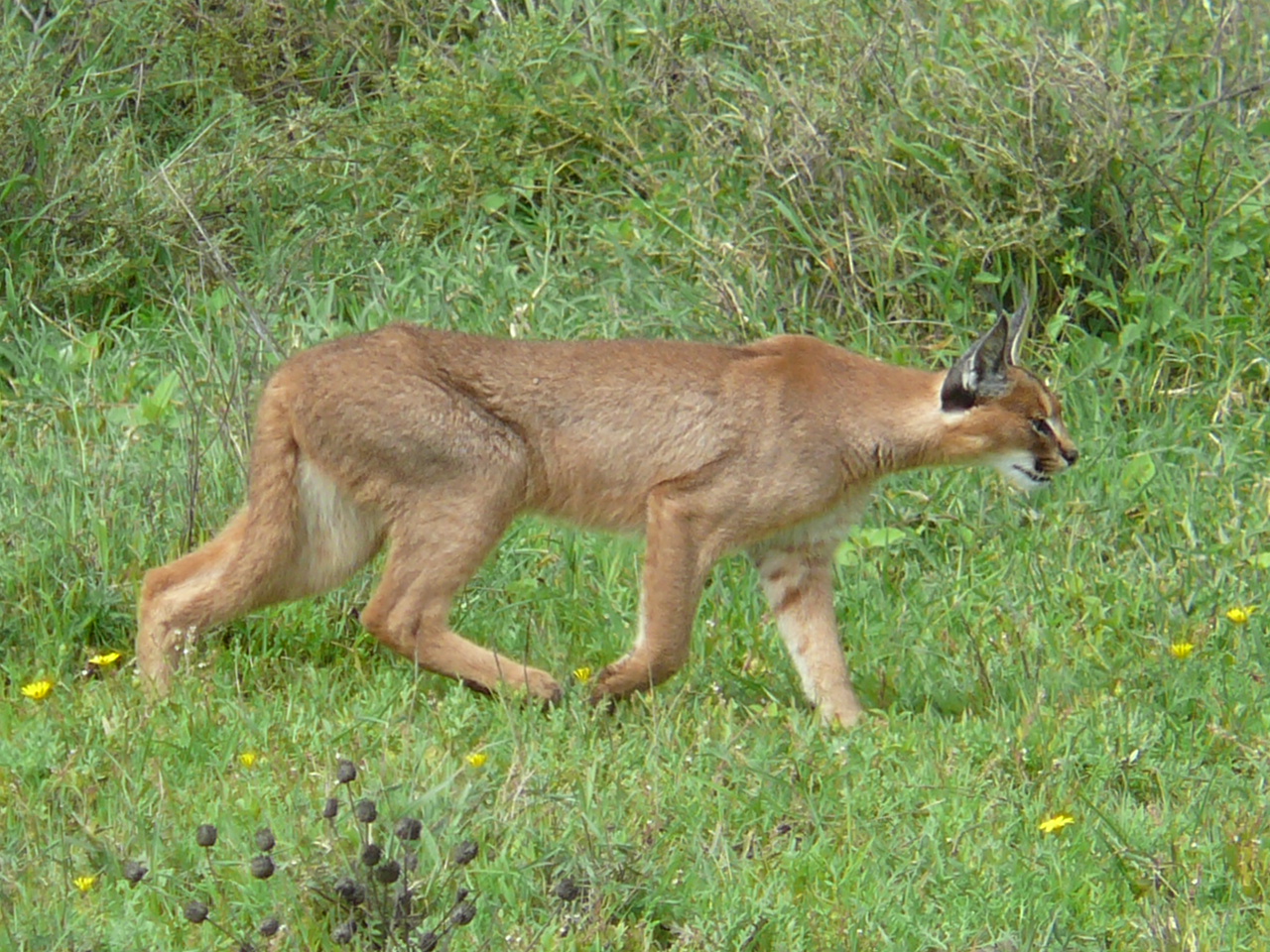
Caracals are easily identified by their long, black-tipped ear tufts, rounded faces and compact, muscular bodies. Their coat is generally a uniform sandy, tawny or reddish color with lighter underparts. While they share some superficial similarities with true lynxes (lynx species), caracals are more closely related to the serval and other African felids. Their powerful hindquarters enable impressive vertical leaps.
Distribution and habitat
They occupy a wide range of habitats including dry savannas, scrublands, open woodlands and semi-arid regions. The species tolerates a variety of conditions but generally avoids densely forested or permanently icy environments. Populations are scattered and vary in density depending on local prey availability and human pressures.
Behavior and hunting
Caracals are largely solitary and most active at dawn and dusk. They hunt a broad spectrum of prey, from birds and small mammals to larger ground-dwelling animals when opportunity allows. A notable behavior is their ability to leap into the air to catch multiple flying birds in a single bound, using speed, stealth and powerful hind limbs to subdue prey.
Relationship with humans
Historically, caracals were sometimes tamed or trained for hunting in parts of the Middle East and South Asia. Today they are admired for their agility but may come into conflict with people through livestock predation, leading to persecution in some areas. They are occasionally kept in captivity by conservation organizations and licensed facilities.
Conservation and notable facts
Overall the caracal is not considered one of the most endangered felids, but local populations face habitat loss, fragmentation and retaliatory killing. Conservation focus includes habitat protection, reducing human-wildlife conflict and monitoring population trends. Their distinctive ear tufts and leaping hunting style make the caracal a striking example of felid adaptation to open and semi-open landscapes.
- Scientific name: Caracal caracal
- Key traits: tufted ears, powerful leap, solitary hunter
- Range: Africa, Middle East, parts of Central and South Asia
Related articles
Author
AlegsaOnline.com Caracal (Caracal caracal) — medium-sized wild cat Leandro Alegsa
URL: https://en.alegsaonline.com/art/16843