
Bharal (Himalayan blue sheep)
A high‑altitude caprid of the Himalayas, the bharal (Pseudois nayaur) is adapted to steep rocky slopes, has a bluish coat and curved horns, and is an important prey species for mountain predators.
Overview
The bharal, commonly called the Himalayan blue sheep and scientifically known as Pseudois nayaur, is a wild caprine native to high mountain regions of South and Central Asia. It belongs to the subfamily Caprinae and is recognized for its stocky build, distinctive horns, and a coat that gives the animal a bluish appearance from a distance. Bharal play a central ecological role in alpine food webs and are often studied as prey species for larger mountain carnivores.
Image gallery
9 Images



Description and adaptations
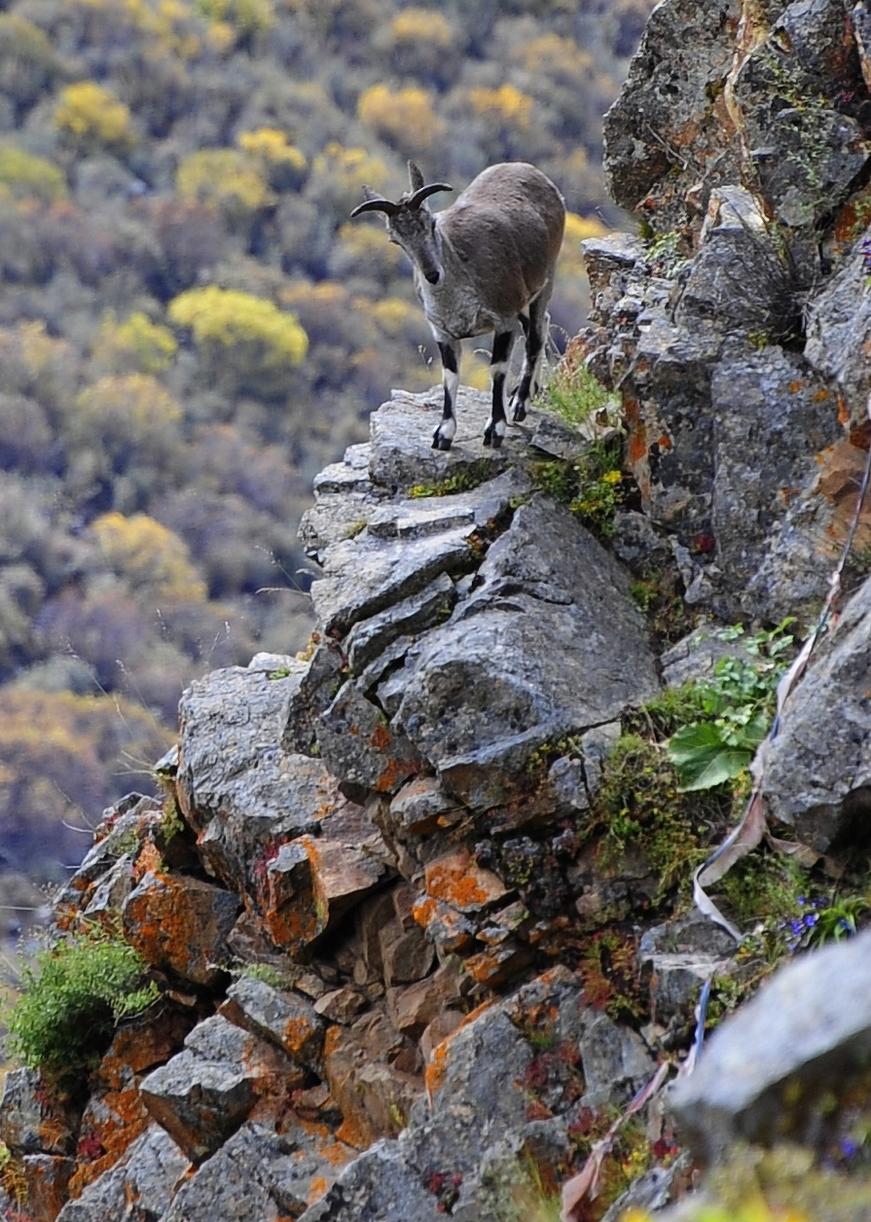
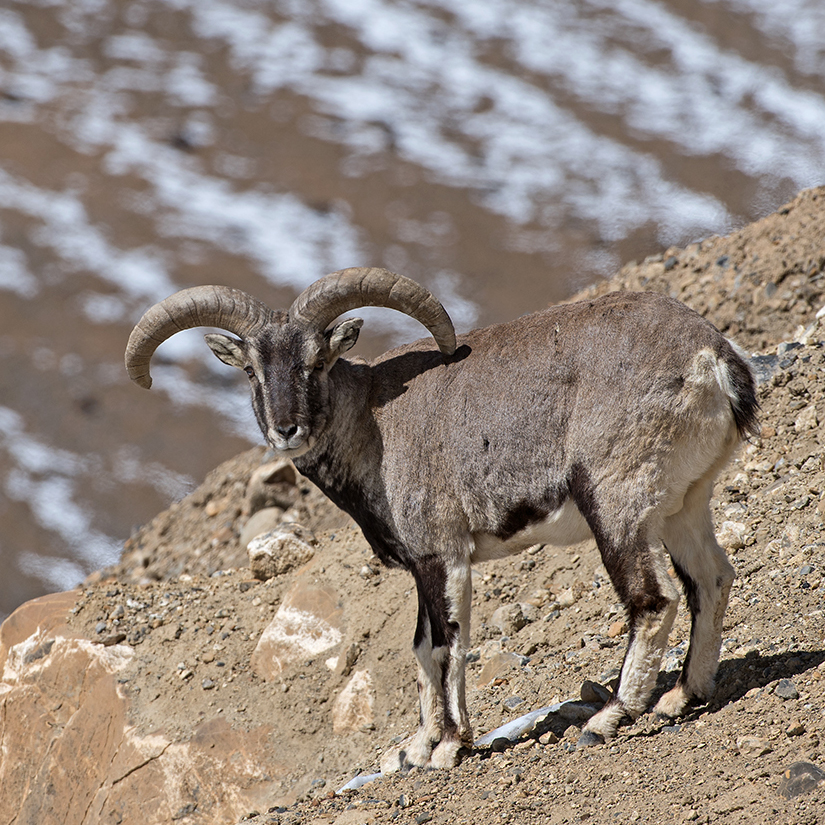
Bharal have short, muscular bodies with relatively long legs, traits that aid movement across narrow ledges and steep scree. The horns of both sexes are present but more pronounced in males; they grow upward, curve outward and then sweep back, giving a shape sometimes likened to an inverted mustache. Their fur ranges from grey to slate blue, providing effective concealment against rocky backgrounds. They rely on stillness and coloration rather than dense cover: when threatened a bharal will commonly freeze and blend into the slope until the danger passes, a behavior tied to their excellent camouflage and cliff‑dwelling lifestyle.
Distribution and habitat
Bharal inhabit high alpine and subalpine zones across the Himalayan arc and adjacent ranges. They occur in parts of Nepal, the Tibetan Plateau (Tibet), portions of China, the disputed and diverse landscapes of Kashmir, areas of Pakistan, Bhutan, and the Republic of India. Typical habitats include open grassy slopes, rocky ridges and steep cliffs above the tree line where sparse vegetation supports grazing but provides little cover from predators.
Behavior and diet
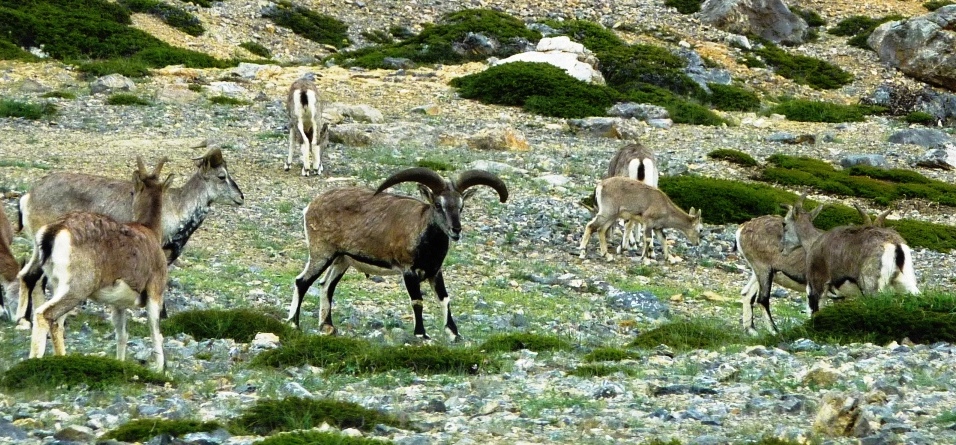
Bharal are primarily diurnal and graze on alpine grasses, herbs and shrubs when available. They move in small groups or loose aggregations, often forming larger assemblages in winter or where food is concentrated. Their daily routine alternates between feeding on slopes and resting on sheltered ledges. When approached, bharal tend to remain motionless to avoid detection; if discovered they rapidly ascend to precipitous cliffs where they can outmaneuver many predators.
Predators and conservation
Where ranges overlap, bharal are a principal food source for large felids and raptors. The species is hunted by the snow leopard and, in places, by the leopard. Juveniles may be taken by smaller predators such as foxes or by birds of prey like eagles. Human activities — including hunting, competition with livestock, and habitat alteration — can pressure local populations. Conservation measures tend to focus on habitat protection, anti‑poaching efforts and maintaining prey populations for threatened predators.
Human interactions and notable facts
Bharal are significant to rural mountain communities as a source of subsistence hunting in some areas and as indicators of ecosystem health where they support apex predators. They also attract wildlife tourism and scientific interest because of their specialized adaptations to alpine life. Their behavior of freezing against rock faces is a striking example of cryptic defense in an open, high‑altitude environment.
Related articles
Author
AlegsaOnline.com Bharal (Himalayan blue sheep) Leandro Alegsa
URL: https://en.alegsaonline.com/art/11175
Sources
- ultimateungulate.com : Ultimate Ungulate
- commons.wikimedia.org : Pseudois nayaur