
Binturong (Bearcat) — Arctictis binturong
A large, arboreal viverrid of South and Southeast Asia known as the binturong or bearcat, notable for its prehensile tail, omnivorous diet, and important role in seed dispersal.
The binturong (Arctictis binturong), commonly called the bearcat, is a distinctive mammal native to parts of South and Southeast Asia. It belongs to the viverrid family, a group that also includes civets and genets, but is larger and more arboreal than many of its relatives. The animal is primarily nocturnal and spends most of its life in trees.
Image gallery
10 Images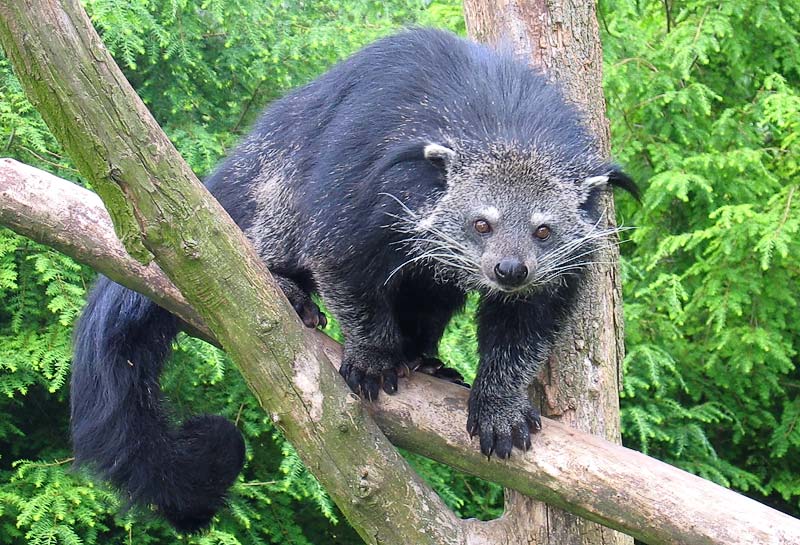
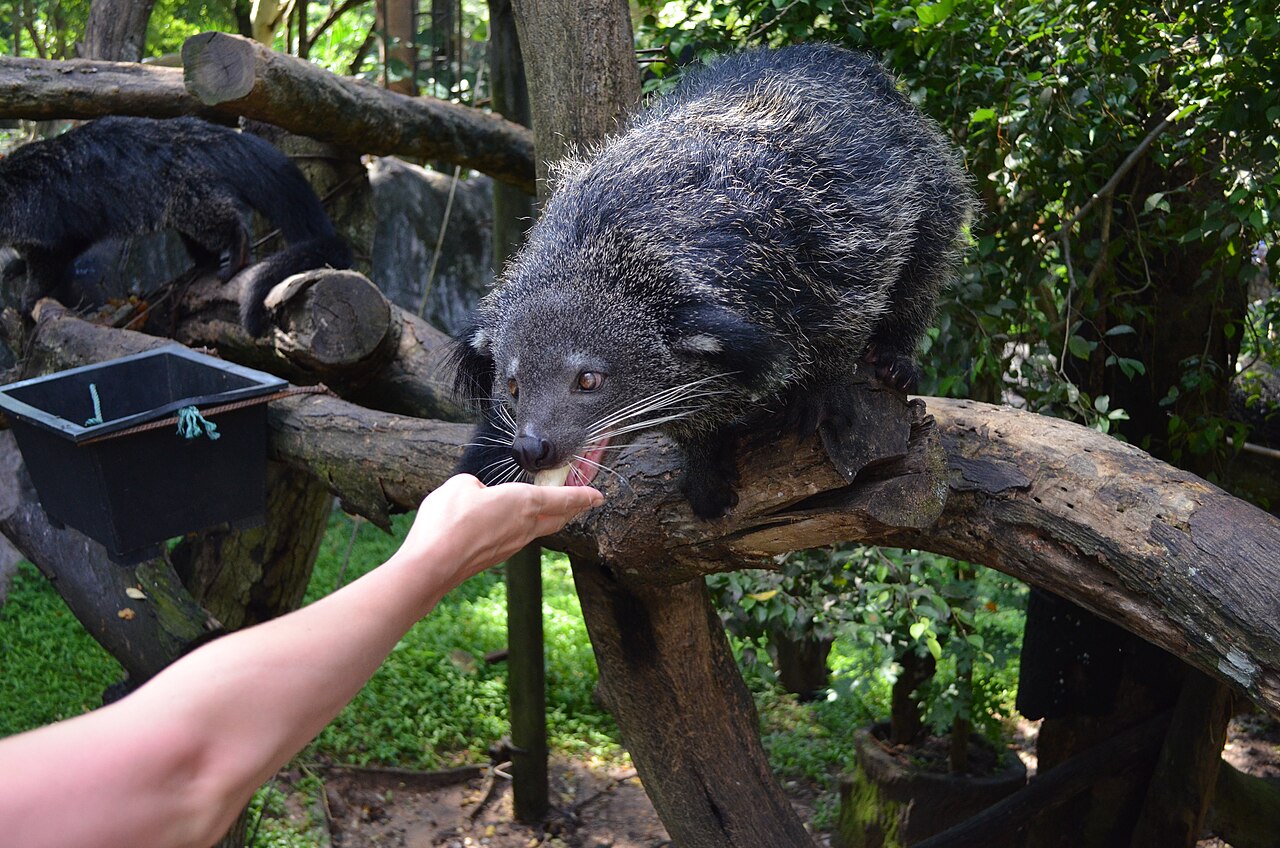
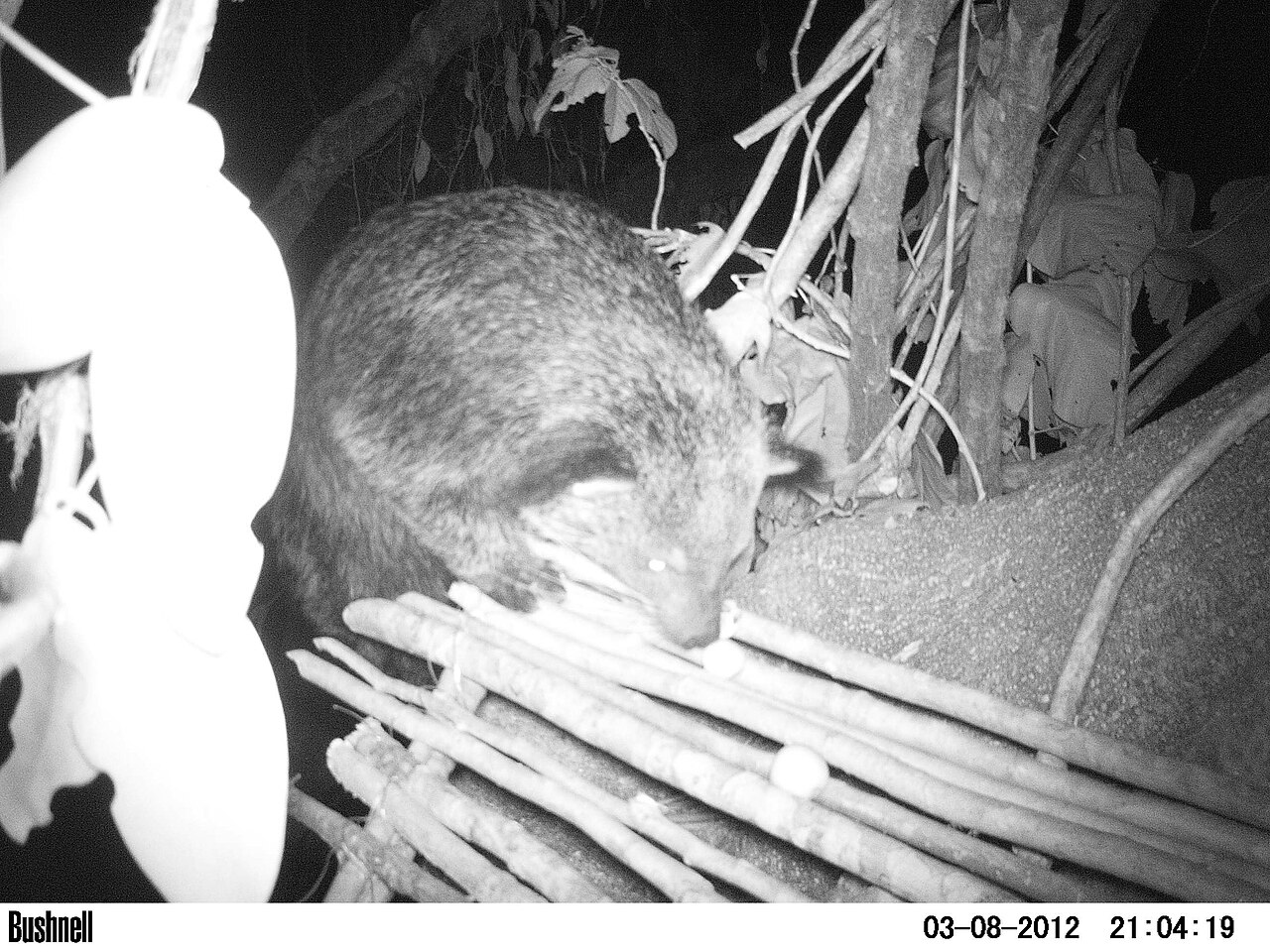


Physical characteristics
Binturongs have coarse, dark fur, a heavy body, and a long, bushy tail that is partially or fully prehensile, allowing them to grasp branches. Their face and ears give a mixed impression that has led to the informal name "bearcat": they seem bear-like in size and fur but show some facial features reminiscent of small cats. Notable features include strong limbs with sharp claws for climbing and a robust skull suited to an omnivorous diet.
Habitat and range
These animals inhabit dense forests and tall trees across parts of South and Southeast Asia, from the Indian subcontinent eastward into island archipelagos. They are most often associated with mature, continuous forest where they can find food and shelter. For more on their geography and preferred habitats see range and habitat information.
Diet and ecological role
Binturongs are omnivores: their diet includes fruit (figs are especially important), small vertebrates, invertebrates, and plant material. By consuming and dispersing seeds—particularly of fig trees—they play a meaningful role in forest ecology and regeneration. Their movements through the canopy help spread seeds across wide areas.
Conservation and human interactions
Populations have declined in many places because of habitat loss, hunting, and capture for the illegal pet trade. The species is considered at risk in parts of its range, and conservation actions focus on habitat protection, law enforcement, and maintaining viable captive populations for education and research. The binturong also appears in local folklore and occasionally in ecotourism programs.
Notable facts
- Its tail is notable for being at least partly prehensile, a rare trait among its relatives.
- Observers frequently describe the animal's scent as resembling buttered popcorn or corn chips.
- The common name "bearcat" reflects its combination of bear-like bulk and cat-like facial features; comparisons to a bear or a cat are only descriptive, not taxonomic.
Ongoing research aims to clarify population trends, ecology, and the best conservation strategies to ensure the binturong continues to occupy its forest habitats and contribute to ecosystem health.
Tags
Related articles
Author
AlegsaOnline.com Binturong (Bearcat) — Arctictis binturong Leandro Alegsa
URL: https://en.alegsaonline.com/art/11613
Sources
- iucnredlist.org : "Arctictis binturong"