
Snow leopard (Panthera uncia): description, habitat, and conservation
Large mountain cat of Central and South Asia, Panthera uncia (snow leopard) is adapted to cold, rugged landscapes. This article covers appearance, behaviour, taxonomy, threats and conservation measures.
The snow leopard (Panthera uncia), also called the ounce or irbis, is a large wild cat native to the high mountains of Central and South Asia. It occupies alpine and subalpine zones across a wide but fragmented range and is specially adapted to cold, rocky terrain. Its elusive behaviour, cryptic coat and low population density have made it one of the least-seen big cats in the world.
Image gallery
10 Images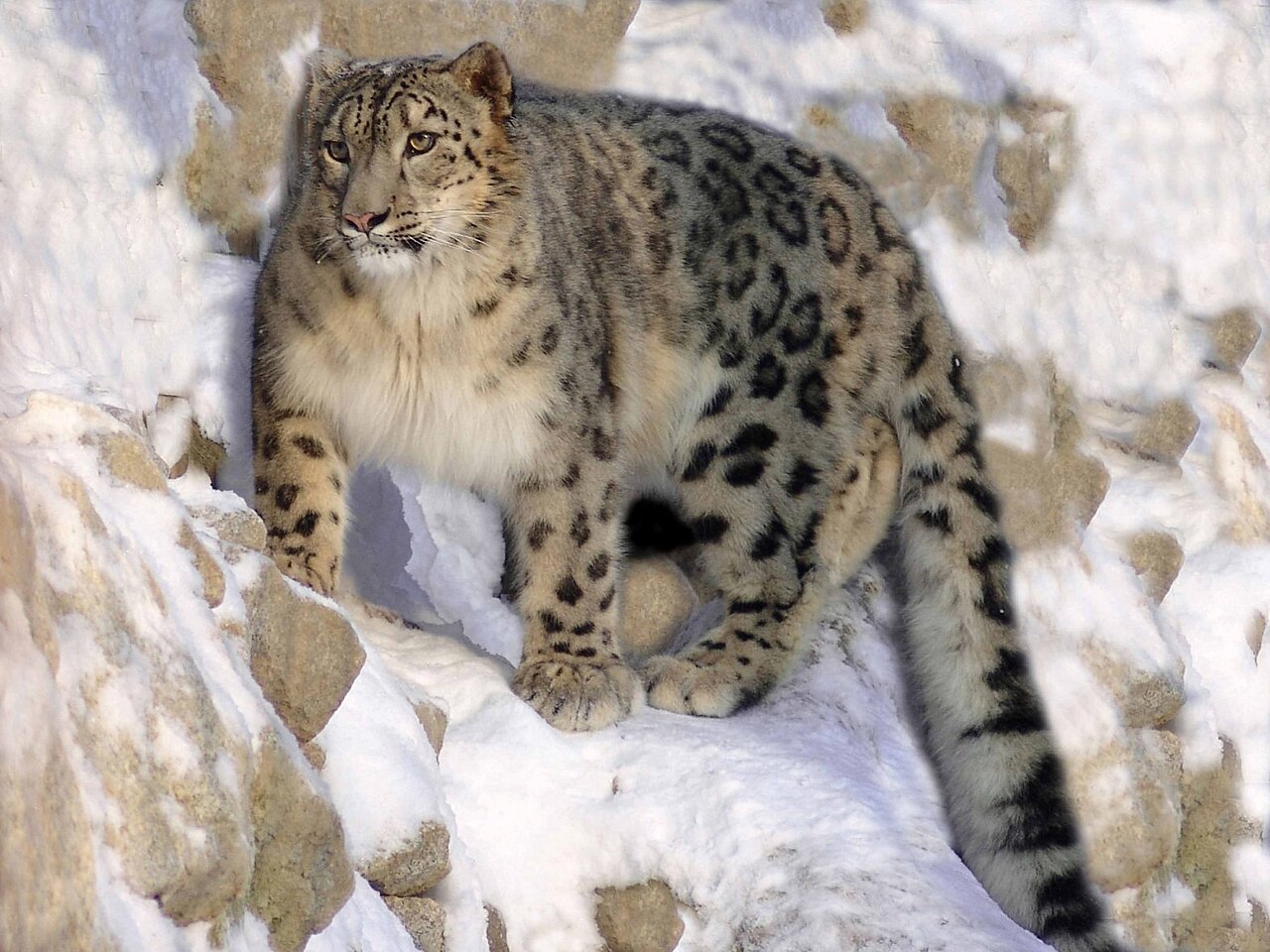


Physical characteristics and adaptations
Snow leopards have thick, pale-grey fur patterned with dark rosettes and spots that provide camouflage on rock and snow. Key adaptations include a long, thick tail that aids balance and can be wrapped around the body for warmth; short forelimbs and powerful hind limbs that enable climbing and long, sure-footed leaps on steep slopes; and enlarged nasal cavities and dense underfur to conserve heat at high altitude. Their ears are small and rounded to reduce heat loss.
Range, habitat and diet
They live in mountain ranges such as the Himalaya, Tibetan Plateau, Tien Shan and Altai across Central Asia and neighbouring regions. Snow leopards favour rugged, rocky habitat above the tree line, often in areas with cliffs and broken ground. Their diet mainly consists of wild ungulates (for example, blue sheep and ibex), supplemented by smaller mammals such as marmots and pikas. They are solitary and primarily crepuscular or active at dawn and dusk.
Taxonomy and research
Historically placed in the genus Uncia, genetic and morphological studies have shown the species belongs in the genus Panthera, making it a close relative of other big cats. It was once thought to be distinct from the common leopard due to superficial differences, a view reflected in earlier classifications and discussion in older literature such as links comparing it to the smaller leopard. Modern DNA evidence has clarified these relationships and informed conservation management.
Conservation status and threats
Snow leopards are classified as a threatened species in part because of their low density, slow reproductive rate and specialized habitat. Major threats include poaching for fur and body parts, retaliatory killing after livestock depredation, decline of wild prey, habitat fragmentation, and the possible impacts of climate change. Conservation efforts combine anti-poaching measures, community-based livestock protection, protected areas, and international agreements such as trade restrictions.
Importance and human interactions
Beyond their ecological role as apex predators in mountain ecosystems, snow leopards hold cultural significance for many indigenous peoples of the highlands and are a focus for ecotourism and scientific research. Camera-trap surveys, genetic sampling of scat and collaborative monitoring programs have improved knowledge of distribution and numbers, helping prioritize areas for protection and community engagement to reduce conflict and promote coexistence.
- Common names: snow leopard, ounce, irbis
- Scientific name: Panthera uncia
- Conservation focus: habitat protection, anti-poaching, community programs
Questions and answers
Q: What is a snow leopard?
A: A snow leopard is a feline that lives in central Asia.
Q: What are some other names for the snow leopard?
A: Some other names for the snow leopard are Irbis and ounce.
Q: Was it previously thought that the snow leopard was not closely related to the smaller leopard?
A: Yes, it used to be thought that the snow leopard was not closely related to the smaller leopard.
Q: What has recent research discovered about the relationship between the snow leopard and other big cats?
A: Recent research has discovered that the snow leopard is closely related to the other big cats in the genus Panthera.
Q: Where is the snow leopard found?
A: The snow leopard is found in central Asia.
Q: What is the scientific name for the snow leopard?
A: The scientific name for the snow leopard is Panthera uncia.
Q: What genus are the snow leopard and other big cats related to?
A: The snow leopard and other big cats are related to the genus Panthera.
Related articles
Author
AlegsaOnline.com Snow leopard (Panthera uncia): description, habitat, and conservation Leandro Alegsa
URL: https://en.alegsaonline.com/art/91339
Sources
- species.wikimedia.org : Uncia uncia
- commons.wikimedia.org : Uncia uncia
- iucnredlist.org : "Panthera uncia"
- pubmedcentral.nih.gov : "Hyoid apparatus and pharynx in the lion (Panthera leo), jaguar (Panthera onca), tiger (Panthera tigris), cheetah (Acinonyx jubatus) and domestic cat (Felis silvestris f. catus)"
- doi.org : 10.1046/j.1469-7580.2002.00088.x
- iucnredlist.org : Panthera uncia (Ounce, Snow Leopard)
- snowleopardconservancy.org : A map of the snow leopard’s range
- ngm.nationalgeographic.com : "Out of the shadows by Douglas H. Chadwick"
- books.google.com : Mammals of the Soviet Union: Carnivora
- doi.org : 10.1016/j.ympev.2010.01.036
- pubmed.ncbi.nlm.nih.gov : 20138224
- doi.org : 10.1126/science.1122277
- pubmed.ncbi.nlm.nih.gov : 16400146
- globalsnowleopard.org : globalsnowleopard.org
- wikidata.org : Q30197