
Handel’s Water Music: Overview, Structure, and Historical Context
A concise encyclopedic account of George Frideric Handel’s Water Music: its composition, suites and movements, instrumentation, Thames premiere, performance practice and enduring legacy.
Overview
The Water Music is a celebrated collection of orchestral pieces by George Frideric Handel, written in the early 18th century and commonly associated with outdoor river performances. Composed in the Baroque idiom for a courtly audience, it is arranged in a set of three suites that together are usually counted as twenty‑one distinct movements. The music is best known for lively dance rhythms and memorable fanfares that were intended to carry well in open air and over water.
Image gallery
2 Images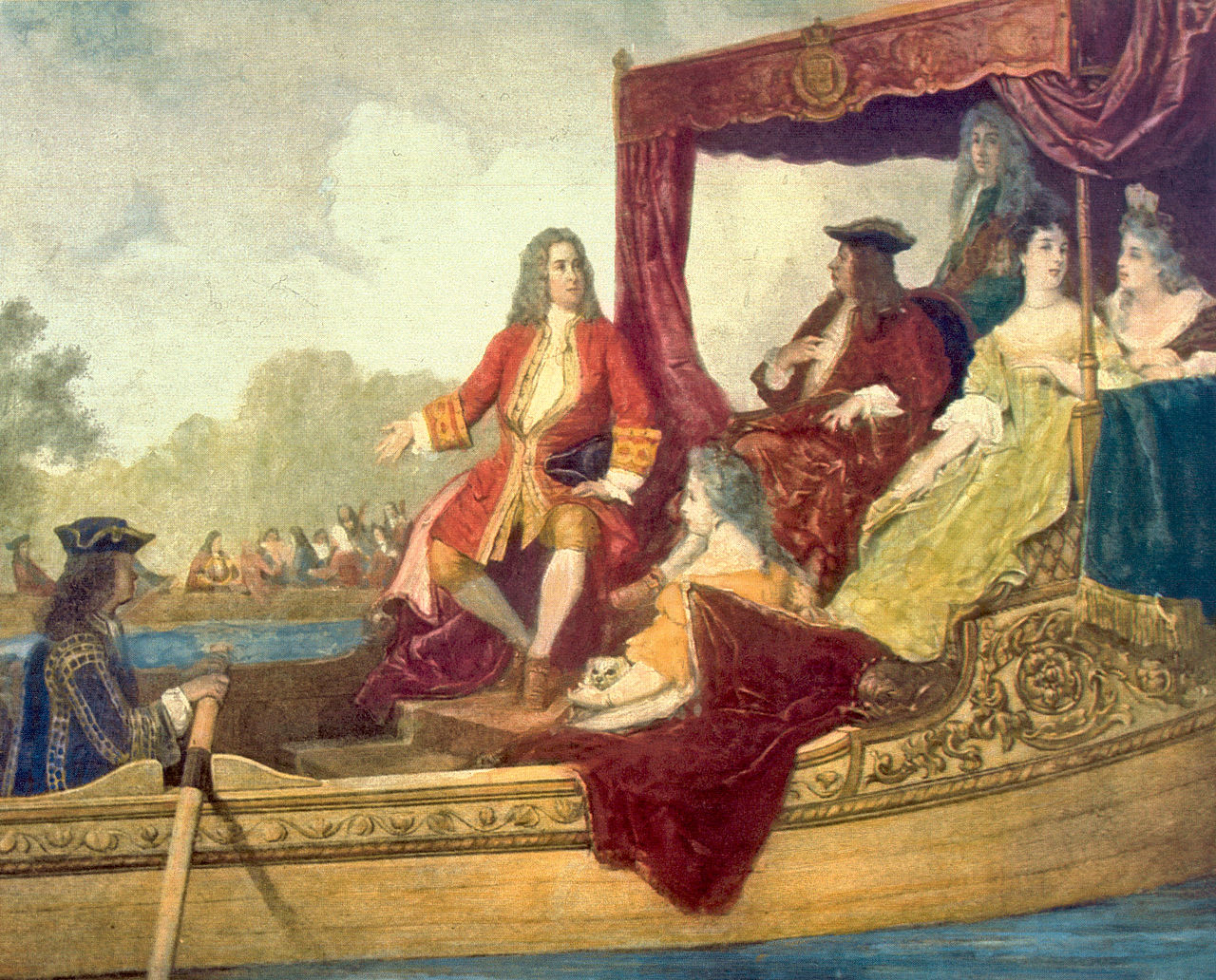

Structure and musical characteristics
The three suites are cast in different keys — most often described as F major, D major and G major — and mix short movements of contrasting tempo and character. Handel assembled a sequence of dances and overture‑style pieces including minuets, hornpipes and bourrées, along with airs, overtures and contrapuntal sections. The variety of tempi and textures gives each suite both unity and variety: stately dances share program space with buoyant, rhythmic numbers designed to energize a royal procession.
Instrumentation and performance practice
The scoring reflects the forces typical of an early 18th‑century orchestra but omits instruments that were impractical for a boat‑based performance. In an ensemble approximating a modern period performance, the lineup often includes:
- flute
- two oboes and two recorders
- a single bassoon (bass‑line reinforcement)
- two horns and two trumpets
- string section (violins, violas, cellos and basses) and a basso continuo
Contemporary accounts note that large keyboard and percussion instruments such as the harpsichord and timpani were not part of the river‑borne ensemble, probably because they could not be transported or sounded effectively on a barge.
Premiere and historical anecdotes
The most enduring story places the first performance on the River Thames on 17 July 1717, when a flotilla carrying King George I passed near Chelsea. According to surviving reports and later retellings, Handel’s music was performed from boats alongside the royal barge by a substantial band of players. One popular account suggests the suites were composed to regain royal favor after a disagreement; another more neutral account simply describes them as entertainment for a royal outing. Contemporary listeners reputedly enjoyed the music so much that it was repeated several times during the journey.
Legacy and modern reception
Since the 18th century, the Water Music has remained among Handel’s most frequently performed works. Individual movements, especially the opening fanfares and the buoyant Alla Hornpipe, are often extracted for concert programs, films and ceremonial occasions. Performers today explore different approaches: some favor period instruments and historically informed tempos suitable for outdoor acoustics, while others present the suites in standard concert halls. The collection has influenced the way composers and impresarios imagined music for public, processional and scenic events.
Further notes
The Water Music illustrates how purposeful scoring, dance forms and public spectacle combined in the Baroque era to serve both musical and social functions. It also provides a practical case study of how composition, instrumentation and venue can interact — a work conceived for the Thames continues to thrive on stages and in recordings worldwide.
Related articles
Author
AlegsaOnline.com Handel’s Water Music: Overview, Structure, and Historical Context Leandro Alegsa
URL: https://en.alegsaonline.com/art/106801