
Orchestra: structure, history, repertoire, and common distinctions
Overview of orchestras: instrument families, sizes and types, historical development, roles such as conductor and concertmaster, repertoire and uses, organization, and contemporary practice.
Overview: An orchestra is an organized ensemble of musicians who perform together on a variety of instruments. Orchestras appear in concert halls, opera houses, recording studios, and community venues. The name derives from a historic term for a performing area: originally the semi-circular space before the stage in a Greek theatre; over time the word shifted from the place to the people performing within it.
Image gallery
8 Images
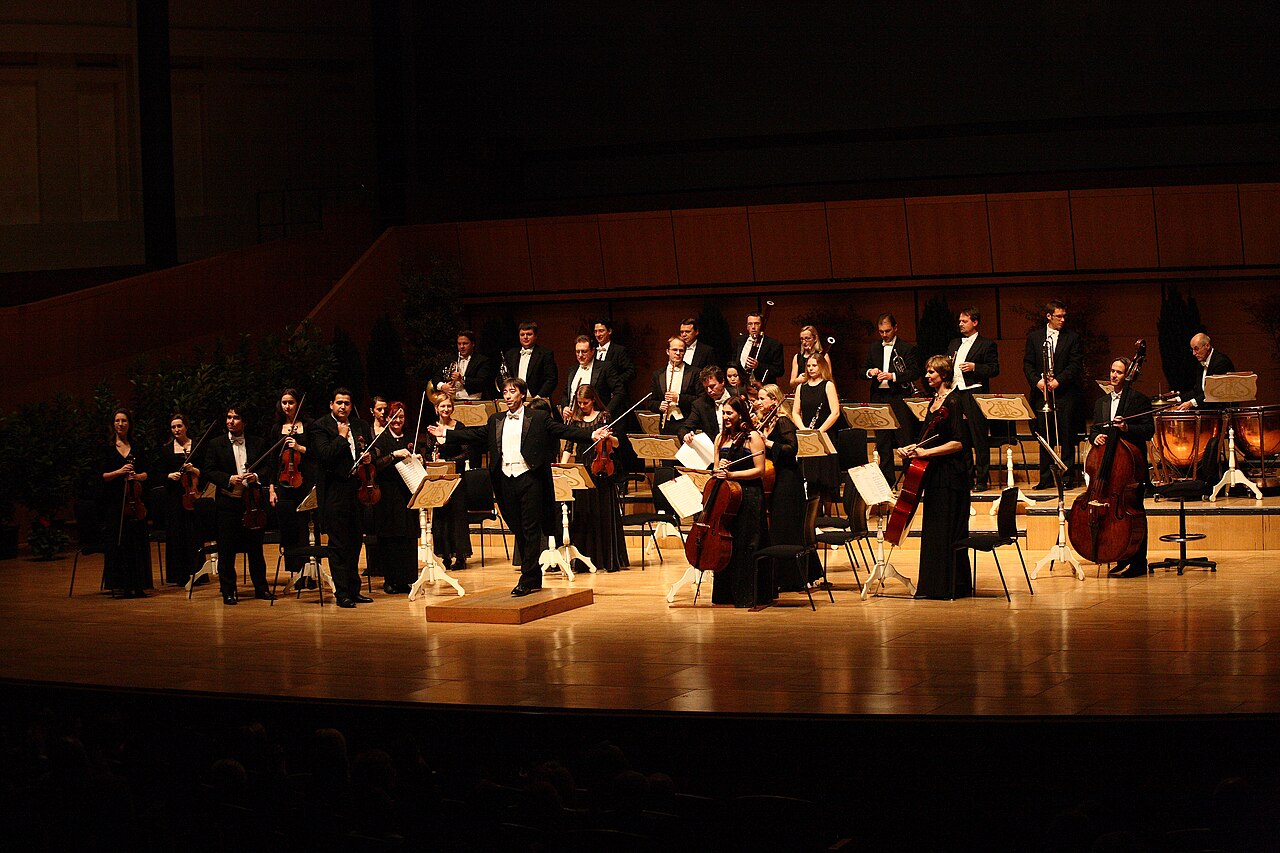


Instrument groups and typical layout
Modern orchestras are normally divided into four families: strings, woodwinds, brass, and percussion. Strings—violins (first and second), violas, cellos and double basses—form the core and often sit nearest the audience. Woodwinds (flutes, oboes, clarinets, bassoons and auxiliaries) usually occupy the middle, with brass (horns, trumpets, trombones, tuba) and percussion at the rear. Harp, piano and other auxiliary instruments are used as required by the score. Seating arrangements can vary by tradition, repertoire and conductor preference to achieve balance and blend.
- Strings: principal first violin (concertmaster), section principals and ranks
- Woodwinds: principal players and doubling on auxiliary instruments
- Brass: often placed to project sound while blending with strings and woodwinds
- Percussion: timpani, tuned and untuned percussion, mallet instruments
Sizes and common types
The term "orchestra" covers ensembles of many sizes. A full or symphony orchestra can comprise large numbers of players for the grand Romantic, 20th-century and film repertoires; a chamber orchestra is substantially smaller and suited to earlier or more intimate works. A string orchestra contains only strings. Pit orchestras accompany opera, ballet and musicals and are configured to fit theatre pits and specific scores.
Historical development
From ancient theatre origins, orchestral practice developed through the Baroque and Classical eras when composers standardized forces and textures. During the 19th century the palette and size expanded as composers sought new colors and greater dynamic range. The 20th century and the rise of film music broadened instrumentation further. In recent decades a parallel movement for historically informed performance has revived period instruments and performance techniques for Baroque and Classical repertoire.
Roles within the ensemble
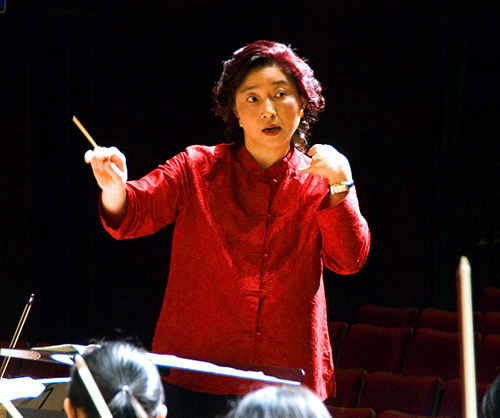
Key roles include the conductor, who shapes tempo, dynamics and overall interpretation, and the concertmaster (principal first violin), who leads tuning, coordinates string articulation and serves as liaison between conductor and players. Principal players of each section guide balance and phrasing. Administrative and supporting roles such as librarians, stage managers and artistic administrators are essential to planning and performance.
Repertoire and activities
Orchestras perform symphonies, concertos, overtures and descriptive orchestral pieces; they accompany soloists and singers, support opera and ballet, and record for media. Many ensembles commission new works and present contemporary music alongside established repertoire. Community engagement, youth ensembles and educational programs extend orchestral activity beyond the concert hall.
Organization, finance and modern practice
Orchestras operate under varied institutional models: professional salaried ensembles, freelance groups, university orchestras and amateur community orchestras. Funding typically mixes ticket revenue, philanthropy, grants and endowments. Programming, touring and outreach are shaped by artistic goals and financial realities. Names such as "philharmonic" and "symphony" are largely traditional and do not indicate a uniform size or function.
Auditions, rehearsal and interpretation
Musicians are usually appointed after auditions and rehearse intensively to realize a conductor's interpretive vision. Rehearsal processes address balance, ensemble precision and stylistic details. Historically informed performances and modern interpretations coexist, offering audiences varied listening experiences.
For introductory reading and resources on orchestral practice and instrumentation, consult general music references and institutional pages: musicians overview, instrumentation guide, symphony orchestras, performance spaces, and historical origins.
Questions and answers
Q: What is an orchestra?
A: An orchestra is a group of musicians playing instruments together to make music.
Q: How many players are in a symphony orchestra?
A: A symphony orchestra typically has about 100 players.
Q: How many players are in a chamber orchestra?
A: A chamber orchestra usually has 30 or 40 players.
Q: Does the number of players vary depending on the type of music they are playing and the size of the venue?
A: Yes, the number of players can vary depending on what music they are playing and the size of the place where they are performing.
Q: Where did the word "orchestra" come from originally?
A: The word "orchestra" originally referred to the semi-circular space in front of a stage in a Greek theatre which was where singers and instruments used to play.
Q: When did it start referring to musicians themselves?
A: Gradually over time, the word came to mean the musicians themselves.
Related articles
Author
AlegsaOnline.com Orchestra: structure, history, repertoire, and common distinctions Leandro Alegsa
URL: https://en.alegsaonline.com/art/95648