
Flute (woodwind instrument)
Overview of the flute: design, history, types (concert flute, piccolo, alto, bass, pan), playing technique, repertoire and role in orchestras, and notable developments such as the Boehm system.
The flute is a member of the woodwind family and one of the oldest musical instruments. It produces sound when a player directs a focused airstream across an opening; modern concert flutes are held transversely (side-blown). Performers are commonly called flutists or flautists, and the instrument appears in solo, chamber and orchestral settings around the world.
Image gallery
10 Images


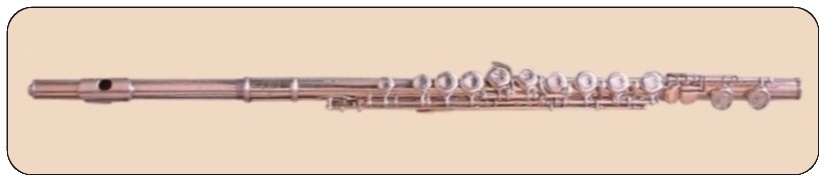


Characteristics and construction
A typical modern concert flute is a metal tube in the key of C and covers roughly three octaves, though exact range depends on the instrument and player. Major parts include the headjoint (with the embouchure hole), the body (bearing the tone holes and keys) and the footjoint. Common materials are silver, nickel-silver and sometimes wood or gold for specialty instruments. The player shapes the embouchure, controls breath pressure and uses fingerings and keys to change pitch and timbre.
Types and variations
- Concert flute: the standard orchestral instrument in C.
- Piccolo: plays an octave higher than the concert flute and is often used for color and brilliance in orchestral writing — see the piccolo reference here.
- Alto and bass flutes: larger, lower members of the flute family; the alto flute sounds a fifth below the concert flute.
- Pan flute: an ancient set of tuned tubes arranged side by side; historically important in many cultures — example entry on pan flutes.
History and development
Flutes appear in archaeological records across many civilizations. During the Renaissance and Baroque eras a variety of transverse flutes and recorders were in use; the term "flute" could mean different instruments in different places and periods. In Baroque practice the name sometimes referred to the recorder, which led to the transverse instrument being called the traverso to reduce confusion; see notes on Baroque music and the recorder. Major 19th-century redesigns by Theobald Boehm, a Bavarian maker and innovator, standardized a system of keywork and bore dimensions that improved intonation, projection and facility across the chromatic scale; background on Boehm is available via Boehm.
Repertoire, roles and examples
The flute has a large and varied repertoire. In symphony orchestras it commonly appears in pairs and sometimes in larger numbers; orchestral practice and personnel issues are discussed under orchestras. Composers have written concertos and showpieces that exploit the instrument's agility and tone, including concerto literature (concertos) and chamber works (chamber music). Famous examples that demonstrate the flute's contrasting expressive possibilities include J. S. Bach's Badinerie from Orchestral Suite No. 2 and the opening solo of Claude Debussy's Prélude à l'après-midi d'un faune. Orchestral scoring often pairs the concert flute with a piccolo or an alto flute to extend the ensemble's high and low registers.
Playing technique and contexts
Players develop a controlled embouchure, breath support and articulation to shape tone and dynamics; extended techniques in contemporary music include flutter-tonguing, multiphonics and pitch bending. Beyond classical music the flute appears in folk traditions worldwide, in jazz, in film scores and in contemporary experimental music. Important distinctions to note: the modern concert flute is classified as an aerophone, not a brass instrument, and its modern mechanism is commonly termed the Boehm system.
For further reading on construction, repertoire and technique, consult general instrument guides and specialist entries: instrument overviews are often linked under general topics like flute, historical surveys under Baroque music and instrument families, and maker histories under profiles such as Boehm. Choirs, orchestras and educational programs list typical uses and adaptations; see resources on orchestral practice here and collections of repertoire here.
Related articles
Author
AlegsaOnline.com Flute (woodwind instrument) Leandro Alegsa
URL: https://en.alegsaonline.com/art/35290
Sources
- books.google.com : The Flute Book: A Complete Guide for Students and Performers
- sugita.co.jp : フルートの選び方 (Choice of flute)
- books.google.com : The Musical Times