
War elephant
A war elephant is a trained elephant used in combat to shock, carry troops, and support armies. This article covers its characteristics, historical use across regions, decline with new weapons, and lasting legacy.
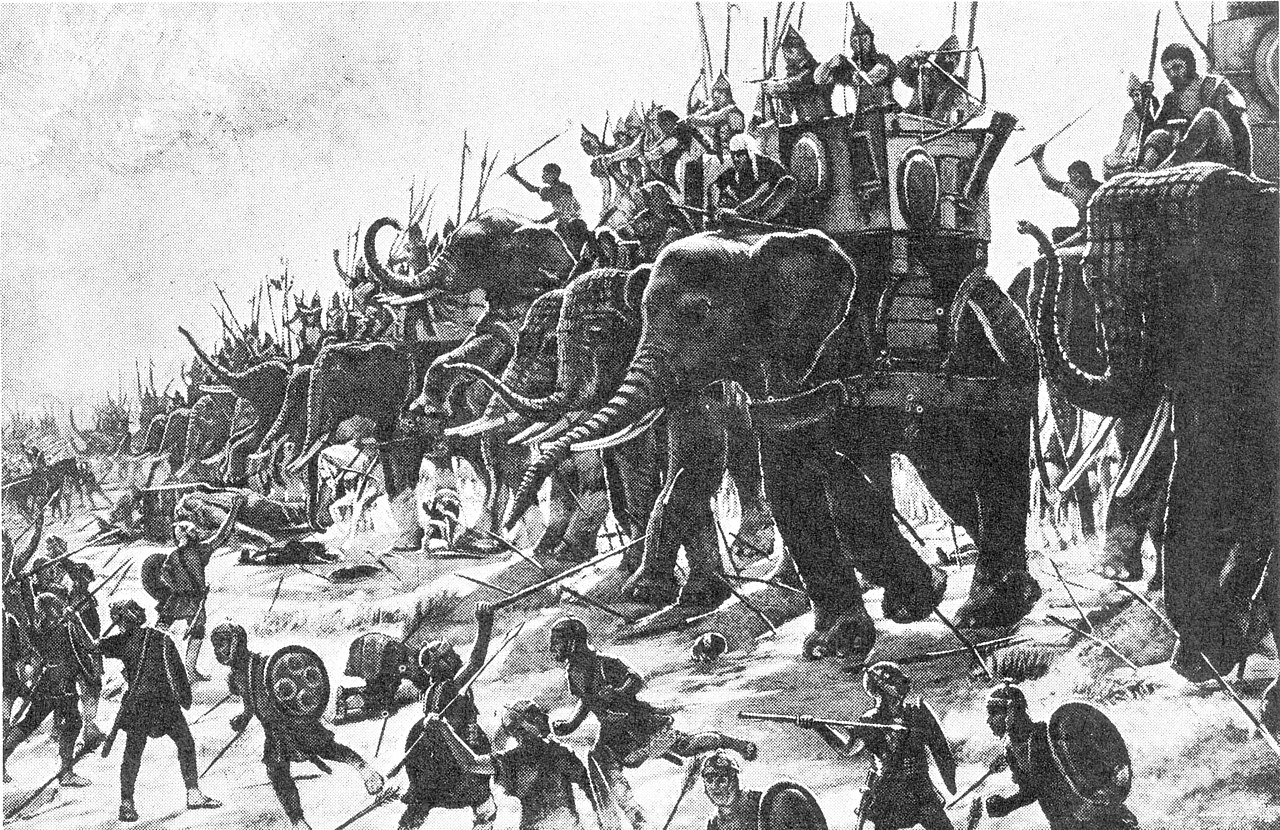
A war elephant is an elephant that has been trained and adapted for military purposes. Historically, these animals served as mobile platforms, heavy chargers and psychological weapons on the battlefield. Armies developed specialized methods of handling, feeding and protecting elephants so they could operate under combat conditions. The practice combined animal care, human logistics and battlefield tactics into a single, distinctive element of pre-modern warfare. Modern readers encounter war elephants most often in accounts of ancient and classical wars and in the iconography of several Asian and Mediterranean civilizations. Elephant and the concept of an animal trained for fighting are closely linked: these creatures were typically selected and raised specifically to perform in battle trained for battle.
Image gallery
10 Images



Characteristics and battlefield roles
War elephants were valued for strength, size and the terror they inspired. Handlers and riders guided them from howdahs or with direct control on the animal’s neck. Their principal role was shock action: a controlled shock tactic in which the elephant would charge enemy lines to trample infantry, scatter cavalry, break formations and create openings for friendly troops. Elephants could carry armored riders, small artillery or banners and sometimes served as elevated command platforms. Armoring for the animal and for the howdah helped, but excessive protection made them heavier and harder to control.
History and geographical spread
War elephants first appear with strong evidence in South Asia, where they were integrated into royal and military institutions. From this core region their use spread through trade, conquest and diplomacy to Persia, the Hellenistic kingdoms, North Africa and later parts of Southeast Asia. Notable historical users include Indian polities, the armies of Pyrrhus of Epirus and the Carthaginian military establishment. Some famous episodes involve commanders like Hannibal, who brought elephants across the Alps during his campaign against Rome. Carthage and other Mediterranean powers adapted the animal to suit different theaters of war. The choice of species also mattered: Asian elephants were generally preferred where available because of temperament and trainability, while African elephants were less commonly used in large-scale formations.
Tactics, advantages and limitations
- Advantages: psychological impact, physical power to break lines, elevated platforms for archers or commanders.
- Limitations: vulnerability to missile fire, difficulty of supply and control, susceptibility to panic and stampede, terrain restrictions.
- Countermeasures: disciplined infantry squares, use of stakes and trenches, missile fire to wound and frighten animals.
As military thinking evolved, commanders developed methods to neutralize elephants. Changes in infantry formation, the use of concentrated missile volleys and later developments in gunpowder weaponry all reduced the battlefield effectiveness of elephants over time. Military thinkers and armies adapted their tactics tactics to lessen the threat posed by large animals.
Decline, later uses and legacy
The widespread emergence of firearms and artillery gradually made war elephants obsolete; the arrival of heavier cannon and more lethal small arms in various regions curtailed their battlefield role—cannons being particularly decisive. After military use declined, elephants continued to have economic and symbolic roles, assisting with heavy transport, forestry and engineering tasks, and appearing in ceremonial contexts. In many parts of Asia they remained valuable as draft animals for non-military work such as logging and building construction. Today war elephants survive in historical studies, reenactments and in art and literature as powerful symbols of monarchy, martial prestige and the interaction of humans with large wild animals.
For further reading on the biology, training and regional histories of elephants in warfare, consult sources that cover their natural history, military treatises and archaeological evidence. Scholarly research continues to refine our understanding of how armies organized and supported these complex units and of the practical experience of soldiers and mahouts who worked with them.
See also: Elephant biology, training methods, and historical case studies such as India, Carthage and campaigns led by Hannibal across the Alps toward Rome. Additional context on the changes in military tactics and the impact of gunpowder and cannons helps explain the decline and post-military roles of elephants in construction and labor.
Related articles
Author
AlegsaOnline.com War elephant Leandro Alegsa
URL: https://en.alegsaonline.com/art/106486