
Cannon: history, design, types, and uses
An overview of the cannon — a large gun that fires projectiles using explosive propellants. Covers parts, operation, historical development, types (guns, howitzers, mortars, autocannons) and modern roles.
Overview
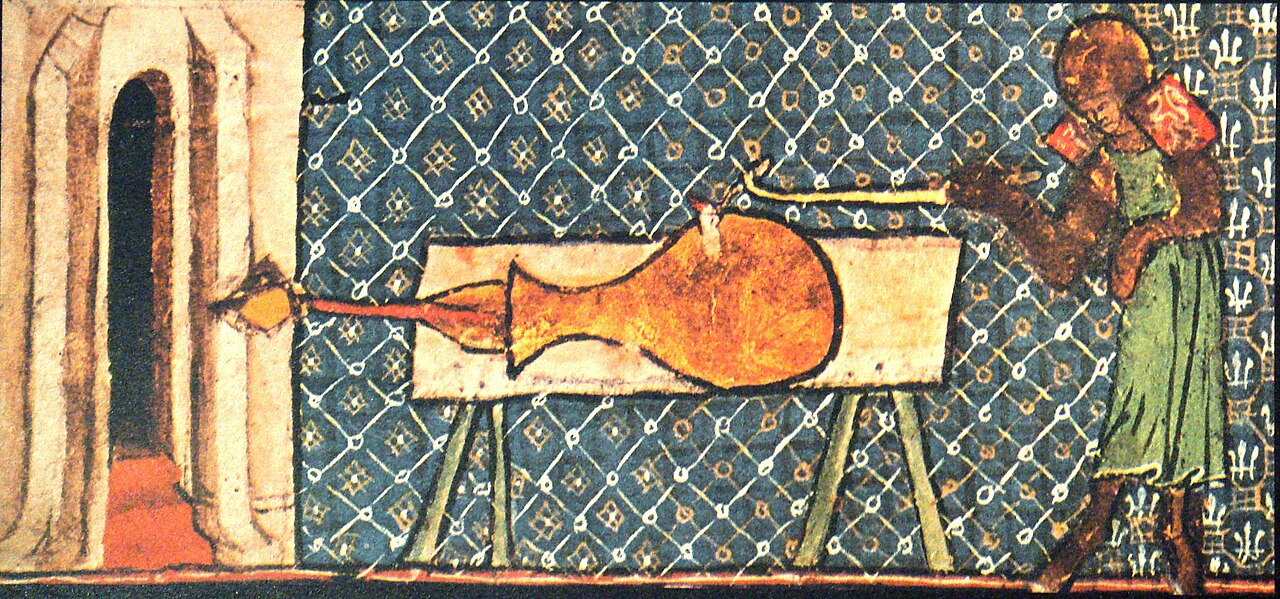
A cannon is a large artillery piece that launches a projectile from a tubular chamber called a barrel by using a rapidly expanding gas from an explosive propellant. In general language the words "cannon" and "gun" are often used interchangeably to describe heavy firearms designed for long-range fire, but the term also refers to specific historical and technical categories. A cannon converts the energy from an ignited propellant into forward motion of a projectile, which may be a solid shot, an explosive shell, or a specialized munition. The idea of using gunpowder to propel projectiles originated in medieval China and spread across Eurasia through trade and warfare; it evolved into a wide family of weapons and influenced tactics, fortification design, and naval power.
Image gallery
10 Images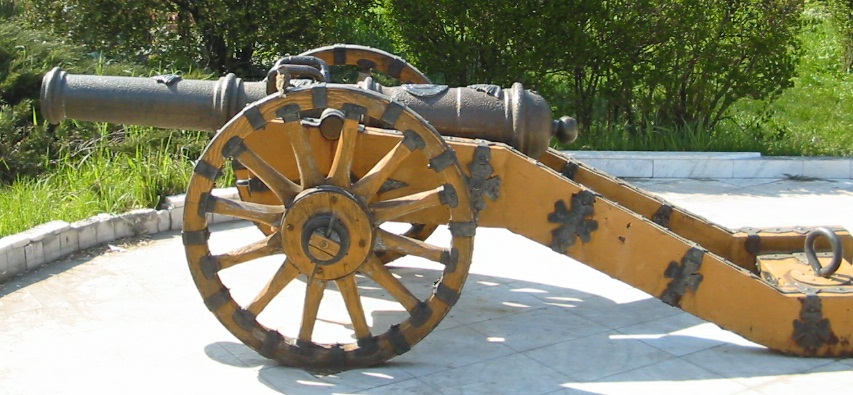




Parts and how it works
At its simplest a cannon consists of several basic elements. These govern how it is loaded, aimed, and fired:
- Barrel: a tube that guides the projectile and contains the pressure of the propellant.
- Bore and caliber: the internal diameter of the barrel; caliber is a basic size measure.
- Breech or muzzle: location where the propellant and projectile are loaded; older cannons were muzzle-loading, later designs used breech mechanisms.
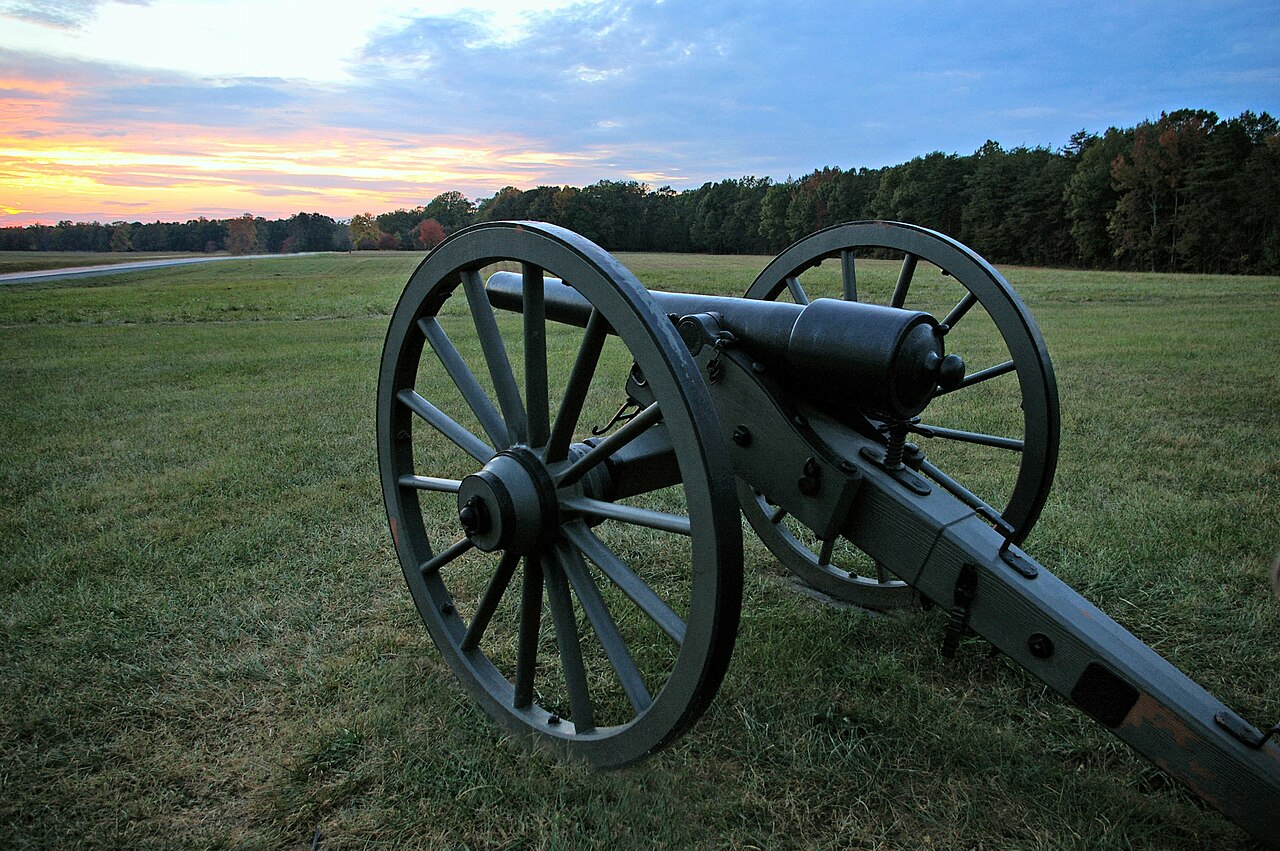
- Carriage and mounting: supports the barrel and allows elevation and traverse; naval and field mountings differ.
- Ignition system: means to ignite the propellant, from simple fuses to percussion primers and modern primers for cartridges.
When the propellant is ignited the rapidly expanding gases create pressure that pushes the projectile down the barrel and out toward the target. Rifled barrels, introduced to increase accuracy, give the projectile spin. Recoil management and carriage design control the movement of the gun when fired.
History and development
Cannons trace their technological roots to the invention of gunpowder and early powder weapons in China; they migrated westward and were adapted in many cultures. Early cannon were cast from bronze or iron and fired stone or iron balls. Over centuries the technology progressed from simple, sometimes unreliable pieces to standardized castings, improved gunpowder, better metallurgy, breech-loading mechanisms, rifling, and the introduction of explosive shells. These improvements changed siegecraft, battlefield formations, and naval warfare. By the 19th and 20th centuries cannons ranged from heavy siege guns to quick-firing naval guns and tank armament.
Types and classification
Artificial categories help distinguish roles and design. Field artillery is often categorized by the relationship between barrel length and caliber: pieces with very long barrels relative to their bore are commonly called guns or field guns, intermediate lengths are called howitzers, and shorter barrels with high-trajectory fire are termed mortars. A practical rule of thumb compares barrel length to caliber: a very long barrel might exceed about 35 times the caliber and be classed as a gun; 10–35 times as a howitzer; less than that as a mortar. Modern rapid-fire weapons with automatic loading and smaller calibers are known as artillery autocannons or simply autocannons and serve different tactical roles.
Uses, examples, and legacy
Cannons have been used for sieges, field battles, coastal defense, and naval combat. On ships they dominated engagements for centuries and shaped empire-building; on land they altered fortifications and infantry tactics. Today large-caliber guns remain on warships and on armored vehicles such as tanks, while smaller automatic cannon are used for air defense and on some vehicles. Projectiles vary from solid shot to high-explosive shells, armor-piercing rounds, and specialized munitions. Loading methods and ammunition also evolved from loose powder and shot to cased charges and integrated cartridges.
Notable distinctions and facts
Historically the term "cannon" implied a large, heavy gun, often cast as a single piece; in modern usage it overlaps with several classes of artillery and naval weapons. The propellant and ignition method are central to performance: early black powder gave way to smokeless powders, increasing range and reducing fouling. The development of rifling, recoil-absorbing carriages, and breech mechanisms were key milestones that made cannons more accurate, faster to operate, and more lethal. For more technical or historical detail, see sources on artillery design and military history: projectiles, origins in China, and the chemistry of gunpowder, along with material on ignition methods like ignition systems.
Related articles
Author
AlegsaOnline.com Cannon: history, design, types, and uses Leandro Alegsa
URL: https://en.alegsaonline.com/art/16586