
Vegavis — a Cretaceous bird linking modern waterfowl to Mesozoic avifauna
Vegavis is an extinct genus of bird from the latest Cretaceous of Antarctica whose fossils indicate close relationships with modern ducks and geese and show Cretaceous diversification of bird lineages.
Overview
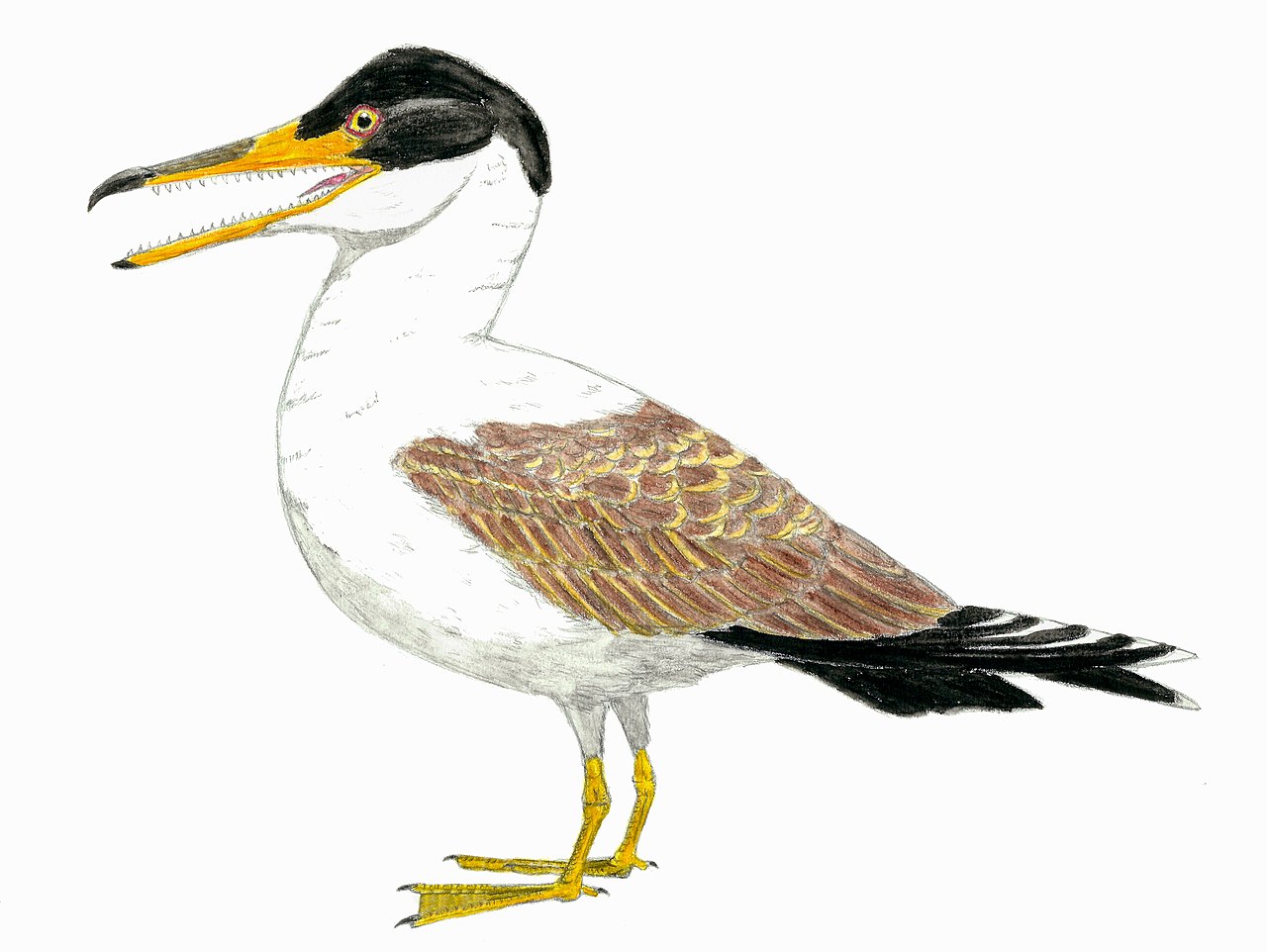
Vegavis is an extinct genus of bird known from the latest Upper Cretaceous deposits of Antarctica. The best-known species, often referred to in the literature, shows anatomical features that align it with the lineage leading to modern ducks and geese, members of the waterfowl clade traditionally associated with the family Anatidae. Its age, near the end of the Cretaceous period, makes Vegavis important for understanding when some living avian groups first appeared.
Image gallery
10 Images



Anatomy and preservation
The Vegavis specimen preserves fragile skeletal elements preserved within rock matrix. High-resolution imaging and careful preparation have exposed portions of the skull, shoulder girdle, sternum and limb bones. These elements exhibit a mix of primitive and derived features: some proportions and articulations resemble those of modern waterfowl, while other traits are more typical of Mesozoic birds. Interpreters have noted characters compatible with aquatic or semi-aquatic lifestyles, such as bone shapes consistent with swimming and flight adaptations, but the fragmentary nature of the material limits detailed ecological reconstruction.
Discovery, age and curation
The type material comes from strata deposited roughly 66 million years ago, in the closing stages of the Cretaceous. Recovered from high-latitude sediments, this fossil indicates that advanced avian lineages were present in polar regions before the end-Cretaceous extinction. The principal specimen is curated at the Museo de La Plata in Argentina, where it remains available for study under controlled conditions. Modern tomographic methods such as CT scanning were used to image the bones in three dimensions without destructive removal from the matrix.
Paleoecology and distribution
Antarctica during the late Cretaceous had a milder climate than today and supported vegetation and diverse vertebrate communities, including dinosaurs, fishes and other birds. The presence of Vegavis in these deposits shows that some crown-group birds occupied polar ecosystems. While the fossil record remains sparse, each specimen contributes to a more complete picture of how bird groups were distributed across ancient continents and how ecological roles now associated with living waterfowl may have deep roots.
Significance for avian evolution
Vegavis is often cited as evidence that several modern bird lineages had already begun to diversify by the end of the Cretaceous. Because it demonstrates morphological affinities with extant waterfowl, some researchers describe Vegavis as among the first definite physical proof that members of modern avian groups were present during the Mesozoic. This fossil therefore helps bridge molecular-clock estimates and the physical fossil record, supporting a scenario in which the origins of many living bird clades predate the K–Pg boundary.
Research methods and implications
Study of Vegavis illustrates the value of non-destructive techniques in paleontology. CT scanning, digital reconstruction and comparative anatomy against living taxa permit detailed study of delicate fossils without causing irreversible damage. Continued fieldwork and reanalysis of existing specimens may reveal additional material or related taxa that refine Vegavis’s exact relationships and the timing of early avian radiations.
Further resources
- General genus overview: Vegavis.
- Context on avian paleontology: birds of the Mesozoic.
- Geologic setting and age information: Upper Cretaceous deposits.
- Regional paleontology of Antarctica: Antarctic research.
- Modern waterfowl comparisons: ducks, geese and Anatidae.
- Discussion of diversification: diversified lineages.
- Broader Cretaceous overview: Cretaceous.
- Significance statements: fossil proof and the Mesozoic record.
- Collection and curation information: Museo de La Plata.
Related articles
Author
AlegsaOnline.com Vegavis — a Cretaceous bird linking modern waterfowl to Mesozoic avifauna Leandro Alegsa
URL: https://en.alegsaonline.com/art/104455
Sources
- digimorph.org : digimorph.org/specimens/Vegavis_iaai/nature03150.pdf