
Viceroy (butterfly)
The Viceroy (Limenitis archippus) is a North American butterfly in the Nymphalidae family, known for its resemblance to the monarch, distinct black hindwing band, willow-feeding caterpillars, and ecological role in mimicry.
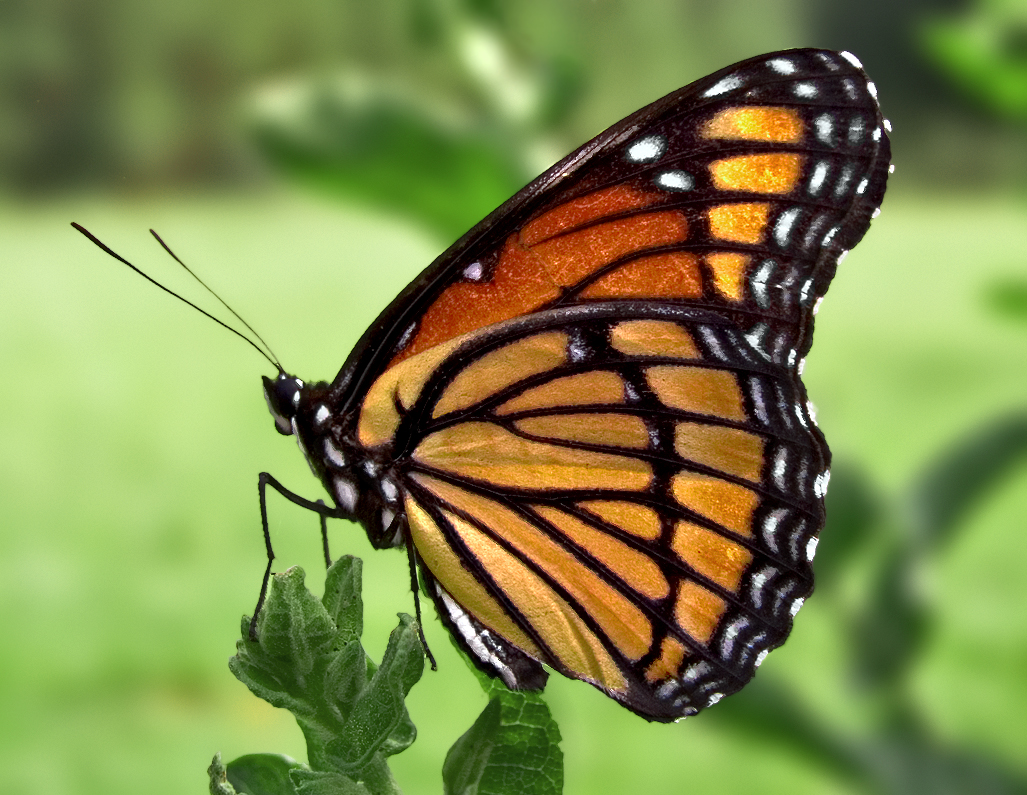
The Viceroy (Limenitis archippus) is a medium-sized North American butterfly in the brush-footed family Nymphalidae. It is widely seen near wetlands, streams and willow stands from southern Canada through much of the United States. Adults are active in warm months and are recognizable by their orange-and-black patterning and a bold dark band that crosses the hindwing.
Image gallery
7 Images




Identification and life stages
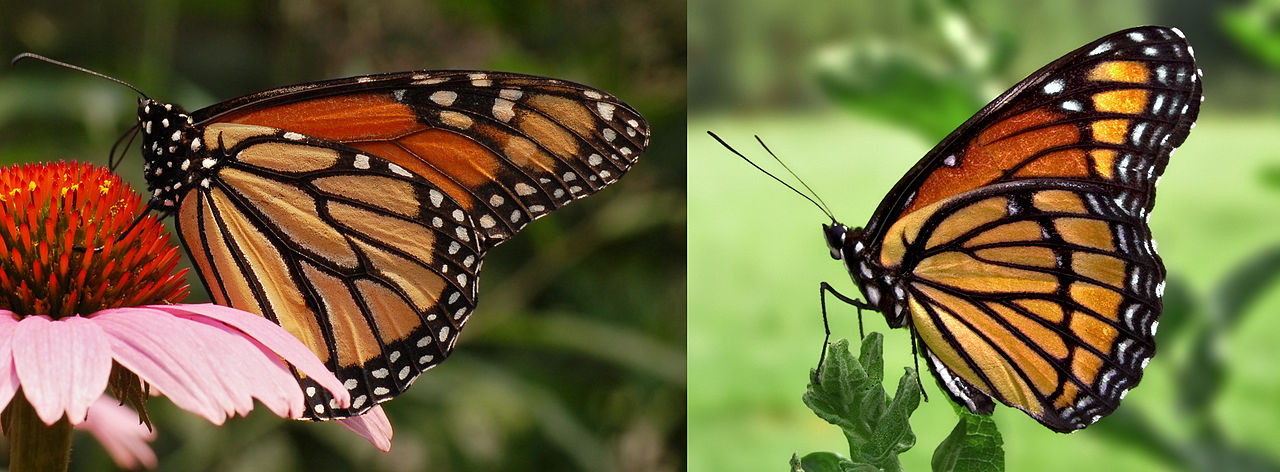
Adults have orange wings with black veins and borders similar to the monarch, but the Viceroy typically displays a distinct black line across the hindwing. Wingspan is roughly 2–3 inches. Caterpillars are mottled brown and knobbly, often described as resembling bird droppings—an effective camouflage. Larvae feed on willow and poplar species and pupate into a chrysalis attached to vegetation.
Host plants and habitat
- Common larval hosts: willows, poplars and cottonwoods.
- Adult food: nectar, tree sap, rotting fruit and moist soil minerals.
- Preferred habitats: riparian corridors, marsh edges and wet meadows.
Mimicry and ecology
The Viceroy was long treated as a Batesian mimic of the distasteful monarch, but research shows it can also be unpalatable, suggesting Müllerian or mixed mimicry. Its resemblance to the monarch deters predators, while its own chemistry—derived in part from host plants—contributes to avoidance by birds. Unlike monarchs, Viceroys do not undertake continent-spanning migrations.
For further species information and identification resources, see species overview, regional guides at range maps, taxonomic data via family Nymphalidae, conservation notes at threat assessments, and citizen-science observations at sighting databases.
Viceroys are common and not generally threatened; they serve as a useful example in evolutionary biology and are a familiar part of North American butterfly fauna.
Related articles
Author
AlegsaOnline.com Viceroy (butterfly) Leandro Alegsa
URL: https://en.alegsaonline.com/art/104915
Sources
- nature.com : "The viceroy butterfly is not a batesian mimic"
- doi.org : 10.1038/350497a0
- erin.utoronto.ca : "Diel flight periodicity and the evolution of auditory defences in the Macrolepidoptera"
- doi.org : 10.1006/anbe.2001.1753