
Mesozoic Era: Age of Dinosaurs and the Rise of Modern Vertebrates
The Mesozoic Era (about 252–66 million years ago), the middle era of the Phanerozoic, saw the rise of dinosaurs, early mammals, birds and flowering plants and ended with a major mass extinction.
Overview
The Mesozoic is the middle era of the Phanerozoic eon and spans the interval from roughly 252 to 66 million years ago. It began after the largest mass extinction in Earth history and ended with another global extinction that removed most large reptiles from the planet. Lasting on the order of 180–190 million years, the Mesozoic is best known as the age in which dinosaurs became the dominant terrestrial vertebrates and many modern groups began to appear.
Image gallery
8 Images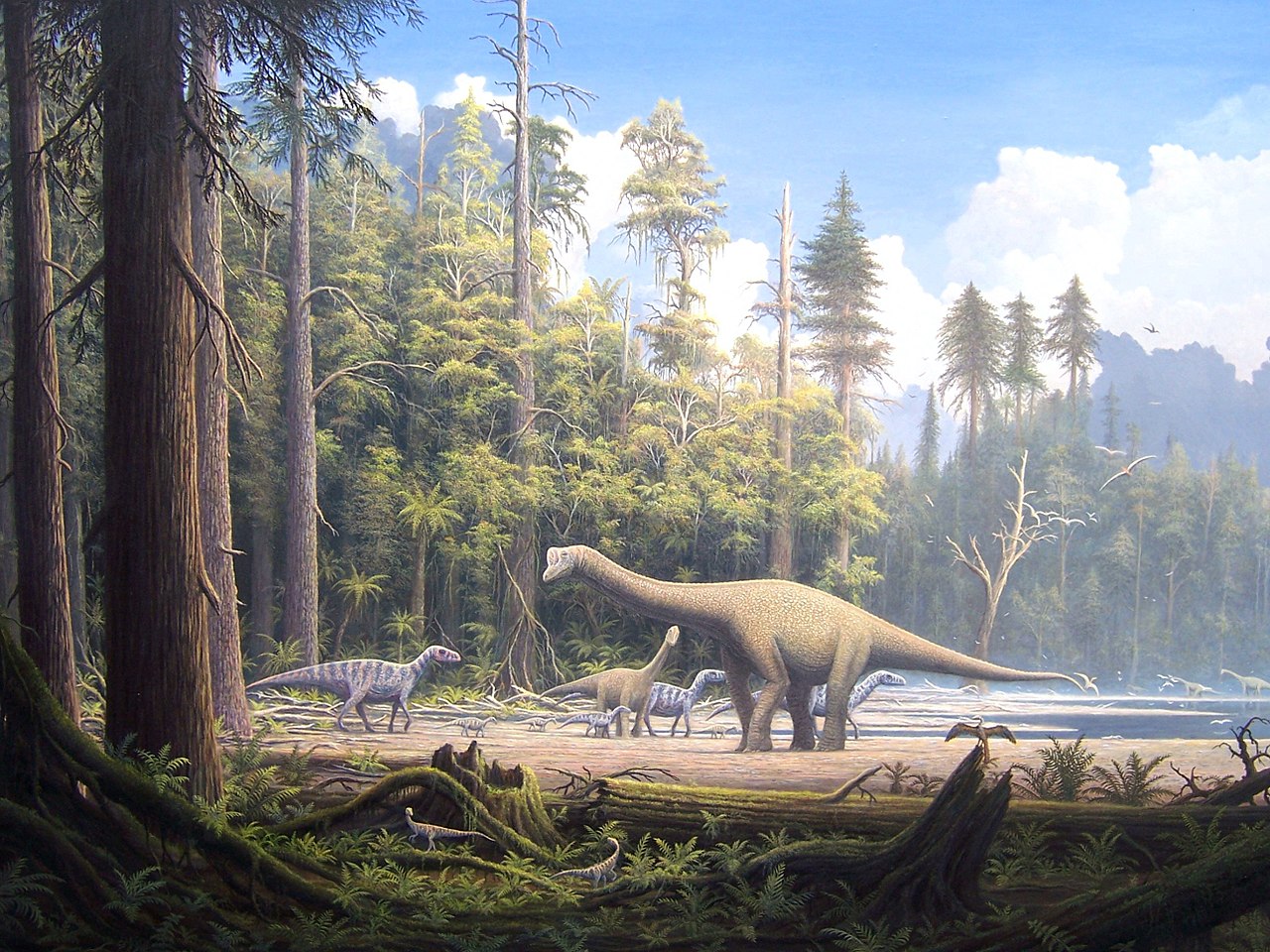


Major subdivisions
Geologists split the Mesozoic into three sequential periods. Each period has distinct climates, life forms and tectonic settings:
- Triassic (early Mesozoic): the period of recovery after the Permian extinction and the time when early dinosaurs, crocodile-line archosaurs and the first true mammals evolved; see Triassic.
- Jurassic: an interval of warm climates, rising sea levels and widespread forests; dinosaurs diversified greatly and the first birds appeared from theropod ancestors.
- Cretaceous: the last period, notable for the spread of flowering plants (angiosperms) and a continued radiation of dinosaurs until the end-Cretaceous extinction.
Life, ecology and key groups
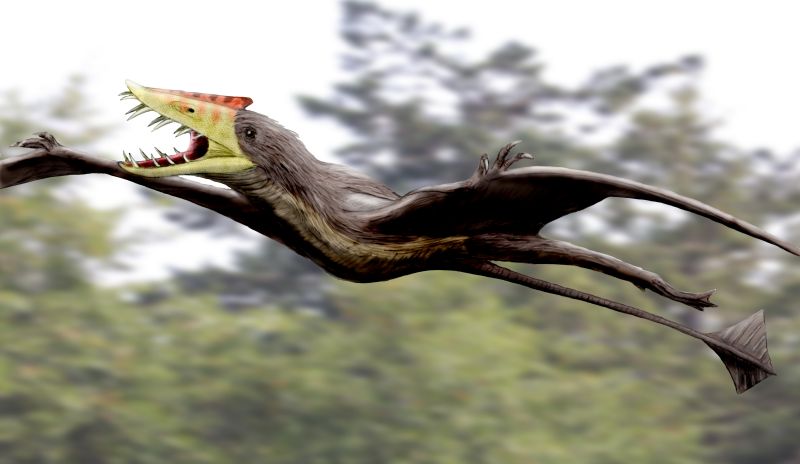
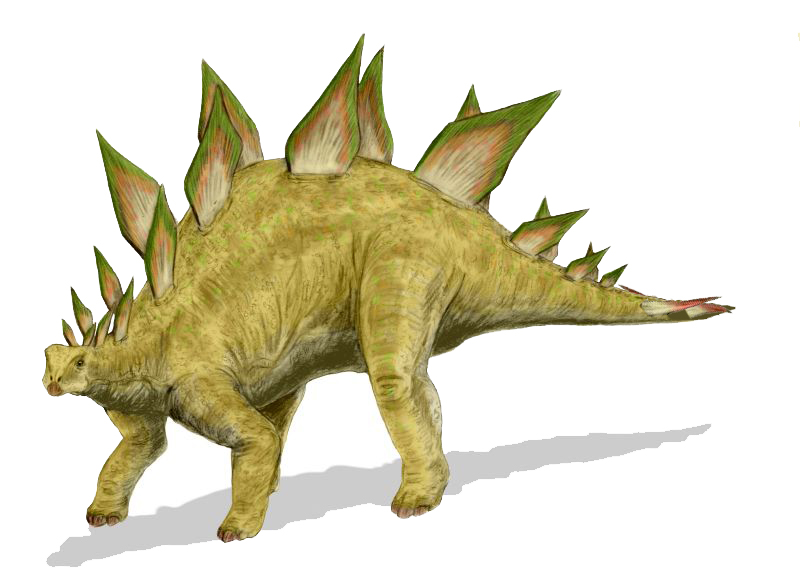
The Mesozoic biota included a wide array of marine, terrestrial and aerial organisms. On land, archosaurs were a dominant reptile group; the term archosaurs groups modern birds and crocodilians with extinct relatives such as non-avian dinosaurs and rauisuchians. Dinosaurs originated early in the Mesozoic and evolved into many forms, from small, agile bipeds to massive sauropods. Birds evolved within the theropod dinosaurs, making them the only dinosaur lineage to survive the end of the era.
Small, often nocturnal mammals also emerged during the Mesozoic. For much of this era they occupied marginal ecological niches—many were insectivorous, arboreal or burrowing—and only later, after the end-Mesozoic extinction, did mammals diversify into larger and more varied forms. Nocturnal habits are discussed in contexts such as nocturnal adaptation studies; sensory shifts like limited colour vision in early mammals are topics of evolutionary research linked to colour vision differences among groups. The evolution of trichromatic vision in some lineages, including primates, is often connected to fruit-eating and visually complex forest habitats.
Origins, tectonics and climate
At the start of the Mesozoic the world was still recovering from the end-Permian crisis. Continental configurations shifted during the era as the supercontinent Pangaea began to rift apart, altering ocean circulation and climate. These tectonic changes influenced sea levels, the distribution of shallow seas and coastal habitats, and the opportunities for diversification and provinciality of faunas across different landmasses.
Extinctions and legacy
The Mesozoic both began and ended with major biotic turnovers. The opening of the era followed the Permian–Triassic extinction event (P/Tr extinction), which dramatically reduced global biodiversity. The era closed with the end-Cretaceous mass extinction, often referred to historically as the K/T event, which marks the boundary after which the Cenozoic era began and modern ecosystems developed. The Mesozoic’s long intervals of evolution established lineages—such as birds and mammals—that shaped subsequent animal life in the Phanerozoic, following the earlier Palaeozoic foundations.
For further reading, paleontological and stratigraphic summaries are available for each period and for key topics such as archosaur evolution and Mesozoic climates; see introductory resources (e.g., pages on the Mesozoic and the Triassic) or focused entries on extinction events like the Permian–Triassic crisis and related mass extinctions.
Understanding the Mesozoic is essential to reconstructing how modern groups originated and how planetary systems—climate, oceans and continents—interacted with life through deep time. For concise topic summaries and deeper treatments, consult specialized overviews and paleobiological databases (see linked subject pages above).
Questions and answers
Q: What is the Mesozoic?
A: The Mesozoic is a geological era that lasted about 186 million years, starting 252.2 million years ago and ending 65 million years ago. It was during this time that dinosaurs lived, as well as the first mammals.
Q: When did dinosaurs appear?
A: Dinosaurs appeared around 231 million years ago, which was 21 million years after the beginning of the Mesozoic.
Q: What group did dinosaurs evolve from?
A: Dinosaurs evolved from reptiles called archosaurs, which are also related to modern birds and crocodiles.
Q: How did mammals differ from dinosaurs during the Mesozoic?
A: Mammals spent most of the long Jurassic and Cretaceous periods as small nocturnal animals living mainly in forests, while most lost their colour vision. In contrast, mammals today have some colour vision due to having three types of colour receptors (cone cells).
Q: What eon does the Mesozoic belong to?
A: The Mesozoic belongs to the Phanerozoic eon.
Q: What preceded and followed it?
A: Before the Mesozoic was the Palaeozoic era, while after it was the Cenozoic era - which we live in - marked by a mass extinction event known as K/T extinction in 65 mya.
Q: What are the three periods within the Mesozoic era?
A:The three periods within the Mesozoic era are Triassic, Jurassic and Cretaceous.
Related articles
Author
AlegsaOnline.com Mesozoic Era: Age of Dinosaurs and the Rise of Modern Vertebrates Leandro Alegsa
URL: https://en.alegsaonline.com/art/64098