
Velociraptor — Late Cretaceous dromaeosaurid (genus)
Small feathered dromaeosaurid from the Late Cretaceous of Asia, noted for a recurved sickle claw, bird-like anatomy, and the famous 'Fighting Dinosaurs' fossil with Protoceratops.
Overview
Velociraptor is a genus of small theropod dinosaurs in the family Dromaeosauridae that lived during the Late Cretaceous, approximately 75–71 million years ago. Remains are best known from Central Asia and northern China. The genus has long been important in studies of the evolutionary link between non-avian dinosaurs and birds because of its bird-like skeleton and evidence for feathers.
Image gallery
10 Images




Size and anatomy
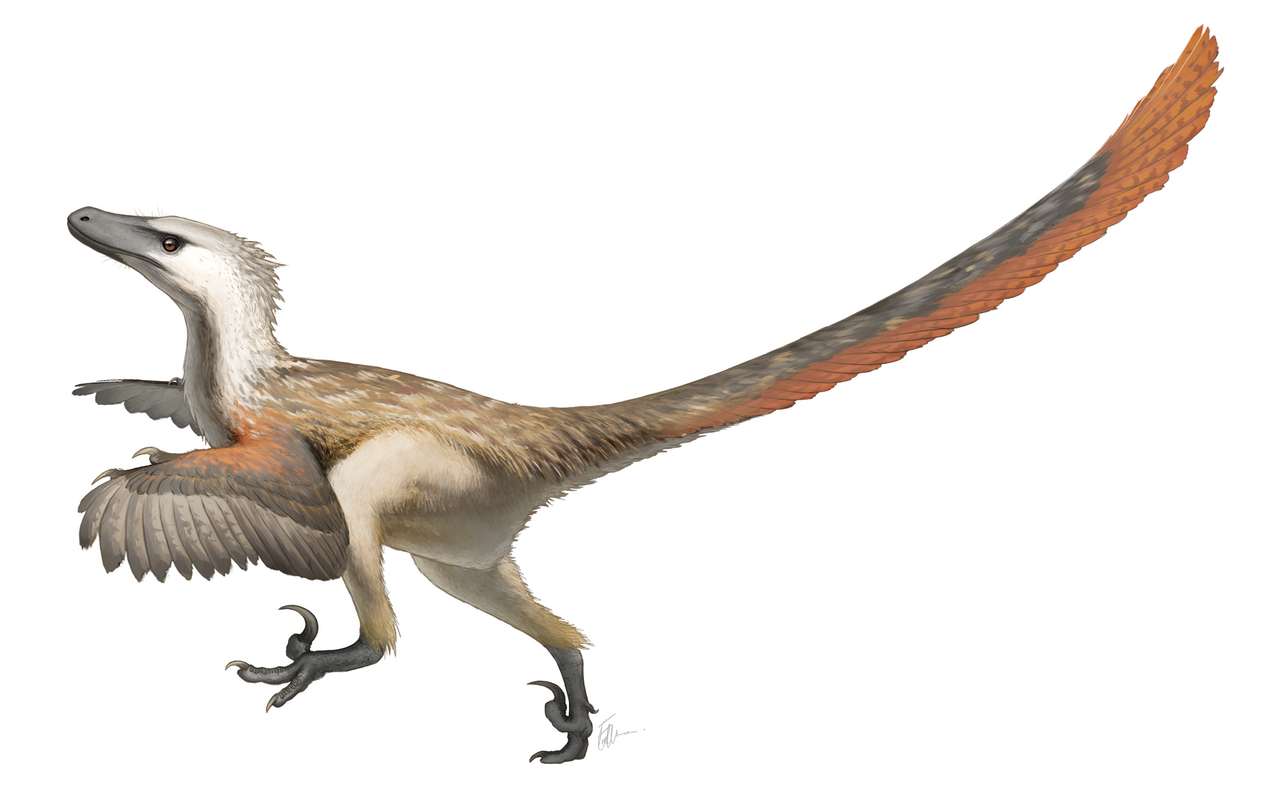
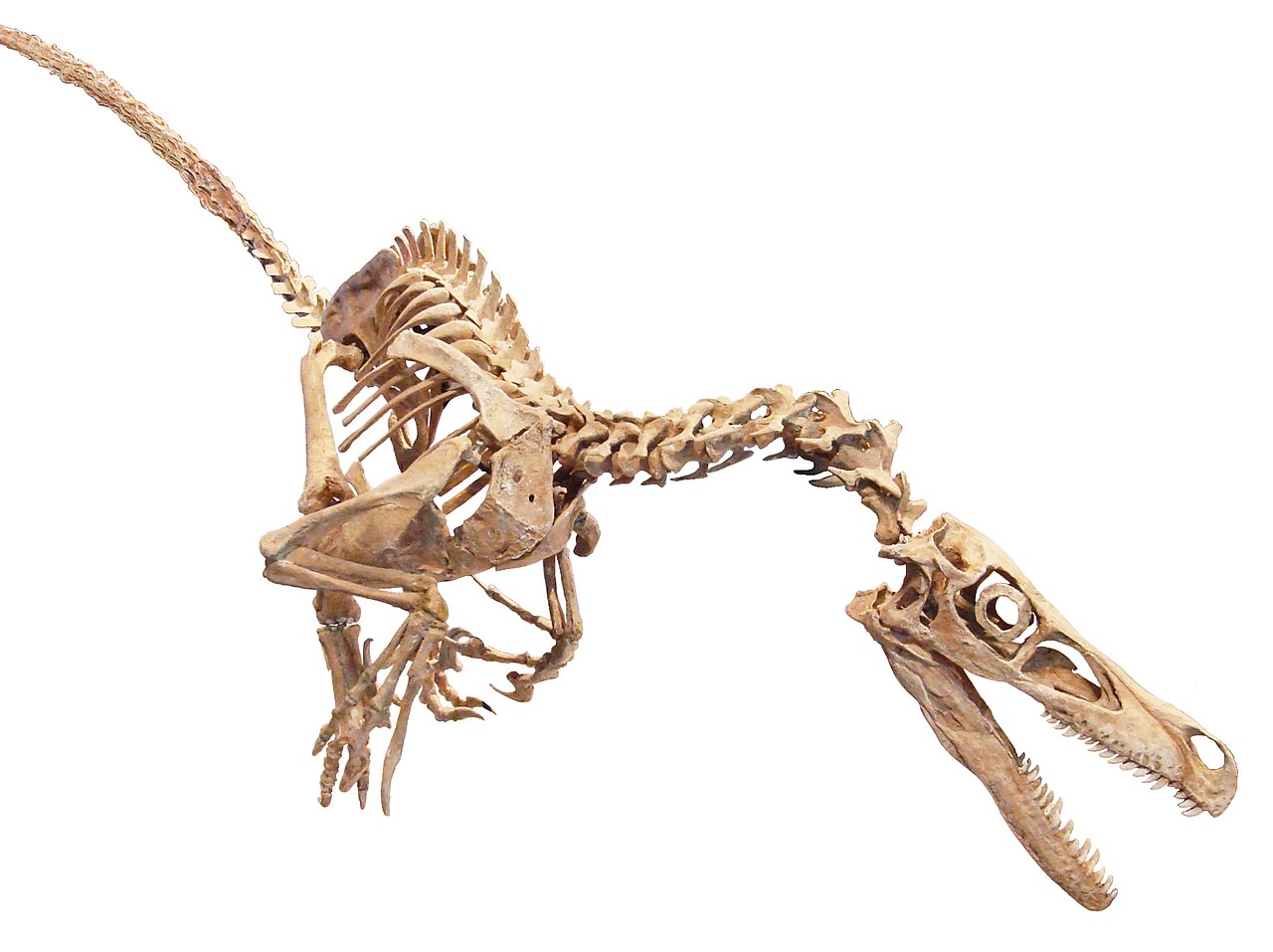
Velociraptor was relatively small compared with many better known theropods. Typical adults measured about two metres in total length and stood under a metre at the hip. The hind foot bore a distinctive recurved, sickle-shaped claw on the second toe; individual claw measurements reported for some specimens are of the order of a few centimetres along the curve. The skull was long and narrow with serrated teeth suited to a carnivorous diet, and the forelimbs were long and adapted for grasping.
- Feathers and integument: Multiple lines of evidence, including quill knobs and forearm anatomy, support that Velociraptor had feathers. These structures are interpreted as serving insulation, display or aiding balance and maneuvering rather than powered flight.
- Limbs and claws: The large second toe claw is a hallmark of the group and likely played a role in seizing or subduing prey; the forelimbs show adaptations for grasping.
- Metabolic implications: Features such as feathers and bone structure are consistent with elevated metabolic rates compared with most modern reptiles, suggesting some degree of endothermy or active physiology.
Species and relationships
Velociraptor is placed within the dromaeosaurids, a clade of generally small to medium-sized, often feathered theropods closely related to birds. At least two species have been named in the genus; the best known is the type species. Comparative study of skull and limb proportions, and discoveries of related dromaeosaurids across Asia, help place Velociraptor within a diverse radiation of maniraptoran theropods.
Discovery and fossil record
Fossils now assigned to Velociraptor were first collected in the Gobi Desert during early 20th century expeditions. The earliest important finds came from desert deposits that preserve an arid to semi-arid ecosystem. Additional material has since been recovered from formations in Mongolia and northern China (notably from deposits correlated with the Gobi Desert and sites in Mongolia), and later Chinese fieldwork expanded the known geographic range (Chinese expeditions). Institutional catalogues and monographs summarize these collections (fossil catalogues).
Palaeobiology and behaviour
Velociraptor inhabited arid to semi-arid landscapes and probably fed on small to medium vertebrates. Its anatomy suggests an active, agile predator capable of rapid turns and grasping prey with its forelimbs and feet. Direct fossil evidence gives rare snapshots of behaviour: the celebrated specimen preserved in close association with a Protoceratops is interpreted as an instance of a predator and prey locked in combat, often cited as the "Fighting Dinosaurs" (Protoceratops fossil).
Disagreements remain about social behaviour such as pack hunting; some authors have proposed cooperative hunting while others argue that skeletal and trace evidence is insufficient to demonstrate complex pack tactics. Likewise, feeding strategies may have varied by age and circumstance, including active predation, ambush, or opportunistic scavenging.
Environment and ecosystems
During the Late Cretaceous, parts of Central Asia supported continental ecosystems with dunes, ephemeral lakes and seasonal water sources. Velociraptor shared its environment with herbivorous dinosaurs, small mammals, lizards and a variety of other theropods. Taphonomic conditions in some formations preserved articulated skeletons and dramatic associations that illuminate predator–prey interactions and palaeoecology.
Scientific and cultural significance
Velociraptor has contributed importantly to understanding the dinosaur–bird transition because of its bird-like forelimbs, presence of feathers, and other skeletal characters. Popular culture has widely adopted the name; cinematic portrayals have often enlarged its size and modified behaviour by borrowing features from related dromaeosaurids. Scientific research continues to refine knowledge of its plumage, biomechanics and ecological role; comparative anatomical studies remain available for further reading (comparative studies).
For curated summaries and specimen records, consult institutional overviews and catalogues referenced above, which compile stratigraphic, locality and museum data (Late Cretaceous context, age estimates, anatomical surveys, fossil catalogues, Gobi field sites, Mongolia finds, Chinese discoveries, famous fighting specimen).
Questions and answers
Q: What was Velociraptor?
A: Velociraptor was a predatory dromaeosaur of the Upper Cretaceous.
Q: When did Velociraptor live?
A: Velociraptor lived about 75-71 million years ago.
Q: How big was Velociraptor?
A: Velociraptor was about two meters long (nearly seven feet) and 0.62 meters tall at the hip, which is bigger than the size of the common chimpanzee.
Q: What unique feature did Velociraptor have on its foot?
A: Velociraptor had one sickle-shaped claw on its foot which measured 6.5 centimeters along its length.
Q: Did Velociraptor have feathers?
A: Yes, Velociraptor had feathers.
Q: Where were the first fossils of Velociraptor found?
A: The first fossils of Velociraptor were found in the Gobi Desert of Mongolia in 1922.
Q: What is a famous fossil of Velociraptor?
A: A famous fossil of Velociraptor, discovered in 1971, was found attacking a Protoceratops in a fossil from Mongolia.
Related articles
Author
AlegsaOnline.com Velociraptor — Late Cretaceous dromaeosaurid (genus) Leandro Alegsa
URL: https://en.alegsaonline.com/art/104502
Sources
- tandfonline.com : tandfonline.com/doi/abs/10.1671/0272-4634(2008)28[432:ANSOVD]2.0.CO;2
- ncbi.nlm.nih.gov : PMID 17885130