
Duck (Anatidae): biology, behavior, and human interactions
Ducks are waterbirds in the family Anatidae. This article covers their classification, anatomy, feeding, life cycle, migration, distribution, domestication, and conservation in accessible, reliable detail.
Ducks are waterbirds commonly placed in the family Anatidae and are broadly described as birds adapted to life in and near water. The everyday name "duck" applies to a range of species rather than to a single evolutionary group. Ducks are closely related to swans and geese, but because similar body forms have evolved more than once, the group is sometimes treated as a form taxon rather than a strictly monophyletic clade. The common distinctions used by observers include generally shorter necks and smaller size compared to swans and geese.
Image gallery
10 Images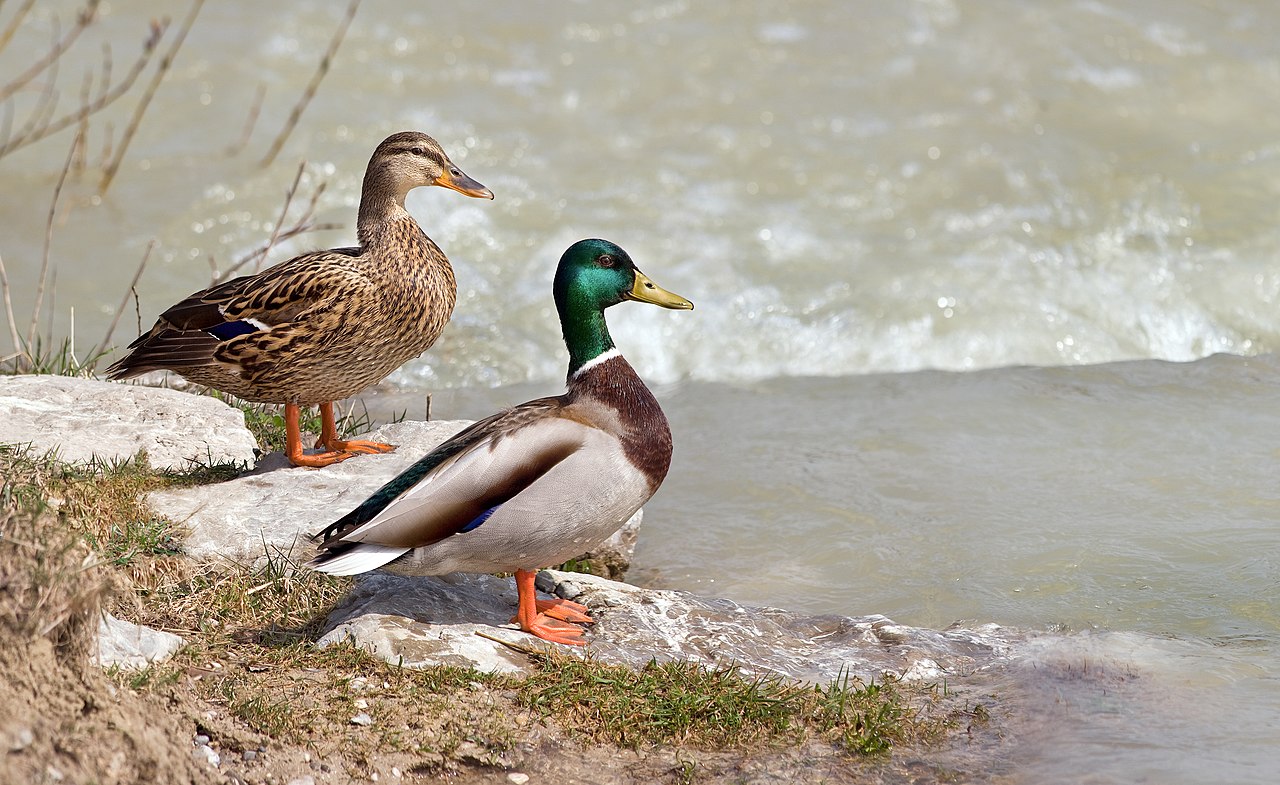


Anatomy and distinctive features
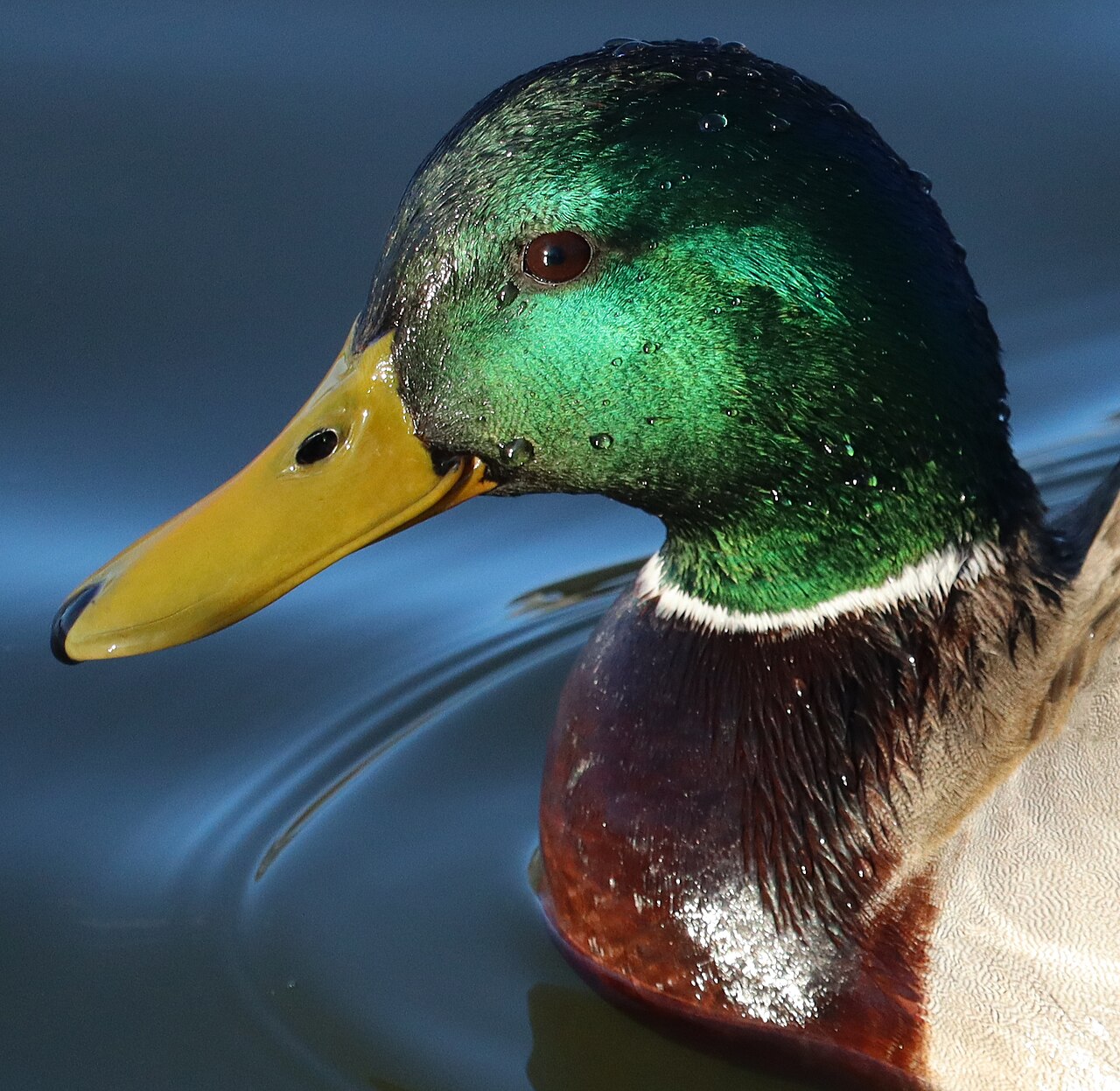
Ducks show anatomical traits suited to swimming and feeding in water. Their bills are often broad and flattened with a comb-like edge, the pecten, which helps strain small food items and maintain plumage. They have webbed feet for propulsion and dense, waterproof feathers maintained by frequent preening and oiling. Many species exhibit sexual dimorphism: males are commonly called drakes, females are hens, and juveniles are ducklings. Ducks occur in a variety of sizes and shapes and are distributed across several subfamilies and genera within Anatidae; some groups are specialized for surface feeding while others are adapted to diving.
Feeding strategies and ecology
Most ducks are primarily aquatic birds that exploit a diverse range of food resources. Some are dabbling ducks, feeding at the surface or by tipping forward to graze on submerged vegetation, mudflats, or shallow water. Others are diving species that pursue invertebrates, crustaceans and small fish beneath the surface. Ducks are generally omnivorous: typical diets include aquatic plants, seeds, grasses, insects, small amphibians, worms and molluscs, and they often supplement wild foods by foraging on land near water. The pecten and bill shape are important functional adaptations that allow species to filter or crush particular prey items.
Although swimming and diving are common, not all birds that swim are ducks. Unrelated groups such as grebes and loons share superficially similar habits but differ in detailed anatomy and evolutionary history. Ducks also show a range of behaviors associated with moult, territory, and social flocking: some species undergo a flightless moult when they replace flight feathers, and many form large flocks outside the breeding season.
Reproduction and life cycle
Reproductive timing and nesting vary with species and climate. Ducks may nest on the ground in vegetation, in tree cavities, or on elevated sites; nests are often lined with down. Many species lay a single clutch each breeding season, though clutch size and the number of broods can vary. Ducklings are generally precocial: after hatching they are relatively mature, covered in down, and capable of leaving the nest to feed with a parent. Migration is a major aspect of the life cycle for many species: numerous ducks are migratory, moving between summer breeding areas and milder wintering grounds according to seasonal resource availability.
Distribution and notable habitats
Ducks have a largely cosmopolitan distribution and occur on every continent except Antarctica. They occupy a wide range of wetland habitats, from coastal estuaries and marine bays to inland lakes, rivers, marshes and seasonal pools. Certain groups such as sea ducks and eiders have specialized for coastal and offshore habitats, while others prefer freshwater wetlands. Ducks have colonized remote islands and established populations on places such as Hawaii and various subantarctic islands; island populations can be vulnerable to introduced predators and habitat change.
Domestication, human interactions and conservation
People have kept ducks for thousands of years for meat, eggs, feathers (including down), pest control and companionship. Domestic breeds, including the Pekin and the Muscovy-derived varieties, differ from wild species in behavior, plumage and body form. Wild and captive ducks are frequently seen on public ponds and in parks, where well-meaning visitors often feed them. Feeding ducks with processed foods such as bread is discouraged because such food lacks proper nutrients and can cause malnutrition, overcrowding, disease, and pollution of waterways; authoritative guidance from wildlife agencies recommends providing no food or appropriate waterfowl feed instead.
Conservation challenges for ducks include wetland loss and degradation, pollution, unsustainable hunting in some regions, invasive species on breeding islands, and climate change that alters wetland hydrology. Conservation measures commonly emphasize protection and restoration of wetlands, sustainable harvest management, monitoring of populations, and public education about responsible interactions with waterfowl. International flyway agreements and local habitat projects play important roles in maintaining migratory populations.
- Overview of Anatidae and classification
- Swimming mechanics and adaptations
- Aquatic plants and duck diets
- Guidance for feeding ducks in public ponds
- Bird anatomy and terminology
- Swans: comparison
- Geese: comparison
- Form taxa in ornithology
- Diving duck ecology
- Grebes and convergent swimmers
- Loons and their life histories
- Aquatic bird ecology
- Dabbling duck species
- Migration and flyways
- Seasonal breeding behaviour
- Wintering strategies
- Global distribution patterns
- Polar limits and absence from Antarctica
- Island populations and vulnerabilities
Questions and answers
Q: What is a baby duck called?
A: A baby duck is called a duckling.
Q: What type of birds are ducks?
A: Ducks are birds in the family Anatidae.
Q: How do ducks get their food?
A: Ducks feed on the surface of water or on land, or as deep as they can reach by up-ending without completely submerging. Diving ducks dive deep to get their food.
Q: Are ducks related to swans and geese?
A: Yes, ducks are closely related to swans and geese, which are in the same family.
Q: Is bread healthy for ducks?
A: No, bread is not healthy for ducks and can kill them. In nature, ducks eat grasses, aquatic plants, fish, insects, small amphibians, worms, and small molluscs.
Q: Where can you find wild ducks?
A: Wild ducks can be found all over the world except for Antarctica. Some species live on subantarctic islands such as South Georgia and Auckland Islands or remote islands such as Kerguelen or Hawaii.
Q: Are other swimming and diving birds considered to be part of the duck family?
A:No, other swimming and diving birds like grebes and loons are not considered part of the duck family even though they may look similar in appearance
Related articles
Author
AlegsaOnline.com Duck (Anatidae): biology, behavior, and human interactions Leandro Alegsa
URL: https://en.alegsaonline.com/art/29122
Sources
- books.google.com : Bird Brains: inside the strange minds of our fine feathered friends · web.archive.org
- sfu.ca : "Dabbling ducks"