
Vampire bat
Small New World bats that drink blood; three species feed on vertebrate blood and are noted for specialized anatomy, social behavior, medical interest and rabies transmission.
Overview
Vampire bats are a small group of New World bats notable for obtaining nutrition from the blood of other vertebrates. They form a distinctive ecological and behavioral guild among bats, and are the only mammals that habitually feed on blood. The three living species adapted to sanguivory are restricted to the Americas and have evolved a suite of anatomical, sensory and social specializations that support blood-feeding. For a general classification see bat subfamilies and for the feeding habit see sanguivory.
Image gallery
5 Images



Species and distribution
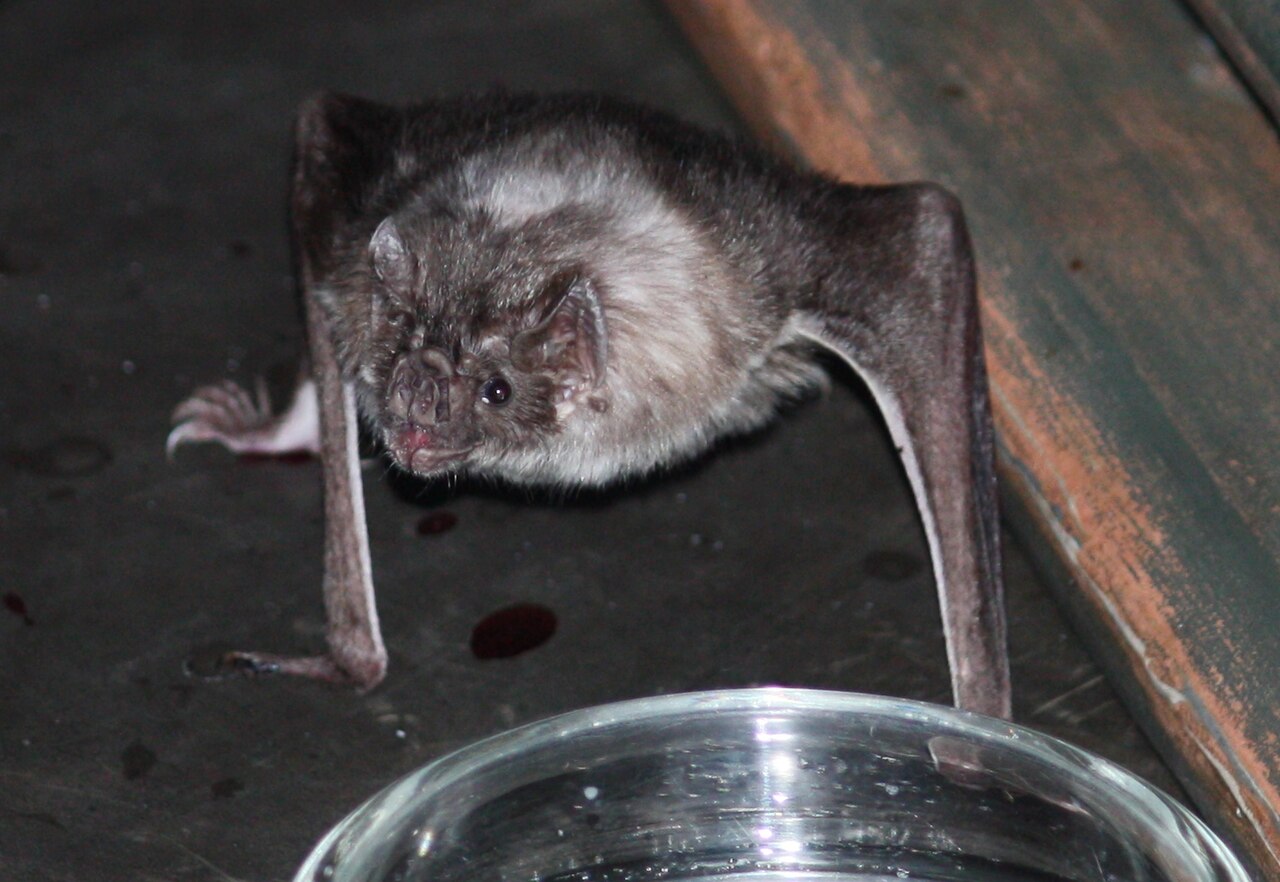
There are three commonly recognized species of vampire bats: the common vampire bat (Desmodus rotundus), which primarily feeds on mammals, and two species that mainly take bird blood, the hairy-legged vampire (Diphylla ecaudata) and the white-winged vampire (Diaemus youngi). Their geographic range spans parts of Mexico (Mexico), Central and much of South America, including countries such as Brazil, Chile and Argentina. Local occurrences depend on availability of prey and suitable roosting sites.
Anatomy, feeding technique and adaptations
Vampire bats show blunt muzzles, specialized incisors that make a small incision in the skin, and a heat-sensitive nose that helps them locate blood-rich areas on a sleeping host. Their saliva contains anticoagulant compounds (one isolated component is known as draculin) that prevent clotting while they feed. They lap up or lick the blood rather than siphoning it. The mammal-feeding species targets hairs or thinner-skinned areas of livestock and other mammals (mammal feeders), while the bird-feeding species typically bite plumage-free skin (avian feeders).
Social behaviour and life history
Vampire bats are social animals. Colonies range from small family groups to aggregations of tens or even hundreds of individuals. They exhibit cooperative behaviours such as mutual grooming, communal roosting and food sharing; an animal that fails to feed may be regurgitated blood by a roost-mate. These behaviours support group cohesion and survival in species where nightly feeding can be unpredictable.
Public health and medical relevance
Vampire bats are a significant reservoir and vector for rabies in parts of Latin America; bites can transmit the virus to livestock, wildlife and occasionally people (rabies). At the same time, components of vampire bat saliva have inspired medical research: their anticoagulant molecules have been studied for potential treatments related to stroke, thrombosis and cardiac events (anticoagulant research).
Distinctions, confusion and cultural notes
The term "vampire" has been applied to other bats that do not consume blood. For example, so-called false vampire bats do not practice sanguivory and instead may eat fruit or small animals; these are not true vampire bats and should not be conflated with them (false vampire bats). Vampire bats have also influenced folklore and literature about vampires in human cultures (vampire myths).
Further points
- Feeding ecology: Nightly foraging targets accessible sleeping hosts to minimize detection and defense.
- Conservation: Their populations respond to changes in prey availability, habitat loss and disease management programs.
- Research: Vampire bats are subjects of studies on social evolution, sensory biology and zoonotic disease transmission.
For introductory overviews and taxonomic context, consult general resources on bats and mammalian feeding strategies (see bat classification, see dietary specializations). For regional information and reports, regional guides list occurrences in Mexico, Brazil, Chile and Argentina. Detailed notes on diets appear under sections for mammal-feeding and bird-feeding species. Health advisories discuss rabies risk (rabies) and medical literature covers anticoagulant research stemming from vampire bat saliva (medical uses). Clarifications on naming and misapplied common names are available regarding false vampire bats, while cultural treatments of vampirism and bat imagery are explored in discussions of vampire folklore.
Related articles
Author
AlegsaOnline.com Vampire bat Leandro Alegsa
URL: https://en.alegsaonline.com/art/104124