
Bat (Chiroptera): biology, behavior and ecological roles
Overview of bats—mammals of the order Chiroptera—covering anatomy, echolocation, diets, habitats, diversity, human interactions and conservation across their global range.
Overview
Bats are mammals belonging to the order Chiroptera, notable for being the only mammals capable of sustained powered flight. They are generally nocturnal, active at night, dusk or dawn, and rest during the day. With more than 1,400 described species, bats form one of the largest and most diverse mammalian orders, representing roughly one in five living mammal species. Most species are small and lightweight, which supports their aerial lifestyle, but body size and habits vary widely across the group.
Image gallery
10 Images




Anatomy and flight
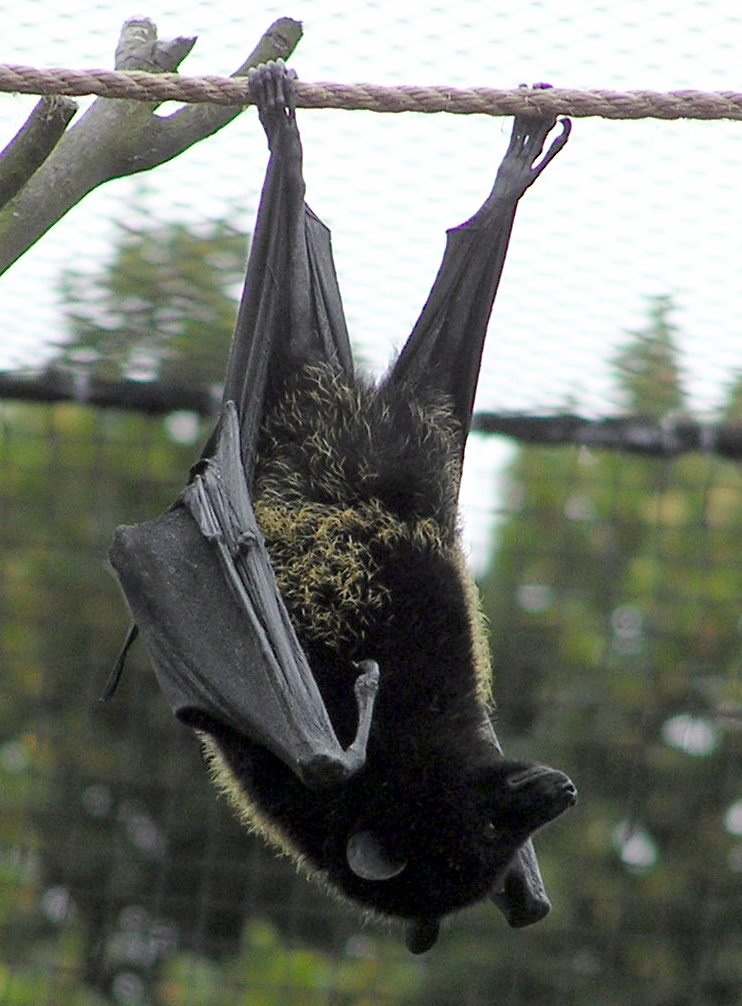
Bat wings are derived from modified forelimbs: the skin membrane called the patagium stretches between elongated finger bones, the body and often the hind limbs. This wing structure gives bats exceptional maneuverability. Internally they share mammalian traits such as fur, mammary glands and a high metabolic rate. Many species can enter torpor or hibernation to survive periods of food scarcity or cold weather, strategies important for temperate-region populations.
Senses and echolocation
Most bats navigate and locate prey using echolocation: they emit high-frequency calls and interpret returning echoes to build a sonic map of obstacles and moving targets, allowing flight in complete darkness. Echolocation is particularly developed in insect-eating species, although not all bats rely on it. Fruit- and nectar-feeding bats tend to use vision and smell as primary senses, and some fruit bats employ simple clicking signals or other cues rather than the sophisticated sonar of many insectivores.
Diet, ecology and roosting
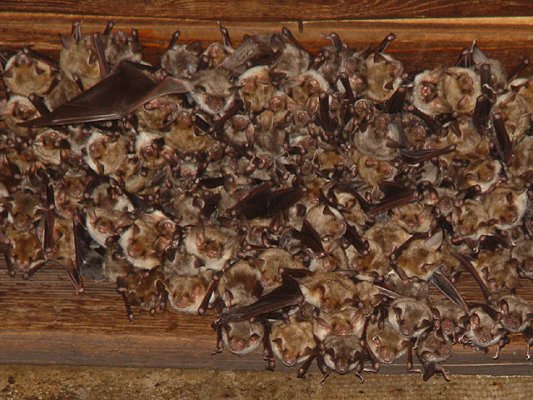
Bats occupy a wide range of feeding niches. Around 60–75% are primarily insectivorous, a basal lifestyle for the group and an important ecological service in controlling insect populations; a familiar example is the common pipistrelle (Pipistrellus) in many regions. Other bats are frugivores or nectarivores—sometimes referred to as fruit bats—and play vital roles as pollinators and seed dispersers. A small number of species have evolved specialized diets: a few feed on vertebrates such as fish or small mammals, and an even smaller set of species feed on blood (sanguivory), usually from livestock or wildlife. Diet shapes roosting choices: many bats form colonies in caves (caves), hollow trees (trees), or man-made structures; in regions such as North America and Europe they are sometimes found in attics and barns.
Distribution, diversity and classification
Bats are found on nearly every continent and inhabit most terrestrial ecosystems; they are absent from the polar regions such as the Arctic and Antarctic, and from some remote oceanic islands. Traditional classification divides bats into larger fruit-eating groups and smaller echolocating groups, sometimes described as 'megabats' and 'microbats', though modern taxonomy emphasizes evolutionary relationships that can blur this distinction. About 70% of known species tend to be insectivores (insectivores), reflecting the ancestral or basal condition for the order. A few taxa are carnivorous or piscivorous (few species represent these habits).
Reproduction, social behavior and life history
Reproductive strategies vary: many species bear a single offspring (pup) per year, while others have twins or more; maternal care is often highly developed, with colonies providing communal protection and learning. Seasonal breeders in temperate zones time births to coincide with peak insect availability. Social systems range from solitary roosting to vast colonies numbering millions in some caves. Longevity in bats can be surprising for their size; several small species live many years in the wild when not threatened by disease or human impacts.
Human interactions and conservation
Bats provide critical ecosystem services—pest control, pollination and seed dispersal—that benefit natural ecosystems and agriculture. They face threats from habitat destruction, disturbance of roosts, wind energy collisions, pesticides, and infectious diseases such as white-nose syndrome in North America. Public misconceptions about disease risk and harmful folklore have led to persecution in some areas, despite the generally low risk when appropriate precautions are taken. Conservation measures include protecting roost sites, legal safeguards in many countries, research on disease management, and public education to highlight their ecological importance.
Notable facts and distinctions
- Bats are the second-largest order of mammals by species count, after rodents.
- Only a minority of bat species feed on blood; those that do are specialized and restricted to the Americas.
- While many bats use sophisticated echolocation, fruit bats rely more on vision and scent, illustrating the sensory diversity within the order.
- Conservation status varies widely by species; some are common and adaptable, others are rare and threatened.
For further introductory information and species accounts, consult general mammalogy resources or regional bat conservation groups: Chiroptera overview, echolocation resources and local cave or wildlife organizations associated with cave and tree habitats.
Questions and answers
Q: What is the order of mammals that bats belong to?
A: Bats belong to the order Chiroptera.
Q: Are bats active during the day or night?
A: Bats are nocturnal, meaning they are active during the night, dusk, or dawn and sleep during the day.
Q: How do bats navigate in dark places?
A: Most bats use sound to navigate in dark places by echolocation. They send out high-frequency squeaks and listen for echoes which helps them find their food even in total darkness.
Q: What kind of animals do most bats eat?
A: Most bats are insectivores, meaning they mostly eat insects. A few species suck blood and a few large ones are carnivorous while others eat fruit or nectar.
Q: Where can you find bats living?
A: Bats live everywhere except the Arctic, Antarctic and a few oceanic islands. They usually roost in caves, old buildings, or trees.
Q: How many species of bat exist?
A: There are more than 1,400 species of bat which means that 20% of all living mammal species – one in five – are bats.
Q: Are bats protected animals in some countries?
A: Yes, in some countries such as the UK they are protected animals.
Related articles
Author
AlegsaOnline.com Bat (Chiroptera): biology, behavior and ecological roles Leandro Alegsa
URL: https://en.alegsaonline.com/art/9338
Sources
- nature.com : nature.com/articles/nature06549?error=cookies_not_supported&code=a5e89e06-bb23-4784-9d0a-…
- news.bbc.co.uk : (BBC News) "Bat fossil solves evolution poser"
- mendeley.com : mendeley.com/catalogue/95cd377e-5cf4-3511-8de5-eb13a5f67431/
- nhc.ed.ac.uk : nhc.ed.ac.uk/index.php?page=493.169.179
- edgeofexistence.org : "Bumblebee bat (Craseonycteris thonglongyai)"
- species.wikimedia.org : Chiroptera
- commons.wikimedia.org : Chiroptera