
Vampire (legendary creature)
A summary of the vampire as a figure in folklore and fiction: features, origins, cultural variants, and its development into a major motif in literature and media.
Vampires are legendary undead beings found in myths and popular fiction. In traditional tales they are often described as once-human figures who return from death with a need for living blood or life force. Modern familiar traits—such as pale skin, prominent fangs, and a weakness to sunlight—are the product of centuries of storytelling and were shaped strongly by 19th-century literature and subsequent films. For general discussions of this broad topic see folklore studies and accounts of early regional tales from Eastern Europe.
Image gallery
10 Images
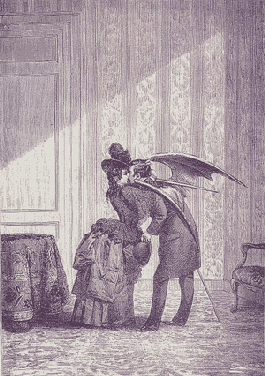
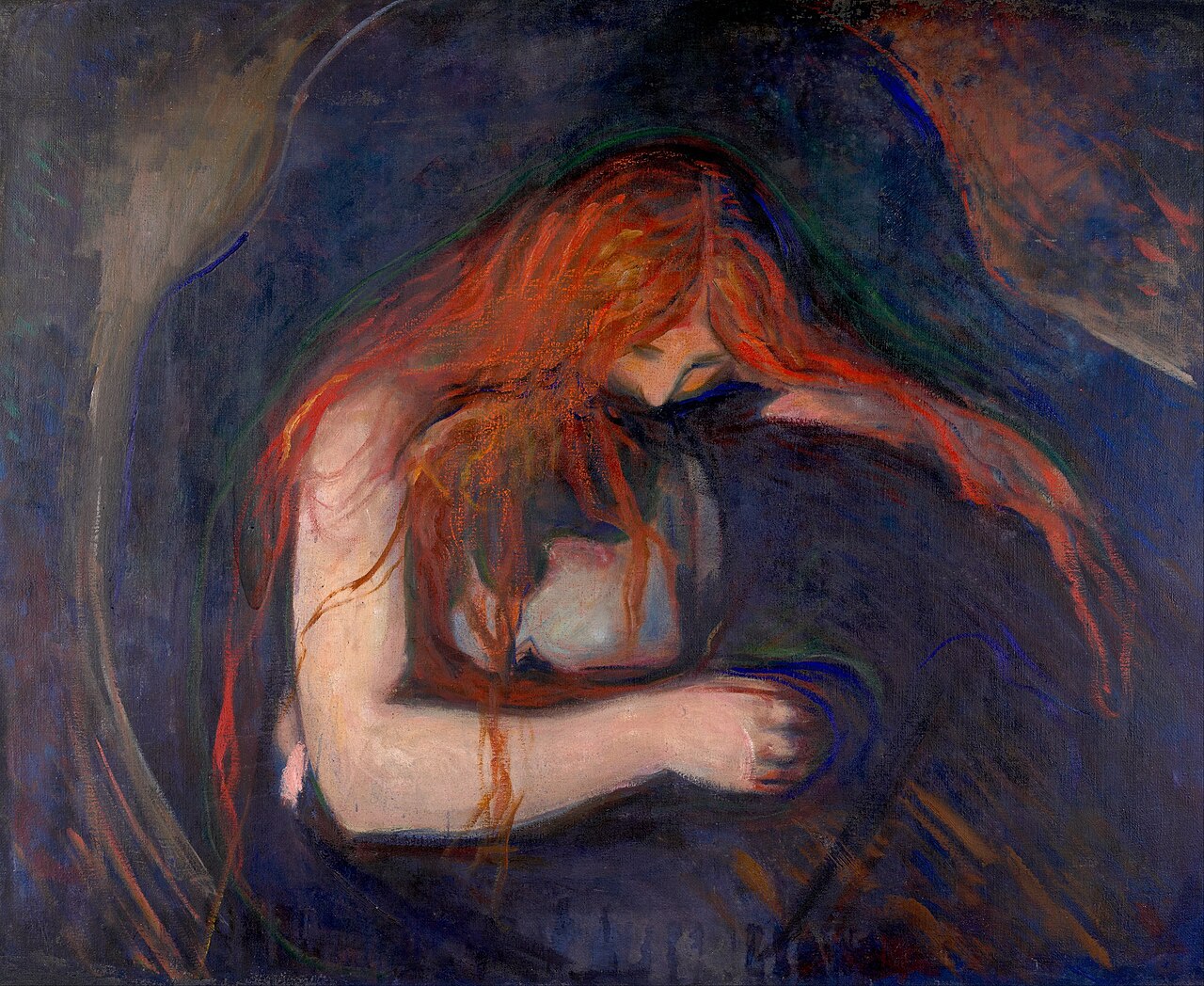


Common characteristics
Descriptions of vampires differ by source, but many narratives share recurring elements. Commonly reported traits include unending lifespan or undead existence, a reliance on human or animal blood, the presence of elongated canine teeth to pierce the skin, and powers such as increased strength or hypnotic influence. In some stories vampires have the ability to transform into animals such as bats, wolves, or rats. Other motifs include aversions to sunlight, holy symbols, or garlic, and methods of destruction like a wooden stake through the heart.
- Undead or undying nature and possible origin from a violent or unremarkable death.
- Feeding on blood or life energy, sometimes creating more vampires by transmission.
- Shapeshifting and nocturnal habits in many tales.
- Local customs for burial and protective rituals developed to prevent revenants.
Origins and literary development
Vampire-like beings appear in many cultures, but the modern Western image largely grew from Eastern European folk traditions and a sequence of literary works. Early English-language fiction helped transform folkloric revenants into charismatic, aristocratic figures: examples include John Polidori’s story and Sheridan Le Fanu’s novella, and the most influential is often acknowledged to be Bram Stoker with his novel Dracula, which synthesized and popularized traits now widely associated with vampires. Historians trace a mix of oral tradition, medical misunderstanding, and social anxiety behind the various vampire panics and reports from the 17th to 19th centuries.
Cultural variants and interpretations
Beyond Europe, many societies have their own versions of blood-consuming or revenant creatures with distinct names and behaviors. These range from East Asian hopping corpses to Southeast Asian entities that share the essential idea of the dead or supernatural feeding on the living. Some explanations proposed for vampire beliefs include attempts to understand decomposition, contagion, or unusual diseases; modern researchers treat such proposals cautiously and avoid simplistic one-cause claims.
Uses, symbolism, and modern legacy
Vampires have become a flexible symbol in art and popular culture. They have been used to explore themes of immortality, forbidden desire, disease and contagion, social otherness, and the seductions of power. Film and television—from early silent movies to classic studio productions and contemporary series—have repeatedly reinvented the figure. Literary reimaginings range from horror antagonists to sympathetic antiheroes, and some subcultures adopt vampire-related aesthetics or rituals as identity or performance.
Notable distinctions and facts
Details about vampires vary greatly: some folktales present them as mindless predators, others as cunning aristocrats. The idea of transforming victims into vampires appears frequently in fiction, but local customs often aimed instead to prevent supposed revenants by modifying burials or performing apotropaic rites. Scholarly and popular research into the phenomenon draws on anthropology, literary studies, and history to separate specific cultural practices from later fictional elaborations. For more on the broad phenomenon see entries indexed under supernatural origins and traditional curse motifs.
Questions and answers
Q: What are vampires?
A: Vampires are monsters in legends and stories.
Q: Where were the first vampire stories told?
A: The first vampire stories were told in Eastern Europe.
Q: Who created the modern portrayal of vampires?
A: Bram Stoker created the modern portrayal of vampires in the famous novel, Dracula.
Q: Do many people believe that vampires are real?
A: Few people believe that vampires are real.
Q: What do some vampires need to do to survive?
A: Some vampires must drink blood to survive.
Q: How do vampires drink blood?
A: Vampires drink blood by biting people or animals on the neck with their two long fangs.
Q: Can people who are killed by a vampire become a vampire themselves?
A: Yes, people who are killed by having their blood drunk by vampires may also become vampires.
Related articles
Author
AlegsaOnline.com Vampire (legendary creature) Leandro Alegsa
URL: https://en.alegsaonline.com/art/104130