
University of Toronto
Public research university in Toronto, Ontario, Canada, founded by royal charter in 1827; known for large research output, federated colleges, three campuses, and discoveries such as insulin and early stem-cell research.
Overview
The University of Toronto is a major public research university located in Toronto, Ontario, Canada. It traces its legal origins to a royal charter granted in 1827 by the King of the United Kingdom, established decades before the modern Canadian state came into being in 1867 (Confederation). Today it is one of Canada’s largest and most research-intensive universities, combining undergraduate education, graduate training and extensive professional schools.
Image gallery
10 Images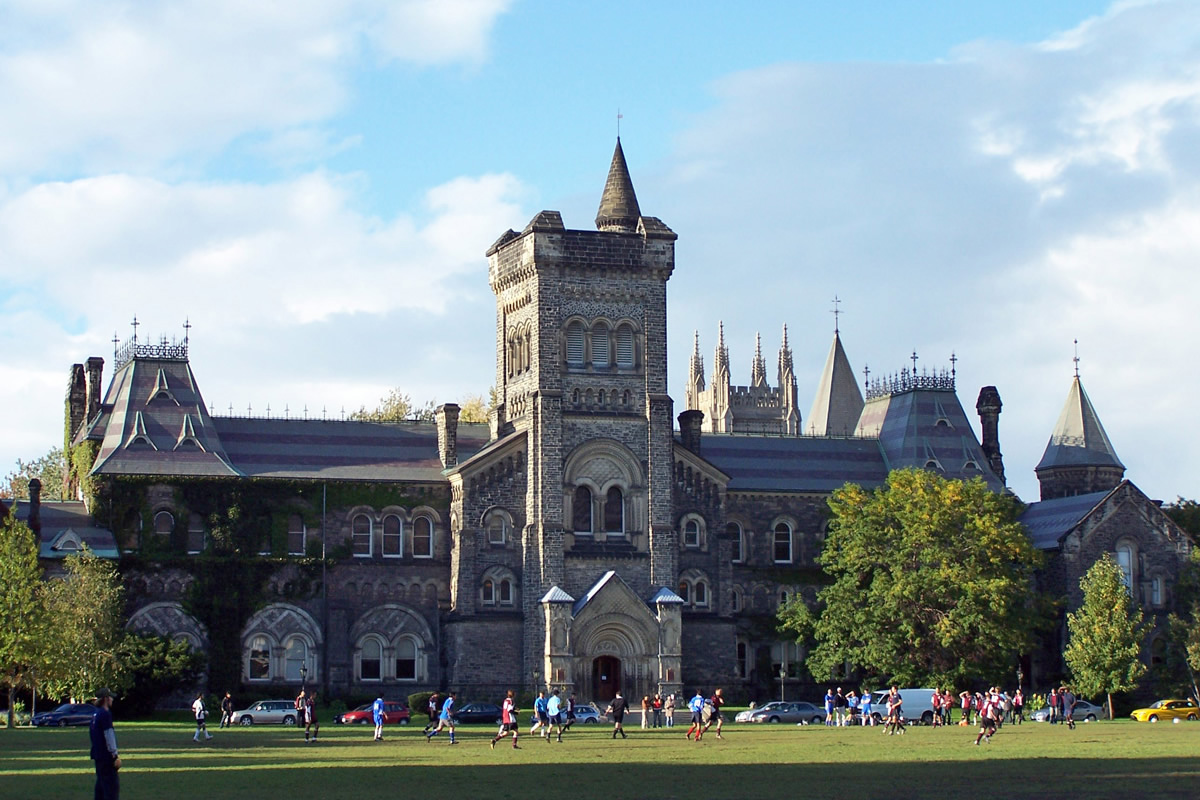


Structure and colleges
The university consists of three main campuses and a collegiate system with a number of federated and constituent colleges. The central St. George campus in downtown Toronto houses many of the original colleges, each with its own traditions, dining halls and libraries. Some colleges retain historic ties to Christian denominations while others are non-religious or secular in character (secular). Colleges provide academic and social communities within the larger university and influence student life and residential arrangements.
Research, hospitals and facilities
U of T operates and affiliates with major teaching hospitals and numerous research institutes, supporting wide-ranging work from basic science to clinical care (research). Faculties cover fields such as the humanities, where scholarship in literature remains influential, and media and communication studies. The university is notable for translating laboratory discoveries into practical impact.
Notable discoveries and contributions
- Insulin: Researchers at the university played a central role in the discovery and early development of insulin therapy in the early 20th century.
- Stem cell research: Early experiments that helped define the concept of mammalian stem cells originated with U of T scientists in the mid-20th century.
- Instrumentation and observation: U of T researchers contributed to early work in experimental electron microscopy (electron microscope) and to observational astronomy that produced evidence for one of the first stellar black hole candidates.
- Human–computer interaction: groups at the university contributed to formative research into touch and multitouch interfaces, influencing later touchscreen and multi-touch technologies.
Student life and athletics
Student life at U of T combines intense academic programming with a wide range of extracurriculars. The university’s varsity teams compete as the Varsity Blues; these programs have lengthy traditions in sports such as Canadian and American football and ice hockey. Campus clubs, cultural groups and college-based events are central to the undergraduate experience.
Reputation and distinctions
Internationally, the University of Toronto is regularly ranked among the leading global universities and is often cited as one of Canada’s highest-performing research institutions. Its size, endowment and volume of sponsored research place it at the center of Canadian higher education and innovation. For further institutional details, consult official university sources and campus guides provided by the school.
Related articles
Author
AlegsaOnline.com University of Toronto Leandro Alegsa
URL: https://en.alegsaonline.com/art/103364
Sources
- content.library.utoronto.ca : "The story of the University of Toronto's original charter"