
Ice hockey: rules, equipment, history, leagues and global reach
Overview of ice hockey covering play, equipment, rules, history, major leagues and international presence, with clear explanations of positions, penalties and notable distinctions.
Overview
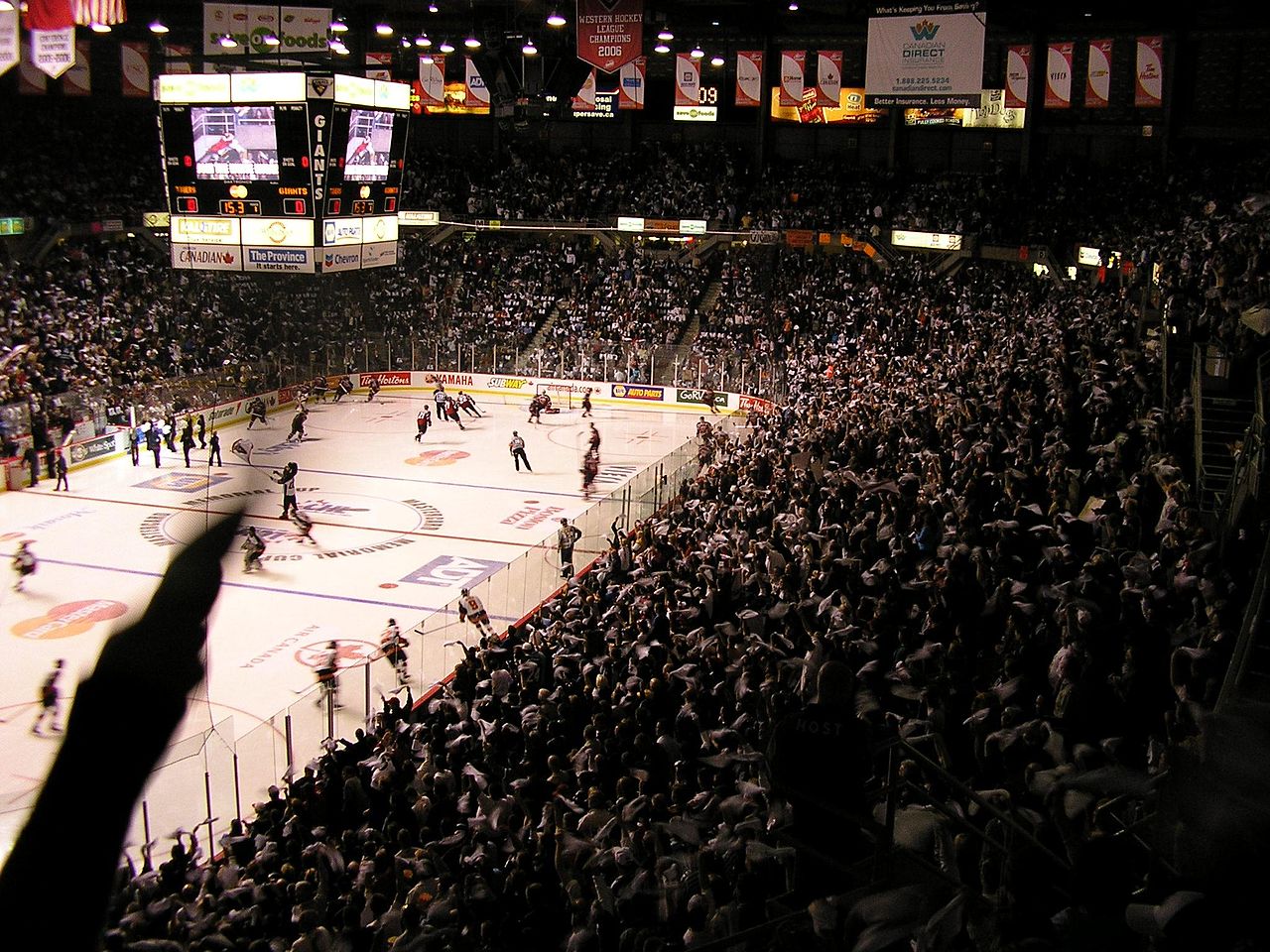
Ice hockey is a fast, physical team sport played on a frozen surface or enclosed rink of ice. Competitors wear ice skates to move at high speed and use a hockey stick to control a small hard rubber puck. The objective is to score by shooting the puck into the opponent’s net while the opposing goaltender attempts to stop it. Standard team play places six skaters from each side on the ice at once—including a goaltender—although rosters carry many more players to allow substitutions and tactical changes.
Image gallery
10 Images




Equipment and positions
Equipment is specialized to protect players and enable fast play: skates, padded helmets with visors or cages, shoulder and elbow pads, gloves, protective pants and a goaltender’s unique mask and padding. Typical on-ice roles are organized into clear positions. Common designations include:
- Center — leads face-offs and often directs play through the middle.
- Wings — left and right forwards who attack along the sides.
- Defensemen — left and right defenders who protect the zone and start transitions.
- Goaltender — the last line of defense, equipped with specialized gear.
Teams usually name a captain and one or more assistant captains to represent the squad to officials and lead on-ice communication.
Rules, penalties and flow of play
Play is divided into three timed periods (commonly 20 minutes each at the top level) with time stoppages for whistles. A game restarts with a face-off where two players vie for the puck after the referee drops it. Officials, including on-ice referees and linesmen, enforce rules: a referee calls infractions that can lead to minor penalties (typically two minutes) or major penalties (longer, usually assessed for fighting or dangerous plays). Penalized players sit in the penalty box while their team plays short-handed.
Two frequent stoppage calls relate to puck movement and player positioning: icing and offside. Icing is whistled when a player shoots the puck from behind the center (red) line across the opponent’s goal line without it being touched; offside is called when an attacking player enters the offensive zone before the puck. These rules preserve fair play and encourage strategic passing and timing.
History and international development
Modern ice hockey developed in Canada in the 19th century, evolving from stick-and-ball games played on frozen ponds and urban rinks. The sport spread across northern and central Europe and into parts of Asia and North America. It is especially popular in countries such as Canada, Russia, Sweden, Finland, the Czech Republic, the United States, Latvia and Slovakia. National federations organize domestic competitions and coordinate international participation at the Olympic Games and world championships.
Major leagues and competitions
At the professional level the National Hockey League (NHL) is the best-known league and features teams from Canada and the United States competing for the annual Stanley Cup. Another top international circuit is the Kontinental Hockey League, which includes clubs from several countries such as Kazakhstan, Latvia, Belarus, Slovakia, China and Croatia. Women’s hockey has organized leagues at different times and places, including North American initiatives like the Canadian Women’s Hockey League and the Western Women’s Hockey League, while international tournaments provide high-profile platforms for both men’s and women’s teams.
Distinctive features and practical notes
Ice hockey stands out for its speed, continuous substitutions (line changes) and a blend of skill, tactics and physical contact. Rinks are divided into three zones by lines, which affect rules for offside and attacking play. Top-level games typically use four on-ice officials (two referees and two linesmen); referees wear identifying armbands and are responsible for major calls. Rosters have limits that vary by competition, but professional teams maintain a full complement of skaters and two goaltenders so they can manage injuries, fatigue and penalties. Variants of the sport include rink hockey indoors, sledge hockey for players with disabilities, and amateur forms adapted to local ice availability. These differences, together with a long tradition in certain countries, give ice hockey a distinct global culture and a diverse set of playing environments.
Questions and answers
Q: What is ice hockey?
A: Ice hockey is a sport that is played by two teams on ice. The players wear ice skates and use hockey sticks to push, shoot or pass a puck around the ice in order to score goals against the opposing team's goaltender.
Q: How many players are on each team?
A: Each team has over 20 players, with six playing at once - two defenders, three forwards, and one goalie.
Q: What happens when a player breaks a rule?
A: When a player breaks a rule, the referee calls a penalty and the player must sit in a penalty box for 2-4 minutes while their team plays without them.
Q: Where is ice hockey popular?
A: Ice hockey is very well-known and well-liked in Canada, Russia, Sweden, Finland, the Czech Republic, the United States, Latvia and Slovakia.
Q: What are some of the professional leagues for ice hockey?
A: The National Hockey League (NHL) has 32 teams in North America and Europe; it is considered one of the best leagues for professional players. Additionally there is also Kontinental Hockey League (KHL), which has teams in Russia, Kazakhstan, Latvia Belarus Slovakia China and Croatia; as well as Canadian Women's Hockey League and Western Women's Hockey League for women's play.
Q: How long does an NHL game last?
A: In the regular season of NHL games last 82 games per team; each team faces each other about 3 times during this period. At the end of this period they try to win Stanley Cup.
Q: What are some positions that can be taken up during an ice hockey match?
A: There are 6 different positions that can be taken up during an ice hockey match - center , right wing , left wing , right defense , left defense , goalie .
Related articles
Author
AlegsaOnline.com Ice hockey: rules, equipment, history, leagues and global reach Leandro Alegsa
URL: https://en.alegsaonline.com/art/46429