
Stem cell: biology, types, and medical significance
Overview of stem cells: their defining properties, categories (embryonic, adult, induced), historical development, laboratory culture, clinical uses, and ethical considerations.
Stem cells are undifferentiated cells with the capacity to produce daughter cells and to develop into more specialized cell types. A defining feature is their ability to divide and to differentiate into multiple cell lineages. They contrast with fully specialized tissues; for example, mature cell types such as skin, muscle and cells of the bone or liver have discrete functions and structures. In multicellular organisms, stem cells serve both to support development and to replace cells lost during normal turnover or injury.
Image gallery
7 Images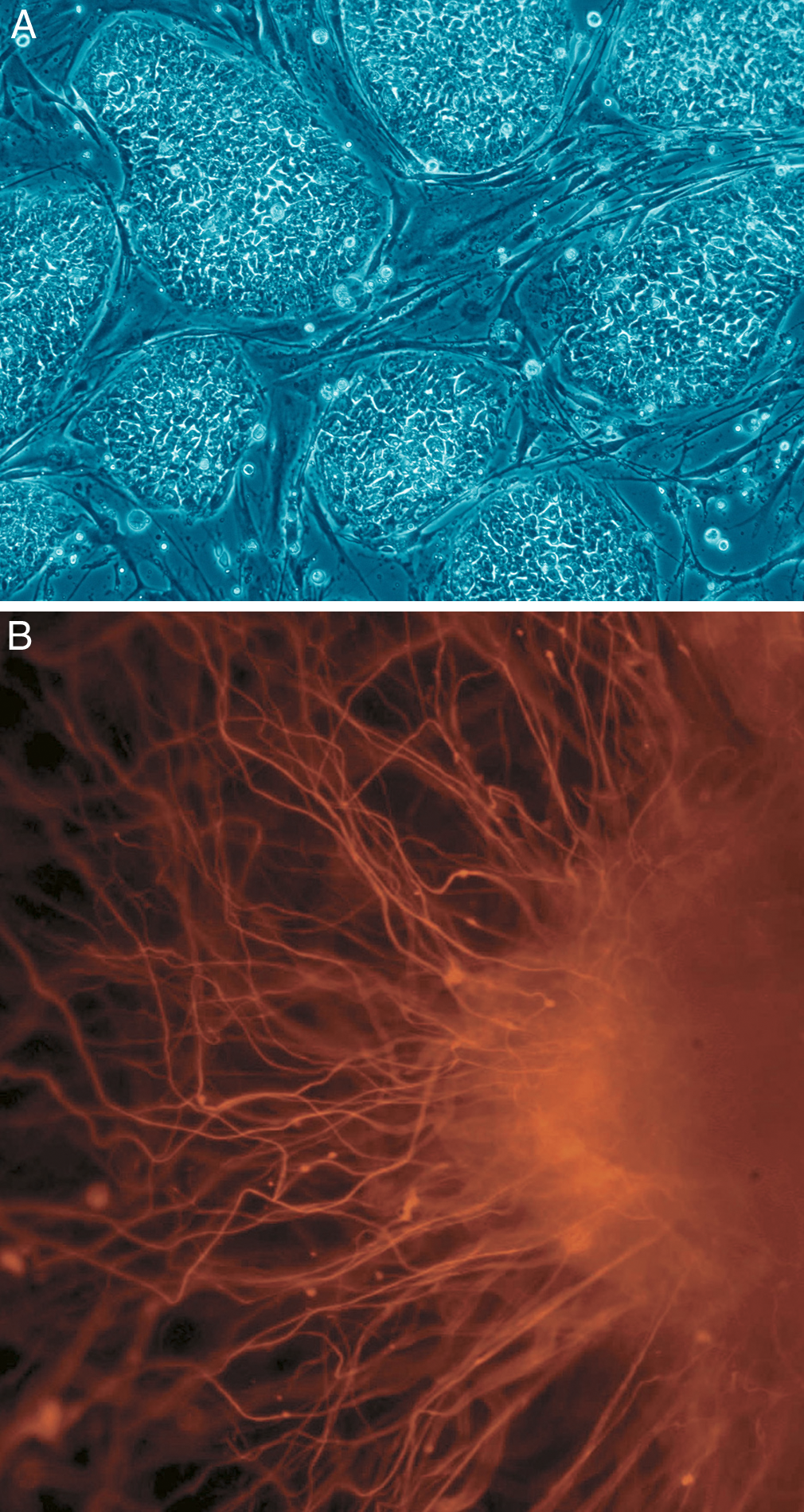


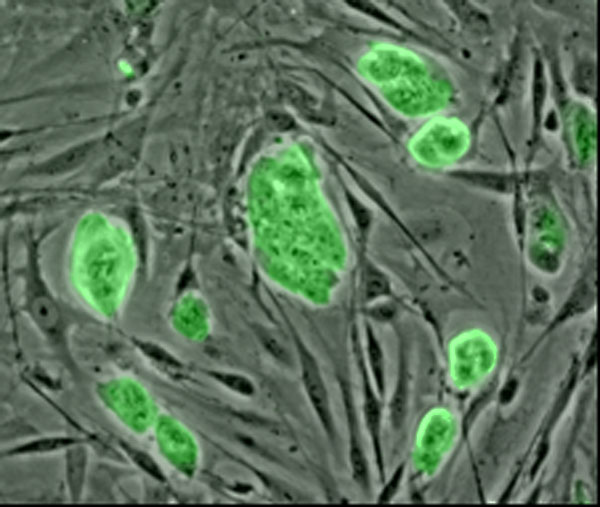
Key properties and classifications
Stem cells are commonly described by two properties: self-renewal (the ongoing ability to produce more stem cells) and potency (the range of cell types they can become). Potency ranges from totipotent cells, which can form an entire organism and extra-embryonic tissues, to pluripotent cells, capable of generating nearly all embryonic cell types, to multipotent and unipotent adult cells that give rise to a limited set of related tissues. In animals and plants, undifferentiated reservoirs exist: plant meristems contain stem-like cells while animals keep niches of progenitor cells. For discussion of cell origins in embryos see the entry on the embryo, and for repair roles in mature organisms see adult stem cell maintenance.
Principal sources and laboratory culture
Broadly, mammalian stem cells fall into embryonic and adult categories. Embryonic stem cells are derived from early embryos and are typically pluripotent. Adult or tissue-specific stem cells are found in many organs and maintain local repair: hematopoietic stem cells replenish blood, intestinal stem cells renew intestinal lining, and specialized progenitors exist in other tissues. Clinically important adult sources include cord blood collected at birth (umbilical cord blood) and bone marrow (bone marrow), both rich in blood-forming stem cells. In the laboratory, stem cells are expanded and guided toward particular fates using defined media and signals; many experiments rely on growing these cells in tissue culture conditions.
Types and notable distinctions
- Embryonic stem cells: high potency, can form diverse embryonic tissues under appropriate conditions.
- Adult (somatic) stem cells: often somatic cells with limited potency adapted to tissue maintenance.
- Induced pluripotent stem cells (iPSCs): mature cells reprogrammed to a pluripotent state; these provide a way to model disease without using embryos.
History, research milestones and uses
Modern stem cell research grew from mid-20th century studies of blood formation and cellular renewal. Isolation and culture techniques advanced in the late 20th century, enabling derivation and experimental manipulation of stem populations. Today, stem cells underpin a range of scientific and medical activities: they form the basis of bone marrow and cord blood transplants, are used to generate cells for drug screening and disease models, and are central to experimental regenerative therapies aiming to replace or repair damaged tissues. Researchers continue to refine methods to direct differentiation so that lab-grown cells perform the functions required in therapies and studies of development and disease (functions).
Clinical impact and ethical considerations
Some stem cell treatments are established—most prominently hematopoietic transplants that restore the blood and immune system after disease or intensive treatment. Experimental protocols target degenerative diseases, organ injury, and congenital disorders. Practical challenges include ensuring safe differentiation, avoiding immune rejection, and preventing uncontrolled growth. Ethical debate has particularly surrounded the use of embryonic sources and invasive procedures; as a result, alternatives such as iPSCs and use of non-embryonic tissues have become important. Stem cell research touches both medical practice and public policy, and work in this area continues to be shaped by scientific advances as well as social and regulatory frameworks.
For further reading of specific tissues and applications, consult dedicated resources on liver regeneration, neural repair, skeletal regeneration and related subfields. Stem cell science links basic biology to translational medicine and remains an active, rapidly developing area of biomedical research across both animals and plants.
Questions and answers
Q: What are stem cells?
A: Stem cells are cells of the body (somatic cells) which can divide and become differentiated. They have not yet specialized into a specific type of cell, but they can change to become some kind of specialized cell.
Q: Where are stem cells found?
A: Stem cells are found in most, if not all, plants and animals.
Q: When did research in the stem cell field begin?
A: Research in the stem cell field grew out of findings in the 1960s.
Q: What are the two broad types of mammalian stem cells?
A: The two broad types of mammalian stem cells are embryonic stem cells, and adult stem cells, which are found in adult tissues.
Q: How do organisms use stem cells?
A: Organisms use stem cells to replace damaged or lost tissue as well as maintain normal turnover of blood, skin, and intestinal tissues.
Q: How can researchers use stemcells?
A: Researchers can use them for medical therapies and expect that they will be used for many future therapies.
Related articles
Author
AlegsaOnline.com Stem cell: biology, types, and medical significance Leandro Alegsa
URL: https://en.alegsaonline.com/art/93713
Sources
- doi.org : 10.1038/197452a0
- pubmed.ncbi.nlm.nih.gov : 13970094
- doi.org : 10.1002/jcp.1030620313
- pubmed.ncbi.nlm.nih.gov : 14086156
- pubmed.ncbi.nlm.nih.gov : 16969445