
Beeswax: properties, history and common uses
Natural wax secreted by honeybees and used for hive construction, candles, cosmetics, food glazing and polishes. Overview of composition, production, historical use and modern applications.
Beeswax is a natural wax produced by worker honeybees and employed primarily as the material for constructing brood comb and storage cells within the hive. Worker bees secrete flakes of wax from abdominal glands and shape them into hexagonal cells. Because of its stable texture and low toxicity it has been collected and refined by humans for millennia. See a general introduction to bees and hive products at beeswax resources.
Image gallery
10 Images
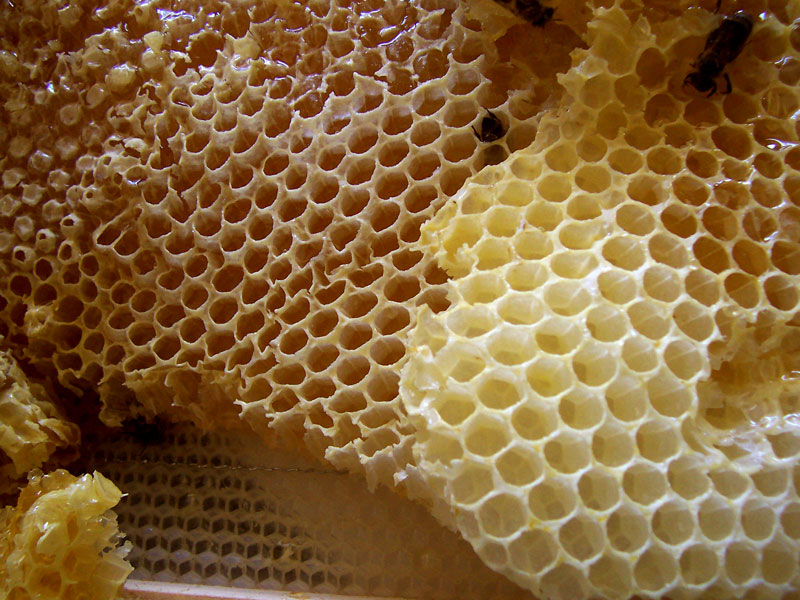


Physical characteristics and composition
Beeswax is a mixture of esters, fatty acids and long‑chain alcohols; its color ranges from nearly white (after bleaching) to deep amber depending on floral source and processing. It softens and melts at roughly 60–65 °C, is insoluble in water, and is moderately resistant to oxidation. These physical traits make it a useful base material in many formulations, notably in cosmetics and skin-care products where it functions as an emollient and stabilizer.
History and cultural uses
Used since ancient times for lighting, sealing, modeling and ritual, beeswax features in artifacts from sculpture to encaustic painting and bookbinding. Its relatively clean burn led to widespread use in high-quality candles before petroleum-based waxes became common.
Modern applications
- Personal care and pharmaceuticals: lip balms, creams and ointments where beeswax acts as a thickener and barrier agent; traditional remedies sometimes include beeswax in medicinal preparations and lozenges.
- Food industry: used as a glazing agent on confections such as gelatin sweets and coated candies (confectionery glazing), and on some cheeses for preservation.
- Household and crafts: furniture polish, leather conditioners, surfboard and ski wax blends, and encaustic art.
- Topical and traditional uses: incorporated into chest rubs and balms marketed for cough or cold symptoms; sometimes included in preparations intended to soothe common colds or to ease muscle soreness, though clinical evidence is limited.
Beekeepers recover wax from cappings and old comb, then render and filter it into different grades. Refined beeswax sold commercially is often labeled as "yellow" or "white/bleached" depending on processing. While broadly renewable and biodegradable, beeswax supply is linked to healthy bee populations and apicultural practices.
Distinct from plant-based waxes such as carnauba or synthetic paraffins, beeswax has unique handling properties and a characteristic scent. It is regulated in food and cosmetic contexts in many jurisdictions under traditional names (for example, cera alba when bleached). For more technical or commercial information consult specialized sources: beeswax overview and industry references at cosmetic ingredient guides.
Related articles
Author
AlegsaOnline.com Beeswax: properties, history and common uses Leandro Alegsa
URL: https://en.alegsaonline.com/art/10096