
Benthos (benthic organisms)
Organisms—plants and animals—that live on, in, or near the bottom of seas, lakes and other water bodies; ecology, classification, zones, roles, and human impacts.
Benthos refers to the assemblage of life found at the bottom of a water body: including attached and free-living plants and animals that live on or within sediments. Typical usage distinguishes benthic organisms from free-swimming groups: for example the term covers both the flora and the fauna found on the floor of a sea or a lake. Many familiar shore life forms, such as creatures in rock pools, are benthic even when they occupy shallow water.
Image gallery
10 Images




Characteristics and common groups
Benthic biota vary by size, mobility and where they live relative to the sediment surface. Key categories include:
- Epifauna/epiflora: organisms living on the sediment surface or attached to hard substrates (e.g., seaweeds, barnacles, sponges).
- Infauna: animals that burrow into soft sediment (e.g., many worms and bivalves).
- Sessile vs mobile: some benthos are permanently attached, others move to feed or escape predators.
- Size classes: microbenthos (microorganisms), meiobenthos (small invertebrates), macrobenthos (larger invertebrates and plants).
Zones, distribution and confusion with pelagic terms
Benthic habitats are described by depth and shoreline position: intertidal and littoral zones near the shore, sublittoral on the continental shelf, and deep-sea or abyssal bottoms farther offshore. The benthic realm is distinct from the open-water pelagic zone, though scientists sometimes contrast benthos with plankton and other pelagic groups. Careful use is needed because terms like bathypelagic or abyssopelagic describe water-column layers beneath the lighted surface and do not imply a benthic lifestyle, even where the water and bottom are physically close. The global ocean hosts a wide variety of benthic environments from rocky shores to soft-mud abyssal plains.
Ecological roles and importance
Benthic organisms are vital in nutrient cycling, organic matter decomposition and as the base of many food webs. Burrowing animals mix and oxygenate sediments (bioturbation), while attached primary producers such as kelp and seagrass beds create habitat and support fisheries. Benthic communities are also used as environmental indicators because many species respond predictably to pollution, oxygen change or habitat alteration.
Sampling, study and human impacts
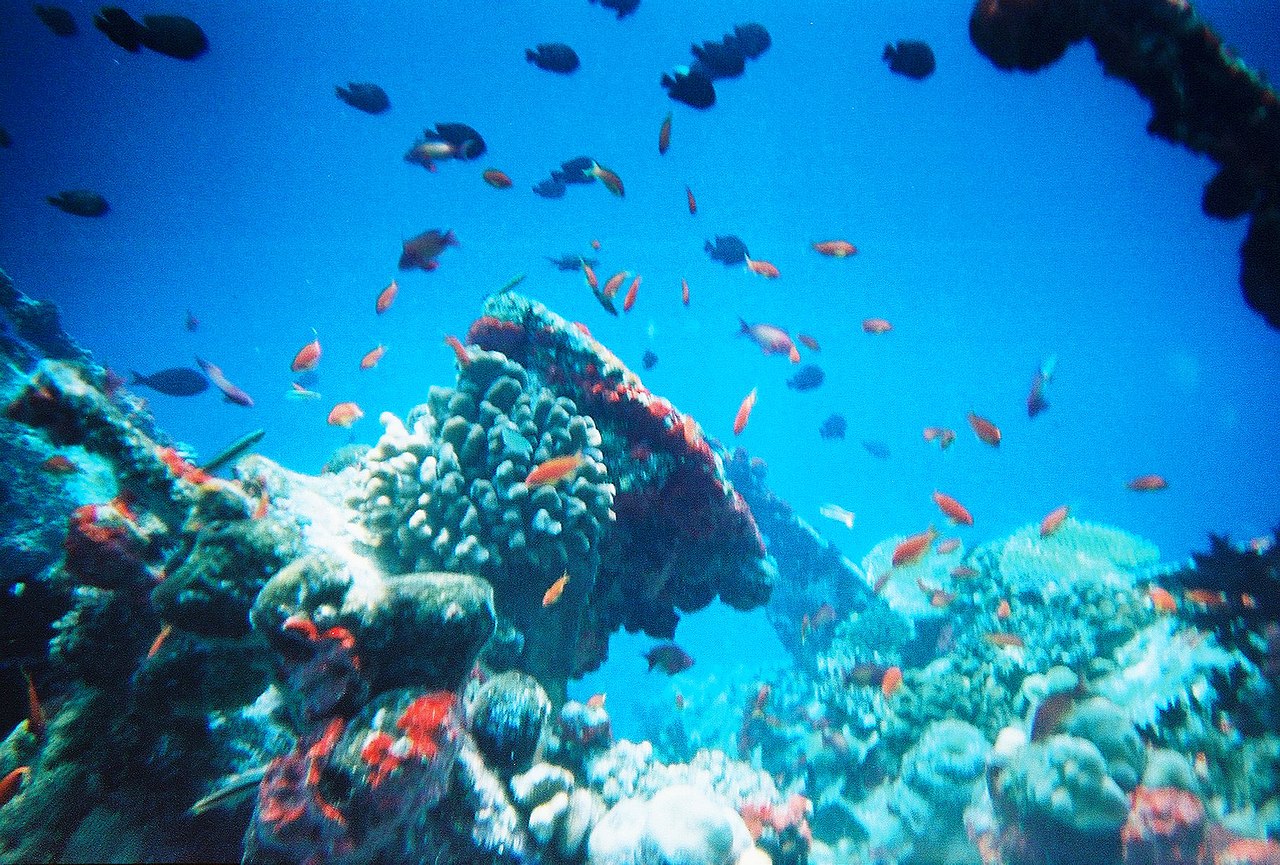
Scientists study benthos with grabs, cores and underwater photography or diving surveys. Management concerns include bottom trawling, pollution, eutrophication in lacustrine and coastal systems, and habitat loss. Conservation actions may protect seagrass beds, coral reefs and other benthic habitats important for biodiversity and coastal resilience.
Examples and historical note
Representative benthic organisms include sea stars, sea cucumbers, polychaete worms, bivalves, crabs, seaweeds and seagrasses. The word benthos comes from a Greek root meaning "the depths," and the term has been used in marine science to emphasize organisms tied to the substrate rather than to the open water column.
Quick reference
Questions and answers
Q: What is benthos?
A: Benthos refers to the flora and fauna that are found at the bottom of the sea or lake.
Q: What does benthic mean?
A: Benthic refers to animals living at the bottom of a water body.
Q: Are animals in rock pools considered benthic?
A: Yes, animals in rock pools are considered benthic despite being only a few inches below the surface.
Q: How does benthos differ from plankton?
A: Benthos refers to organisms at the bottom of the sea, while plankton are found in the upper pelagic zone.
Q: What are the bathypelagic and abyssopelagic zones?
A: The bathypelagic and abyssopelagic zones are the zones located beyond the reach of sunlight.
Q: Are the terms bathypelagic and abyssopelagic commonly used?
A: No, these terms are mostly not used.
Q: Why are the terms bathypelagic and abyssopelagic not commonly used?
A: The problem of contrasting organisms living deep in the sea with plankton can be addressed by extending the pelagic zone down below the light, and therefore, these terms are mostly not used.
Related articles
Author
AlegsaOnline.com Benthos (benthic organisms) Leandro Alegsa
URL: https://en.alegsaonline.com/art/10600