
Beehive: natural nests and man-made hives
A beehive is the shelter where honey bees live, raise young and store food. Articles cover structure, types of human-made hives, history, uses such as pollination and honey production, and management challenges.
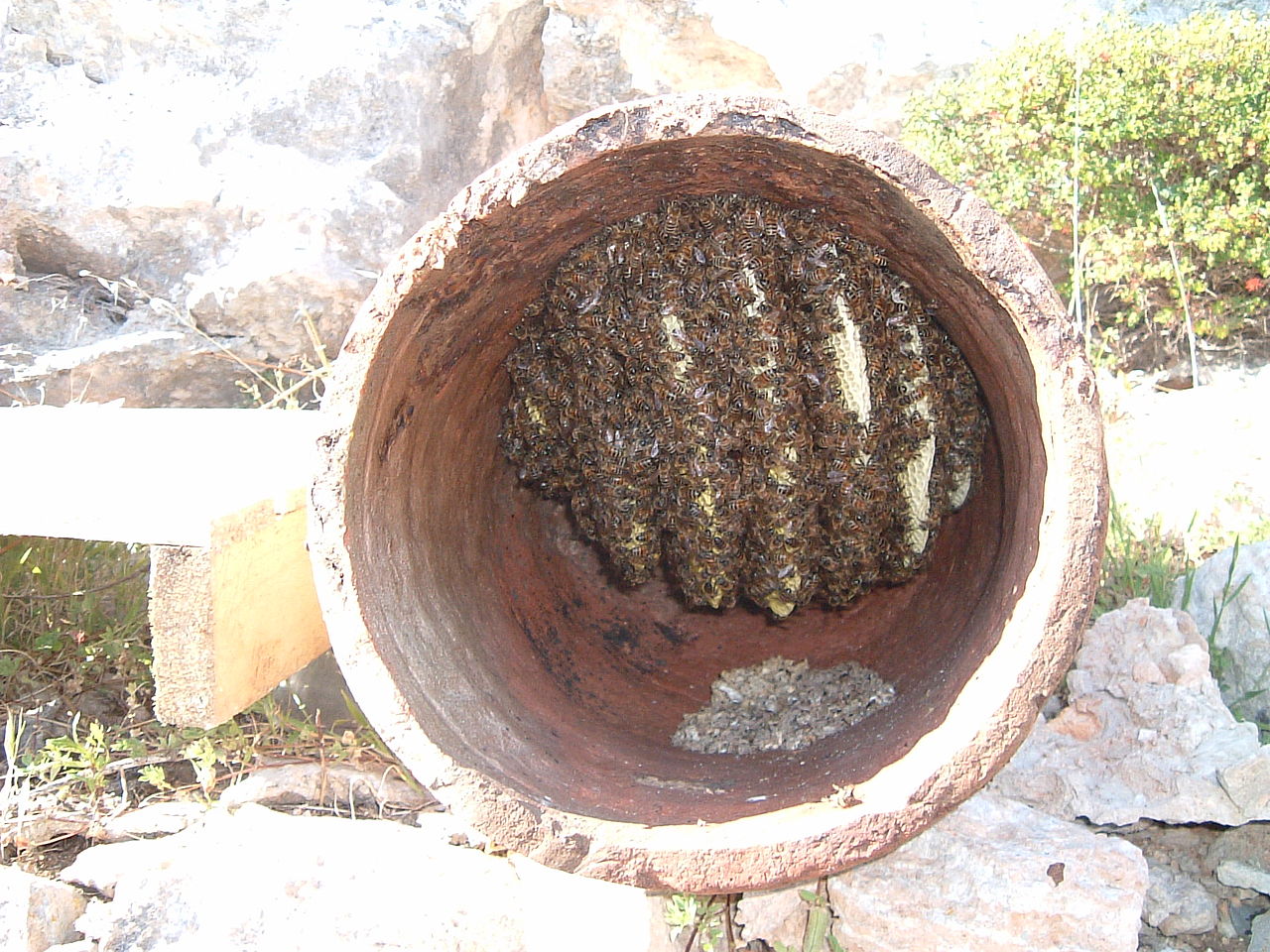
A beehive is the structure where certain species of honey bees live, rear brood and store food. In wild settings these structures are often called nests; in managed contexts they are custom-built and kept in an apiary for agricultural or hobbyist beekeeping. The insects commonly called honey bees belong to the genus Apis, and they organize into a social unit commonly referred to as a colony.
Image gallery
10 Images




Structure and components
Inside a beehive the most familiar feature is the honeycomb: a closely packed sheet of cells made from beeswax. Each cell is typically hexagonal in cross-section, creating a space-efficient lattice known as a honeycomb. Cells serve multiple roles—some hold honey or pollen, others are rearing cells for larvae (the brood). In managed hives the interior is divided into functional parts such as a brood chamber, supers for honey storage, movable frames, entrance, and ventilation openings.
History and types
People have kept bees for millennia, using simple containers or woven skeps before more modern designs. Today several types of man-made hives are common:
- Traditional skeps and log-hives (historic, non-movable comb).
- Top-bar hives (horizontal frames, simpler construction).
- Frame hives such as the Langstroth-style movable-frame design (introduced in the mid-19th century), which allow inspection and management.
- Other styles adapted to local practice or conservation goals.
Domesticated colonies are usually referred to as managed or domesticated hives and are kept for honey, pollination services and other products.
Importance and uses
Beehives and their inhabitants provide multiple societal and ecological services: pollination of crops and wild plants, production of honey, beeswax, propolis and royal jelly, and cultural or educational value. A healthy beehive functions as a colony or superorganism, with complex division of labor among queen, workers and drones.
Management, threats and notable facts
Beekeeping practices include regular inspection, disease control, feeding in lean seasons and swarm management. Hives face threats such as parasites, pathogens, pesticide exposure and habitat loss, so management must balance bee welfare and productivity. Notable features of beehives include active thermoregulation, defensive behaviors around the entrance, and the remarkable efficiency of hexagonal comb construction.
Understanding both natural nests and human-made beehives helps clarify why hive design, placement and care are central to sustaining bee populations and the services they provide.
Related articles
Author
AlegsaOnline.com Beehive: natural nests and man-made hives Leandro Alegsa
URL: https://en.alegsaonline.com/art/10078