
The Grapes of Wrath — John Steinbeck's 1939 social novel
John Steinbeck's 1939 novel about the Joad family's migration from the Dust Bowl to California; a social-protest work that won the Pulitzer Prize and remains widely read and studied.
Overview
The Grapes of Wrath is a novel first published in 1939 by John Steinbeck. It tells the story of the Joad family as they leave their Oklahoma farm and travel westward in search of work and security. The book won the Pulitzer Prize for Fiction shortly after publication (Pulitzer Prize) and has been widely assigned in American high schools and colleges. Its title is an allusion to a passage in the Book of Revelation, and that biblical image shapes the novel's sense of moral urgency.
Image gallery
4 Images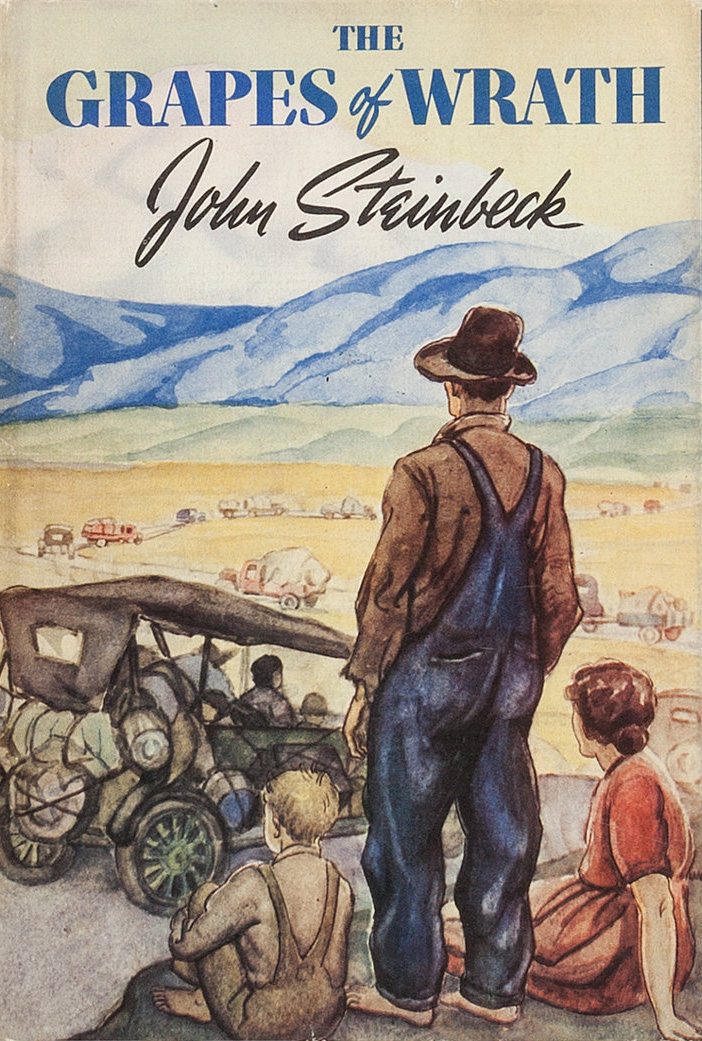


Setting, plot, and characters
The narrative is set during the late 1930s, against the twin crises of the Great Depression and the Dust Bowl. Environmental disaster, including extended drought, and structural shifts in the agricultural industry dispossess many small-scale farmers. The Joads pack their belongings into a truck and travel to California, hoping to find seasonal work in the Central Valley. Along the way and after arrival they confront hunger, illness and the collapse of traditional livelihoods.
Structure and notable elements
Steinbeck intersperses the family story with broad, panoramic chapters (often called "intercalary" chapters) that describe conditions faced by migrants in general. The novel centers on characters such as Tom Joad, Ma Joad and the former preacher Jim Casy, while the intercalary sections convey economic forces and communal experiences. The blend of intimate family episodes and wide-angle social commentary is a defining structural feature.
Themes and style
The book examines hardship and human dignity, foregrounding themes of poverty, corporate and landlord power, discrimination, and labor exploitation. Steinbeck's prose draws on naturalistic description and a populist sympathy for working people. Moral questions about individual responsibility, collective action and social reform run through the narrative, balanced with scenes of family solidarity and practical resilience.
Reception, adaptations, and legacy
On publication the novel prompted strong reactions: it received acclaim for its power and compassion but also provoked criticism and censorship in some quarters, particularly from those who felt it portrayed migrants and landowners unfavorably. It inspired a major 1940 film adaptation directed by John Ford and starring Henry Fonda, and it remains a touchstone in discussions of American migration, labor history and environmental stress. Steinbeck later received the Nobel Prize in Literature (1962) for his body of work, of which this novel is a prominent part.
Why it matters and further resources
The Grapes of Wrath endures because it combines a compelling story with a sustained engagement with social conditions. It is used as a literary text and as a historical lens on the 1930s, prompting study of agrarian change, migration policy, and community responses to crisis. For additional entry points, see links below.
- About the novel
- John Steinbeck biography
- Pulitzer Prize information
- Teaching in high school
- College course use
- Biblical allusion (Revelation)
- Context: farmers and tenancy
- Great Depression background
- Dust Bowl and migration
- Drought and ecology
- Changes in agriculture
- California as destination
- Central Valley studies
- Poverty and relief efforts
- Discrimination and social response
- Labor exploitation and unions
Related articles
Author
AlegsaOnline.com The Grapes of Wrath — John Steinbeck's 1939 social novel Leandro Alegsa
URL: https://en.alegsaonline.com/art/98085